










Enkei Wheels India Revenue Climbs 30% Despite Profit Decline
Key highlights
- Enkei Wheels India reported Q2 FY27 revenue from operations of ₹345.37 crore, up 30% year-on-year.
- Q2 FY27 net profit was ₹7.28 crore versus ₹7.94 crore in the year-earlier quarter, a decline of about 8%.
- Profit before tax fell to ₹9.59 crore in Q2 FY27 from ₹13.86 crore in Q1 FY27.
- June 2026 revenue was ₹319.03 crore, following March 2026 revenue of ₹299.06 crore.
powered by IRIS
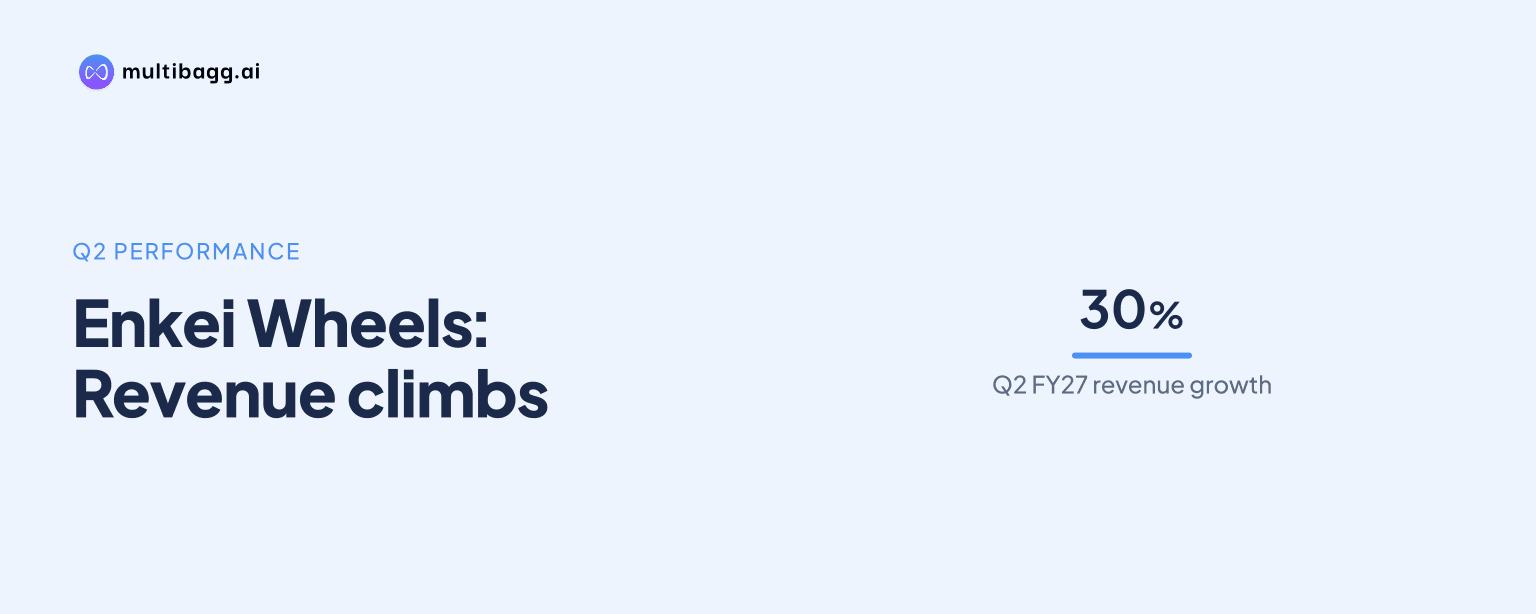
Enkei Wheels (India) Limited reported revenue from operations of ₹345.37 crore for the quarter ended September 30, 2026, a 30% year-on-year increase, but net profit declined 8% to ₹7.28 crore from ₹7.94 crore as material, finance and depreciation costs weighed on margins.
Know Enkei Wheels India inside out
Results, valuation, peers and who's buying, in one view.
What did Enkei Wheels India report for Q2 FY27?
Enkei Wheels India recorded a sharp rise in sales during Q2 FY27, with revenue from operations reaching ₹345.37 crore. The figure was about 30% higher than the corresponding quarter of the previous year and around 8% above the June 2026 quarter. Total revenue, including other income, was also stated at ₹345 crore on a rounded basis.
The Pune-based automotive wheel manufacturer reported profit before tax of ₹9.59 crore for the September quarter. This was lower than the ₹13.86 crore profit before tax reported in Q1 FY27. The quarter-on-quarter reduction was attributed in the supplied data to higher finance costs and depreciation expenses.
The reported net profit was ₹7.28 crore, compared with ₹7.94 crore in the year-earlier quarter. This represents an 8% year-on-year decline based on the underlying figures. The supplied material also describes a 21% year-on-year increase in profit and refers to ₹73 crore of net profit, but those statements conflict with the accompanying ₹72.81 million figure. ₹72.81 million converts to ₹7.28 crore, which has been used here for consistency.
Why did revenue grow while Enkei Wheels India's profit fall?
Revenue growth appears to have been supported by higher volumes and demand from the automotive sector. Enkei Wheels India had already reported strong sales growth in earlier quarters, with June 2026 net sales of ₹319.03 crore, up 36.83% year-on-year, and March 2026 net sales of ₹299.06 crore, up 31.18% year-on-year.
However, the increase in sales did not translate into higher net profit in Q2 FY27. The supplied information points to elevated input costs as a source of margin pressure. Higher finance costs and depreciation also affected profitability compared with Q1 FY27, contributing to the decline in profit before tax from ₹13.86 crore to ₹9.59 crore.
The divergence between revenue and profit is important for an auto-component manufacturer because production volumes can increase faster than earnings when raw-material, funding or fixed-asset costs rise. The quarterly data therefore indicates improved top-line momentum, while the conversion of sales into profit remained under pressure.
How do the latest figures compare with recent quarters?
Enkei Wheels India's Q2 FY27 revenue was higher than the sales reported in the two immediately preceding quarters. Revenue rose from ₹299.06 crore in March 2026 to ₹319.03 crore in June 2026, before reaching ₹345.37 crore in the September 2026 quarter. This sequence shows continued sales expansion through the first half of FY27.
Profitability has been more uneven. The June 2026 quarter recorded net profit of ₹10.25 crore, compared with a net loss of ₹0.61 crore in the March 2026 quarter. Against that base, the ₹7.28 crore Q2 FY27 profit indicates a sequential moderation, although the source does not provide a directly comparable Q1 FY27 net-profit figure in the same result summary.
Got a follow-up? Ask IRIS
What does the result mean for investors and the auto-component sector?
For investors, the result separates volume-led sales growth from earnings performance. Enkei Wheels India expanded quarterly revenue by 30% year-on-year, but net profit declined because expenses increased faster than the benefit from higher volumes. The fall in profit before tax from the June quarter also places attention on financing and depreciation costs.
The result is relevant to the broader automotive supply chain because wheel makers are exposed to vehicle production volumes as well as raw-material costs. A rise in automotive demand can support factory utilisation and revenue, but margins can remain constrained when material costs are elevated or when depreciation increases after investment in capacity and equipment.
No management commentary, guidance or formal cost-reduction target was included in the supplied information. As a result, the available data supports an assessment of current-quarter performance but does not establish whether the margin pressure is temporary or persistent.
What should be monitored after the September quarter?
The next focus will be whether revenue growth remains above the recent ₹319.03 crore June-quarter level and whether operating costs moderate. A sustained increase in sales without a recovery in profit before tax would continue to indicate pressure on earnings conversion.
Investors may also track finance costs, depreciation and input-cost trends in subsequent disclosures. These items were specifically identified as factors affecting the sequential profit comparison and will be relevant to assessing whether Enkei Wheels India can improve profitability alongside its higher sales base.
Conclusion
Enkei Wheels India delivered a 30% year-on-year increase in Q2 FY27 revenue to ₹345.37 crore, extending the sales growth seen in March and June 2026. Yet net profit of ₹7.28 crore was 8% below the year-earlier figure, while profit before tax declined sequentially to ₹9.59 crore, showing that cost pressures offset part of the benefit from higher volumes.
The supplied earnings calendar listed November 4, 2026, as the expected Q2 FY27 earnings date. The next disclosures should be assessed for any update on input costs, finance expenses, depreciation and the company's ability to translate continued revenue growth into stronger margins.