










Fabtech says European deal may unlock European-funded projects
Key highlights
- Fabtech expects the European acquisition to close within six months or in the first quarter of next year.
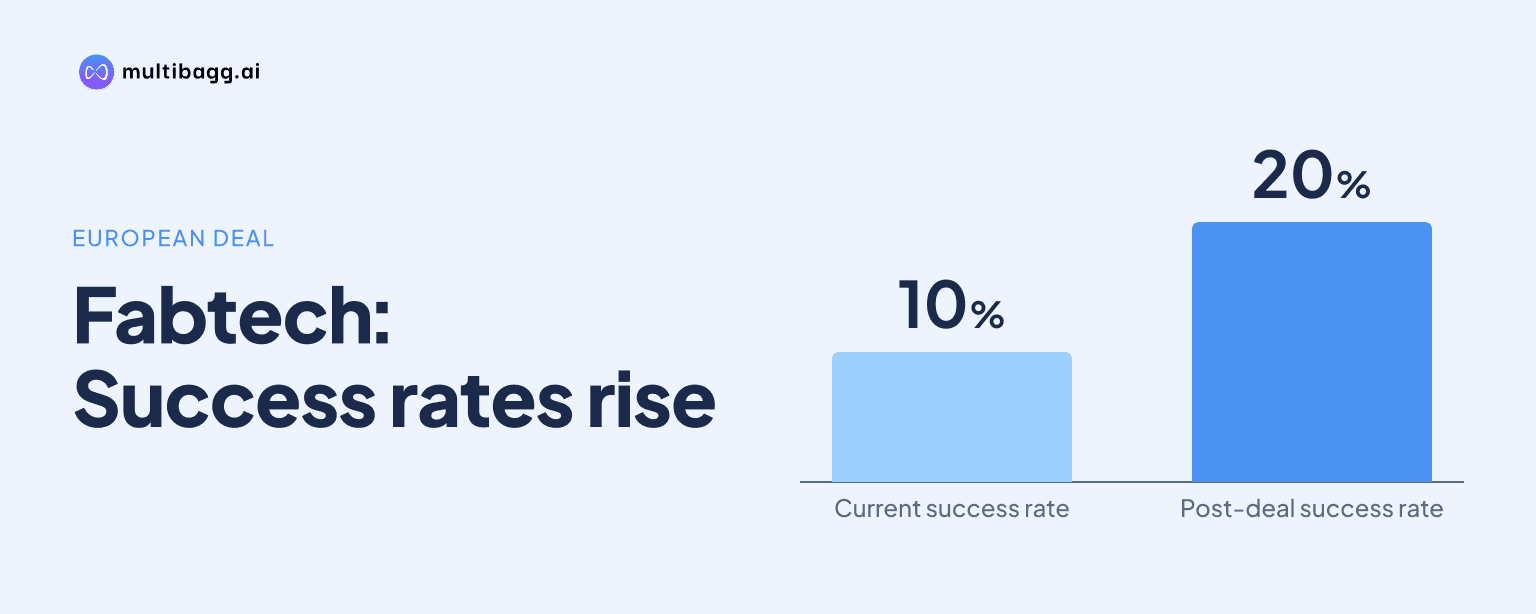
- Management said the deal could lift success rates on relevant European-funded opportunities from 10% to 20%.
- Fabtech reported a Rs 900 crore unexecuted order book, including about Rs 700 crore commercially cleared.
- Management estimated a Rs 3,600 crore to Rs 4,000 crore hot pipeline and Rs 800 crore to Rs 850 crore of potential conversion over 12 months.
powered by IRIS
Fabtech said its planned European acquisition could support bids for European-funded Middle East and Africa projects by adding European manufacturing, products, employees and references, while also creating a U.S. gateway. Management expects the transaction to close within six months or in the first quarter of next year.
Know Fabtech Technologies inside out
Results, valuation, peers and who's buying, in one view.
Why is Fabtech pursuing a European acquisition?
Fabtech is pursuing the acquisition to obtain local European manufacturing, diversify its product profile and gain the target’s employees and market references. Management said this would be more useful than opening a European office because the transaction is intended to add an established operating platform rather than only a local presence.
Fabtech also linked the deal to pharmaceutical investment projects in the Middle East and Africa that receive funding from European institutions. Management said procurement from Europe can be a prerequisite when a European investment bank finances a project, making a European manufacturing base relevant to bid eligibility.
Management estimated that the acquisition could raise Fabtech’s success rate on applicable opportunities from 10% to 20%. That is a management expectation rather than a reported conversion result, and the company did not define the opportunity pool, period or measurement method behind the estimate.
When could Fabtech close the European acquisition?
Fabtech expects to close the European acquisition within six months or in the first quarter of next year. Management described the process as moving positively when asked about the Italian transaction, but did not confirm a signed agreement, regulatory approvals, financing completion or the target’s identity.
Fabtech separately said it had more than Rs 200 crore of cash in bank, including initial public offering proceeds earmarked for working capital, general corporate purposes and inorganic activity. Management expects the planned use of those proceeds to be more or less completed by the end of financial year 2027, while free cash could be used for acquisitions or internal working capital.
The company did not disclose the purchase price, funding mix, revenue, profitability, debt, integration cost or expected financial contribution of the European business. Management also declined to say whether the deal would be earnings-per-share accretive from day one, calling that a forward-looking matter.
How could European manufacturing change Fabtech’s project bids?
Fabtech said European ownership could allow its procurement structure to align with financing conditions attached to some Middle East and African projects. The proposed benefit is therefore tied to a specific mechanism, procurement from Europe, rather than only to broader geographic expansion.
The acquisition is intended to support opportunities alongside Fabtech’s existing regional pipeline. Management estimated a hot pipeline of Rs 3,600 crore to Rs 4,000 crore and potential conversion of Rs 800 crore to Rs 850 crore over the next 12 months across the Middle East and Africa. These are management estimates, not secured orders.
Fabtech reported an unexecuted order book of Rs 900 crore, with about Rs 700 crore commercially cleared and in detailed engineering or execution planning. Management said its usual order mix allocates about 70% of value to large projects and 30% to multiple smaller orders, combining large milestones with faster-run-rate work.
Got a follow-up? Ask IRIS
Can the European acquisition take Fabtech into the U.S.?
Yes, according to management’s longer-term plan, the European acquisition is intended to be a gateway to the U.S. pharma and healthcare market. Fabtech said it had executed some Indian-driven U.S. projects in the past, but did not disclose a U.S. entry date, target customer, investment amount or order target.
The European plan sits alongside Fabtech’s expansion in Saudi Arabia and non-pharmaceutical critical infrastructure. Management said joint-venture discussions in Saudi Arabia had progressed and expected a disclosure in another quarter after establishing the operating model, human-resources structure and project pipeline.
Fabtech is also developing pre-engineered buildings, or PEB, and civil work, which management said could account for roughly 20% of its project pipeline. Management described the segment as being in incubation and said clearer revenue visibility would require about one year, with a contribution potentially arriving in the second half of financial year 2027 or first half of financial year 2028.
What could delay Fabtech’s expansion plans?
Geopolitical disruption has delayed project conversions and affected freight, raw-material prices and site-security measures, Fabtech said. Management said the disruption had not cancelled its pipeline, but it has created volatility in markets where Fabtech is executing projects.
Collections are another near-term issue. Fabtech said most receivables are backed by letters of credit, or LCs, and management expected many collections to be realised in the third and fourth quarters, although it did not disclose a receivables balance or a target for collection days.
Revenue timing remains under review because Fabtech currently bills mainly on a shipment basis. Management said it is working with auditors and consultants on a possible shift toward project-completion accounting around financial year 2028, while assessing the effect on existing and new contracts.
Management retained its target of 25% to 30% year-on-year growth despite an analyst citing a 24% year-on-year fall in second-quarter revenue and an approximately 12% decline in first-half revenue. Fabtech said second-half execution would carry greater weight, particularly in the fourth quarter, supported by its Rs 900 crore order book and work-in-progress material equal to about 30% of the second-half requirement.
Conclusion
Fabtech is presenting the planned European acquisition as a way to obtain manufacturing, products, employees and references that may help it meet procurement conditions on some European-funded projects. The strategy links its Middle East and Africa opportunity pipeline to a longer-term U.S. market ambition, but the transaction’s price, target financials and integration costs remain undisclosed.
The next developments to watch are whether Fabtech completes the deal within six months or in the first quarter of next year and whether it identifies the target and financing structure. Management’s planned Saudi joint-venture disclosure in another quarter, its Rs 800 crore to Rs 850 crore potential order conversion over the next 12 months, and the possible PEB contribution from the second half of financial year 2027 are additional milestones.