










Gala says KPMG working-capital benefits need up to 18 months
Key highlights
- Gala said KPMG’s working-capital recommendations will require at least 12 to 18 months to deliver benefits.
- Export revenue was 38%, up from 33% in the cited comparison, and the export working-capital cycle is 90 to 100 days.
- Gala is reviewing actions to reduce inventory by at least 10%, without disclosing a baseline or deadline.
- Q2 FY27 revenue was about Rs 94 crore, up 31% year on year, while EBITDA rose 43% to about Rs 16 crore.
powered by IRIS
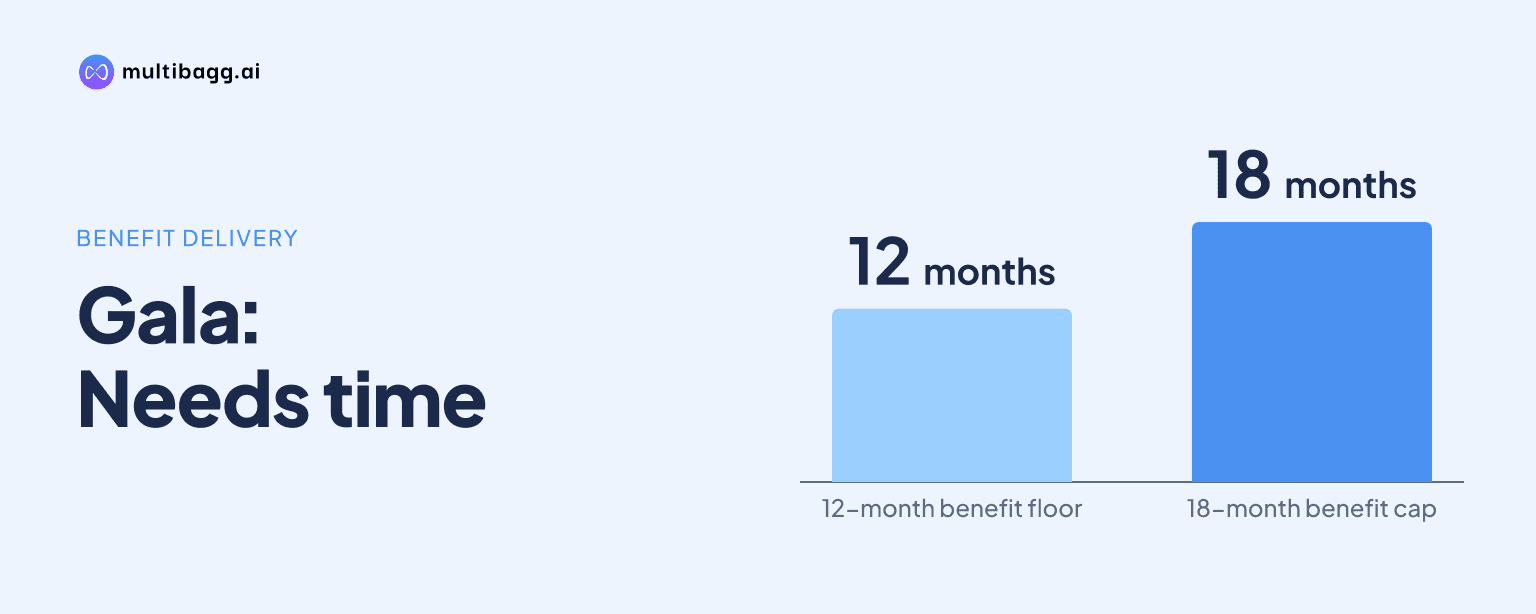
Gala Precision Engineering Limited said on November 6, 2026 that KPMG’s working-capital recommendations will take at least 12 to 18 months to benefit the company, following an increase in export revenue to 38% from 33% that extended the cash cycle through transit and collection periods.
Know Gala Precision Engineering inside out
Results, valuation, peers and who's buying, in one view.
Why will Gala’s KPMG recommendations take up to 18 months?
Gala said benefits from KPMG’s recommendations will require at least one to one-and-a-half years because implementation is yet to begin. Management said KPMG had recently completed its diagnostic analysis and submitted its report before the November 6, 2026 earnings call. Gala plans to form an internal team and start implementation sometime early in financial year 2028, or FY28.
The review is complete, but Gala did not disclose KPMG’s detailed recommendations, a cash-release estimate, or targets for receivable and inventory days. An investor said first-half operating cash flow was modest compared with reported profitability while inventory and trade receivables rose. Management did not provide an operating-cash-flow figure or set a date by which the internal team must complete any action.
What caused Gala’s receivables to rise?
Gala said trade receivables rose mainly because exports represented 38% of revenue, compared with 33% in the comparison with the fourth quarter of the prior year. Management said export sales increased by almost Rs 5 crore, while international transit time increased receivable days. It put the overall working-capital cycle for export business at 90 to 100 days.
Domestic revenue consequently accounted for 62%, down from 67% in the cited comparison period. Gala also linked working-capital absorption to business growth, saying it was growing at around 25%, while second-quarter FY27 revenue rose 31% year on year. The mechanism disclosed by management is that a larger export mix keeps goods and invoices in transit for longer before cash is received.
Gala did not present the export mix as the only driver of working-capital use. Management specifically connected the receivables increase to exports and transit time, while separately referring to sales growth of about 25%. The call also cited exports at approximately 36% of first-half revenue before the question session, but did not reconcile that figure with the later 38% used in the receivables discussion.
How is Gala managing inventory while sales grow?
Gala said inventory had reduced slightly compared with the previous quarter or the comparable earlier quarter, although it did not disclose an inventory balance in rupees or a precise inventory-day figure. When an investor cited an estimate of almost 270 inventory days, management said the calculation appeared incorrect and described inventory days as “around 100 and something.”
Management said inventory requirements reflect more than 800 stock-keeping units, imported inputs, domestic sales and exports. It also said goods in transit are accounted for as inventory, a treatment relevant to the 36% export share cited in the first-half revenue mix. These factors mean inventory includes products moving internationally as well as materials held for production.
Gala said it is examining internal measures to reduce inventory by at least 10%. That is a management objective rather than a completed result, and the company gave neither a baseline balance nor a deadline. Management also said inventory supports future demand as it targets 25% to 30% annual growth, so reductions would be pursued while production and dispatches expand.
Got a follow-up? Ask IRIS
How do Gala’s sales and profit compare with last year?
Gala reported second-quarter FY27 revenue from operations of about Rs 94 crore, up 31% year on year, while first-half revenue reached about Rs 169 crore, up 26%. Earnings before interest, tax, depreciation and amortisation, or EBITDA, increased 43% in the quarter and 35% in the first half, faster than revenue in both periods. These earnings gains contrast with the longer timetable management gave for working-capital improvements.
EBITDA margin was 16.76% in Q2 FY27, an improvement of 135 basis points, and 16.56% in H1 FY27, up 110 basis points. A basis point is one-hundredth of a percentage point. Management attributed the first-half margin improvement partly to lower manpower and other expenses as a share of revenue, as well as the absence of the foreign-exchange loss recorded in H1 FY26.
Net profit increased 26% year on year in both reported periods, but quarterly profit-after-tax margin was 11.31%, down 45 basis points. The first-half profit-after-tax margin was 11.06%. Gala therefore reported faster EBITDA growth than revenue, while cash conversion remains subject to the export-related 90-to-100-day cycle and the not-yet-implemented KPMG actions.
What could change Gala’s cash-conversion profile next?
Gala’s cash-conversion profile could change as it implements KPMG’s recommendations, works toward a 10% inventory reduction and manages its export mix. The company has not disclosed targets for working-capital days, receivables, inventory value or operating cash flow. Management’s stated minimum 12-to-18-month benefit timeline means any material outcome is not expected immediately after implementation starts in early FY28.
Expansion plans may also affect funding requirements. Gala said it secured Rs 58 crore of bank finance, including Rs 15 crore of fund-based working-capital facilities, Rs 10 crore of non-fund working-capital facilities for an NCBG facility and Rs 28 crore of term loan. The listed components total Rs 53 crore, and the call did not explain the Rs 5 crore difference from the stated Rs 58 crore total.
For FY28, management plans capital expenditure of approximately Rs 40 crore to Rs 45 crore, which it said should support more than Rs 100 crore of turnover capacity. Gala also said Chennai Phase 2 was planned to be ready in the last quarter, while management targets about 25% growth next year. These plans could increase sales activity, but their effect on cash conversion will depend on the undisclosed KPMG measures and the export-versus-domestic revenue mix.
Conclusion
Gala’s central explanation is that higher receivables reflect a larger export mix and the associated 90-to-100-day working-capital cycle, rather than a disclosed deterioration in one specific collection measure. KPMG has completed its diagnostic work, but management expects implementation benefits to take at least 12 to 18 months, even as Q2 FY27 revenue rose 31% to about Rs 94 crore.
The next disclosed milestones are the formation of an implementation team in early FY28, progress toward at least a 10% inventory reduction and Chennai Phase 2 becoming available in the last quarter. Investors can watch whether the export share, cited at 38% in the receivables discussion, changes further and whether Gala subsequently provides working-capital-day or cash-flow targets.