










HLFL merger cleared despite overdue-loan repayment flags
Key highlights
- HLFL shareholders present and voting approved the scheme with 100% support by value and number on 30 July 2026.
- The Official Liquidator’s 17 September 2026 report flagged overdue loans, near-term repayments and FVTOCI loan-asset valuation.
- HLFL said ECL provisions at 31 March 2026 were adequate and that it could meet repayment obligations.
- The NCLT required E-Form INC-28 filing within 30 days and stamp-duty lodgement within 60 days of order receipt.
powered by IRIS
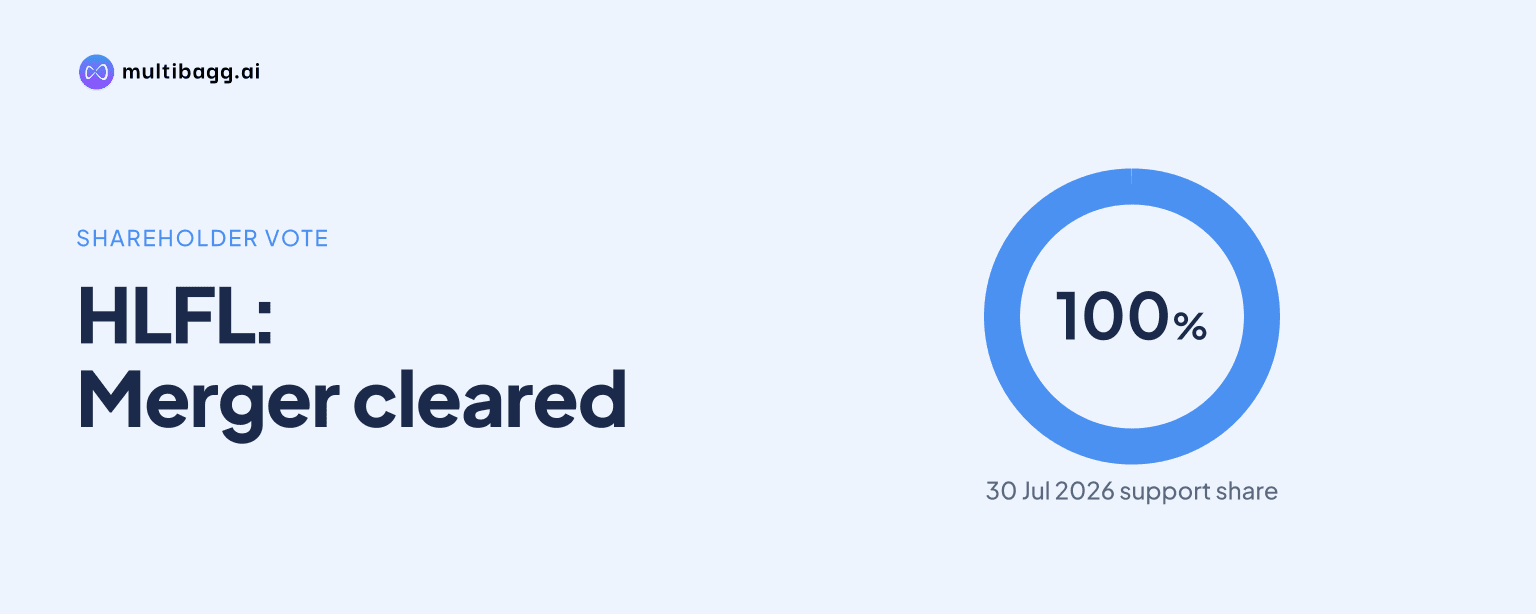
Hinduja Leyland Finance (HLFL) received National Company Law Tribunal approval for its merger despite the Official Liquidator recording overdue-loan, near-term repayment and fair-value concerns, after HLFL said Expected Credit Loss provisions at 31 March 2026 were adequate and shareholders present and voting approved the scheme with 100% support by value and number.
Know NDL Ventures inside out
Results, valuation, peers and who's buying, in one view.
Why did the NCLT approve the HLFL merger?
The National Company Law Tribunal (NCLT), Mumbai Bench-I, approved HLFL’s scheme after finding that it appeared fair and reasonable, did not violate law and was not contrary to public policy. In CP (CAA) No. 120/MB/2026, the tribunal said the necessary statutory compliances had been fulfilled and made the company petition absolute in terms of its prayer clauses.
The approval followed meetings ordered by the NCLT on 17 June 2026 and held through video conferencing or other audio-visual means on 30 July 2026. HLFL shareholders present and voting approved the scheme with 100% support by value and number, while the other petitioner’s shareholders gave 99.99% support by value and 97.87% by number.
The tribunal also recorded that no other objection had been received from statutory or regulatory authorities, creditors, members or other stakeholders. The Regional Director’s authorised representative said on 1 October 2026 that there was no objection if the scheme was considered for approval, following the companies’ replies and undertakings on the Regional Director’s observations.
What loan concerns did the Official Liquidator raise about HLFL?
The Official Liquidator’s report dated 17 September 2026 raised observations on HLFL’s overdue loan portfolio, substantial near-term repayment obligations and the valuation of certain loan assets classified as Fair Value through Other Comprehensive Income (FVTOCI). The NCLT order does not disclose the amount of overdue loans, the maturity schedule of repayments or the carrying value of the identified FVTOCI assets.
The order therefore records the nature of the concerns but does not provide a delinquency ratio, provision coverage figure or liquidity metric that would measure their scale as at 31 March 2026. It does, however, distinguish the Official Liquidator’s observations from a finding of prejudicial conduct: subject to those observations, the Official Liquidator stated that HLFL’s affairs had not been conducted in a manner prejudicial to creditors or the public interest.
This distinction is material because the NCLT approved the scheme after reviewing the companies’ submissions, reports from the Regional Director, Income Tax Department and Official Liquidator, and the lack of other objections. The approval does not supply a numerical conclusion on HLFL’s asset quality, refinancing needs or fair-value exposure; those figures are absent from the order.
How did HLFL answer the overdue-loan and repayment observations?
HLFL said in its affidavit in reply dated 17 September 2026 that its Expected Credit Loss (ECL) provisions as at 31 March 2026 were adequate. It also stated that loan assets, after those provisions, fairly represented their realisable value and that it was well positioned to meet its repayment obligations.
Those statements were HLFL’s representations to the Official Liquidator rather than disclosed repayment amounts, cash balances or funding ratios. The order gives no comparison between ECL provisions at 31 March 2026 and an earlier reporting date, and it does not state whether any specific overdue exposure required additional provisioning.
On the FVTOCI loan assets, HLFL said its valuation methodology complied with Indian Accounting Standard 113, known as Ind AS 113, which addresses fair-value measurement. HLFL also said it had engaged an independent valuer to determine the fair value of identified loan assets, but the order does not name the assets, give the valuer’s conclusion or disclose whether the exercise resulted in an adjustment.
The reported contrast is therefore clear: the Official Liquidator identified overdue-loan, repayment and valuation matters on 17 September 2026, while HLFL responded that provisions, net asset values and its ability to meet obligations were adequate as at 31 March 2026. The NCLT sanctioned the scheme, but its order leaves the amounts behind both positions undisclosed.
Got a follow-up? Ask IRIS
What does the approved merger transfer to the transferee company?
The sanctioned scheme transfers all liabilities accruing in HLFL to the transferee company, while HLFL is dissolved without winding up. The order separately preserves liability under Section 240 of the Companies Act, 2013 for offences committed before the merger by officers in default, meaning the corporate transfer does not remove that statutory consequence.
HLFL employees in service immediately before the scheme’s effective date will become employees of the transferee company without a break or interruption in service. Their terms and conditions must be no less favourable than those existing immediately before the effective date, although the supplied order does not specify that date.
The scheme provides that the transferee company will issue 25 fully paid equity shares of face value Rs 10 each for every 10 fully paid HLFL equity shares of face value Rs 10 each. This 25-for-10 exchange ratio sets the share consideration under the arrangement, but the NCLT order does not provide post-merger ownership percentages or a market-value calculation.
For the other petitioner, three unsecured creditors with aggregate outstanding dues of Rs 8.77 lakh as at 31 March 2026 had been paid in the ordinary course of business and issued no-dues certificates. Their creditor meeting was consequently dispensed with, unlike the first petitioner’s unsecured-creditor meeting, where 99.99% of participating creditors approved the scheme on 30 July 2026.
What compliance steps remain after the HLFL order?
HLFL and the transferee company must electronically file the NCLT order and scheme with the relevant Registrar of Companies through E-Form INC-28 within 30 days of receiving the order. They must also lodge authenticated copies with the relevant Superintendent of Stamps within 60 days of receipt for adjudication of any stamp duty payable.
The companies also undertook to comply with applicable tax and goods and services tax requirements, directions of sectoral regulators and the Regional Director’s observations. The NCLT stated that its approval would not stop relevant authorities from examining issues arising after the scheme takes effect, and that their decisions would be binding on the companies.
The Income Tax Department remains free to examine tax payable as a result of the scheme and to act under tax law if it finds tax avoidance. The order also says there were no pending proceedings or investigations against the petitioner companies under the listed Companies Act provisions, and no insolvency proceedings or litigation with a material impact on the scheme.
Conclusion
HLFL’s merger has been sanctioned after the NCLT considered the Official Liquidator’s 17 September 2026 observations and HLFL’s response that ECL provisions at 31 March 2026 were adequate, net loan values reflected realisable value and repayment obligations could be met. The approval rests alongside, rather than eliminates, the recorded questions on overdue loans, near-term repayments and FVTOCI valuations, for which the order gives no monetary detail.
The next disclosed milestones are the E-Form INC-28 filing within 30 days of order receipt and stamp-duty lodgement within 60 days. The independent valuation of identified loan assets, the transfer of liabilities to the transferee company and any examination by tax or other competent authorities after the scheme takes effect remain matters to watch under the order.