










India Exports Near $1 Trillion Goal After $570 Billion in Seven Months
Key highlights
- India reported about $570 billion in combined exports during April-October FY27.
- October 2026 exports reached nearly $90 billion, including about $50 billion in merchandise and $40 billion in services.
- India's combined exports in April-September FY27 were $476.20 billion, up 13.84% year on year.
- India recorded $863 billion in exports in FY26 and is targeting $1 trillion in FY27.
powered by IRIS
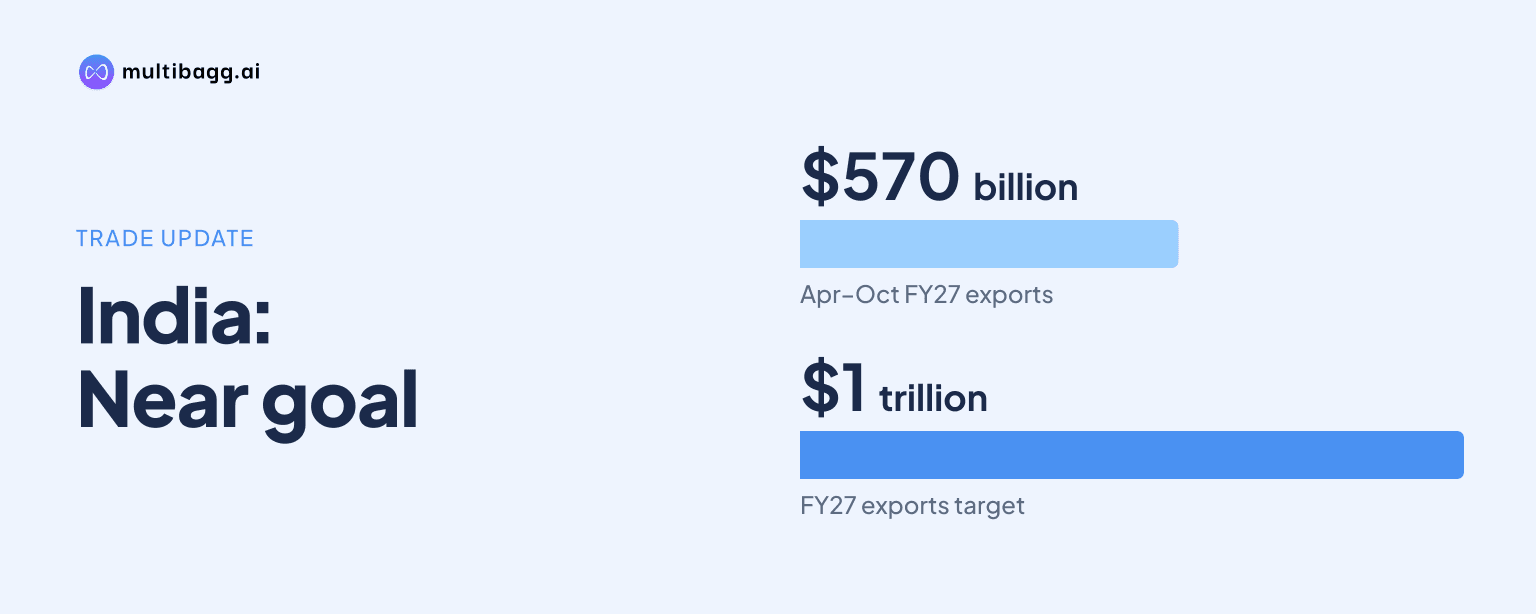
India is nearing its $1 trillion export goal for FY27 after combined merchandise and services exports reached $570 billion in the seven months through October 2026. October alone delivered nearly $90 billion of exports, while Commerce Minister Piyush Goyal said international trade could grow 15-16% during the year.
How close is India to the $1 trillion export target?
India has reached $570 billion of exports during April-October, placing it more than halfway toward the $1 trillion target for the financial year ending March 2027. The figure is described by the Commerce Minister as an unprecedented seven-month performance and follows a reported export total of $863 billion in FY26.
At the current reported total, India needs roughly $430 billion over the five months from November to March to reach $1 trillion. The target covers combined merchandise and services exports, making performance in both segments important rather than relying on one export category alone.
What drove India's October 2026 export record?
India recorded nearly $90 billion in combined exports in October 2026, comprising about $50 billion of merchandise exports and $40 billion of services exports. Goyal called the monthly level a historic milestone while presenting the case that the annual objective remains achievable.
The October split underlines the role of services alongside physical goods in the export total. Merchandise accounted for the larger part of the month's shipments, but services represented a substantial share, meaning continued momentum in both will matter in the final five months of FY27.
How fast are India's exports growing in FY27?
India's exports grew by more than 16% during April-October, according to ASSOCHAM Chief Economist S. P. Sharma, while the Ministry of Commerce and Industry reported 13.84% growth for April-September. The difference reflects the separate reporting periods, but both point to double-digit expansion in the first part of the financial year.
Goyal has projected 15-16% growth in India's international trade for FY27. A rise from $863 billion in FY26 to more than $1 trillion would represent growth of more than 15%, based on the figures cited in the discussions around the target.
Got a follow-up? Ask IRIS
What could affect India's path to $1 trillion exports?
India's progress is taking place amid geopolitical uncertainty, two ongoing wars and subdued global trade growth expected to be around 3.5%, according to Goyal. These conditions could affect demand, trade flows and the ability of exporters to sustain the pace recorded through October.
The Commerce Minister has urged businesses, manufacturers and artisans to use free trade agreements to expand access to overseas markets. Sustained demand from key global markets was also identified by ASSOCHAM as a factor supporting the expectation that exports can cross $1 trillion in FY27.
Why does the export target matter for India?
India's $1 trillion objective would mark a new annual export high if achieved, exceeding FY26's record $863 billion. The target has become a closely watched indicator of how merchandise producers and service exporters are performing in international markets.
The longer-term export ambition cited in the discussion is $2 trillion by 2030. The FY27 target is therefore an interim milestone, with the current year's performance providing a measure of whether the combined merchandise-and-services base can maintain higher growth over time.
Conclusion
India's first seven months show a strong start toward the $1 trillion export target, supported by a nearly $90 billion October and double-digit growth in the April-October period. The data also shows that both merchandise and services are central to the result, with neither segment alone defining the outcome.
The key period to watch is November through March, when India must add roughly $430 billion to meet the stated goal. Export demand in major markets, the effect of geopolitical volatility and the ability of businesses to use free trade agreements will determine whether the FY27 target is achieved and how firmly India advances toward the $2 trillion ambition for 2030.