










InterGlobe Aviation reports ₹1,900 crore Q2 FY27 loss amid fuel costs
Key highlights
- IndiGo reported a ₹1,900 crore net loss for Q2 FY27.
- IndiGo held its Q2 FY27 earnings call on October 29, 2026, at 17:00 IST.
- The Q2 loss was attributed to historically high fuel costs and seasonal monsoon softness.
- IndiGo's Q1 FY27 listing reported 19% revenue growth alongside a ₹240 crore net loss.
powered by IRIS
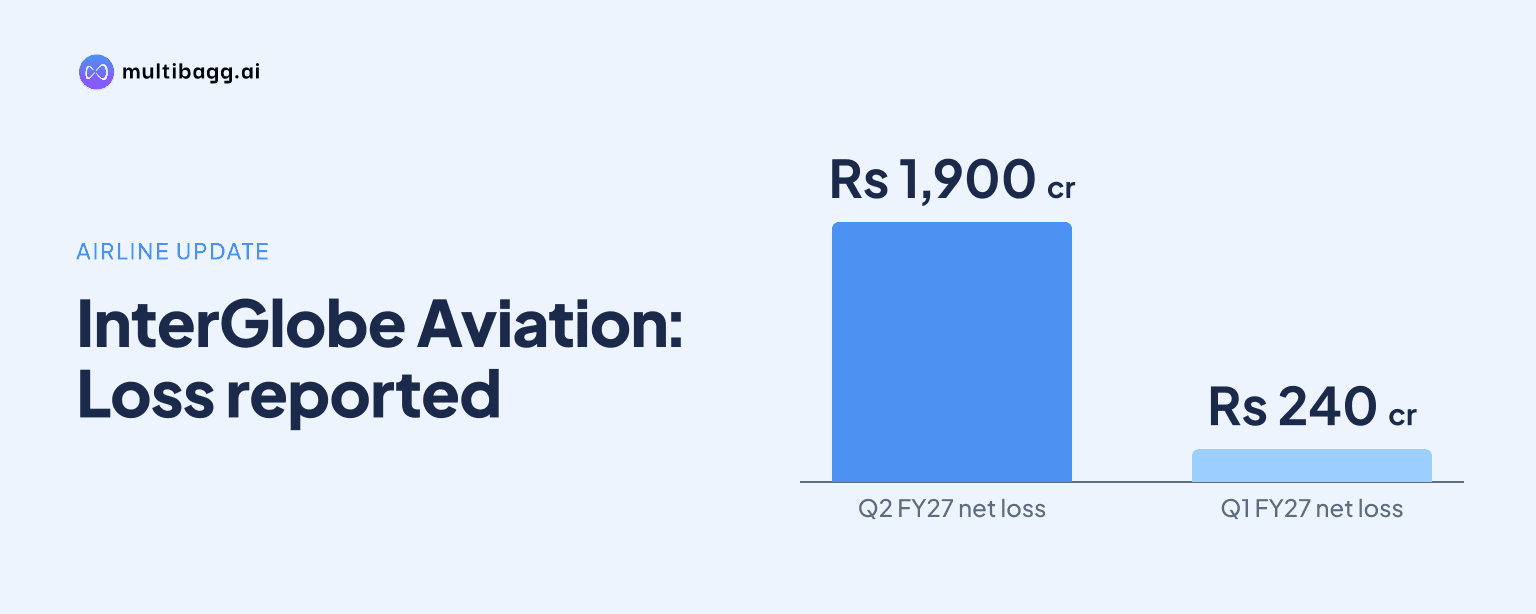
InterGlobe Aviation Limited reported a ₹1,900 crore net loss for Q2 FY27, with historically high fuel costs and seasonal monsoon softness offsetting stronger yields. The result matters because fuel costs and currency movements remain central variables for IndiGo's profitability even when passenger demand and pricing improve.
Know Interglobe Aviation inside out
Results, valuation, peers and who's buying, in one view.
Why did IndiGo report a Q2 FY27 loss?
IndiGo reported the ₹1,900 crore net loss in the Q2 FY27 earnings-call summary provided with the company material. The stated reasons were historically high fuel costs and seasonal monsoon softness, while the same summary noted strong yield growth. The information supplied does not state a Q2 revenue figure, fuel-cost amount, passenger number, or capacity growth rate.
For an airline, fuel is a major operating expense and a rapid rise can materially affect profit even if fares and yields improve. Monsoon conditions can also affect seasonal travel patterns and airline operations. The available summary does not quantify the impact of either factor, so the relative contribution of fuel, seasonality, foreign exchange, or other costs to the reported loss cannot be determined from the disclosed material.
What happened at IndiGo's October 29 earnings call?
IndiGo held its Q2 FY27 earnings conference call on October 29, 2026, at 17:00 IST, after the market close. The company had previously said its Board would meet that day to consider unaudited standalone and consolidated results for the quarter and half year ended September 30, 2026.
The call was scheduled for 60 minutes and was open to investors and analysts. The operator's opening message confirmed that the conference call was to discuss the second-quarter FY27 financial results. At the time reflected in the supplied material, the call recording was available or intended to be archived on the company website, while the Q2 transcript was marked as not yet available.
The availability of the recording and eventual transcript is relevant because management commentary can clarify operational trends that are not visible in a brief earnings summary. In particular, investors generally look for details on capacity deployment, yields, unit costs, fuel exposure, foreign-exchange effects, aircraft availability, and the company's outlook. None of these detailed Q2 FY27 datapoints are contained in the material provided here.
Got a follow-up? Ask IRIS
How does Q2 compare with IndiGo's earlier FY27 update?
The Q2 outcome follows a difficult first quarter for IndiGo. The supplied Q1 FY27 call summary stated that the airline posted a net loss of ₹2.4 billion, or ₹240 crore, despite 19% revenue growth and record passenger numbers. It attributed the Q1 loss to surging fuel costs and currency headwinds.
A separate Q1 summary in the material described fuel-cost increases of 80%, a 19% rise in revenue and improved yields, while referring to a loss of about ₹2 billion. As the supplied summaries use different loss figures, the ₹2.4 billion figure should be treated as the more specific number cited in the earnings-call transcript listing. The Q1 information nonetheless indicates that cost pressures were already affecting earnings before the second quarter.
IndiGo had guided for 25% growth in the Q1 call material, while also indicating that capacity growth would remain flat in Q2 and that yields and PRASK were expected to rise more than 25% year on year. The Q2 material supplied does not provide an update on whether these operating expectations were met. It only confirms strong yield growth alongside the reported net loss.
What does the result mean for investors and airline operations?
The Q2 loss shows that stronger yields alone did not fully absorb the cost and demand pressures cited by IndiGo. For investors, the key issue is the relationship between fare-related improvements and costs such as aviation turbine fuel and currency-linked expenses. The source does not provide a Q2 operating margin, cash-flow figure, debt figure, or balance-sheet data, so those measures cannot be assessed from this disclosure.
IndiGo remains subject to a Competition Commission of India investigation that has been kept in abeyance, according to the supplied material. No reason, date, or further procedural detail was provided. This remains a regulatory item to monitor separately from the quarterly operating performance.
For customers and the wider aviation market, the disclosed result underscores how airline finances can remain sensitive to fuel prices and seasonal conditions. The material supports no conclusion on ticket prices, route changes, fleet deployment, employee actions, or market-share movements. Those details would require the company’s complete results filing, presentation, or management transcript.
Conclusion
IndiGo's Q2 FY27 earnings summary records a ₹1,900 crore net loss despite strong yield growth, citing historically high fuel costs and seasonal monsoon softness. Together with the earlier Q1 loss, the result places cost management and the durability of fare improvements at the centre of the airline's reported FY27 financial performance.
The next item to watch is the full Q2 FY27 earnings-call transcript and related results material, which can provide the missing information on revenue, capacity, yields, unit costs and management guidance. Investors may also monitor any further disclosure on the Competition Commission of India matter, which remains in abeyance according to the available information.