










Inter State Oil Carrier Q2 FY27 Results Board Meets November 13
Key highlights
- Inter State Oil Carrier's board will consider Q2 FY27 and half-year results at 3:00 PM on November 13, 2026.
- September 2026 cargo volume rose 31.69% year on year to 27.88 thousand metric tonnes.
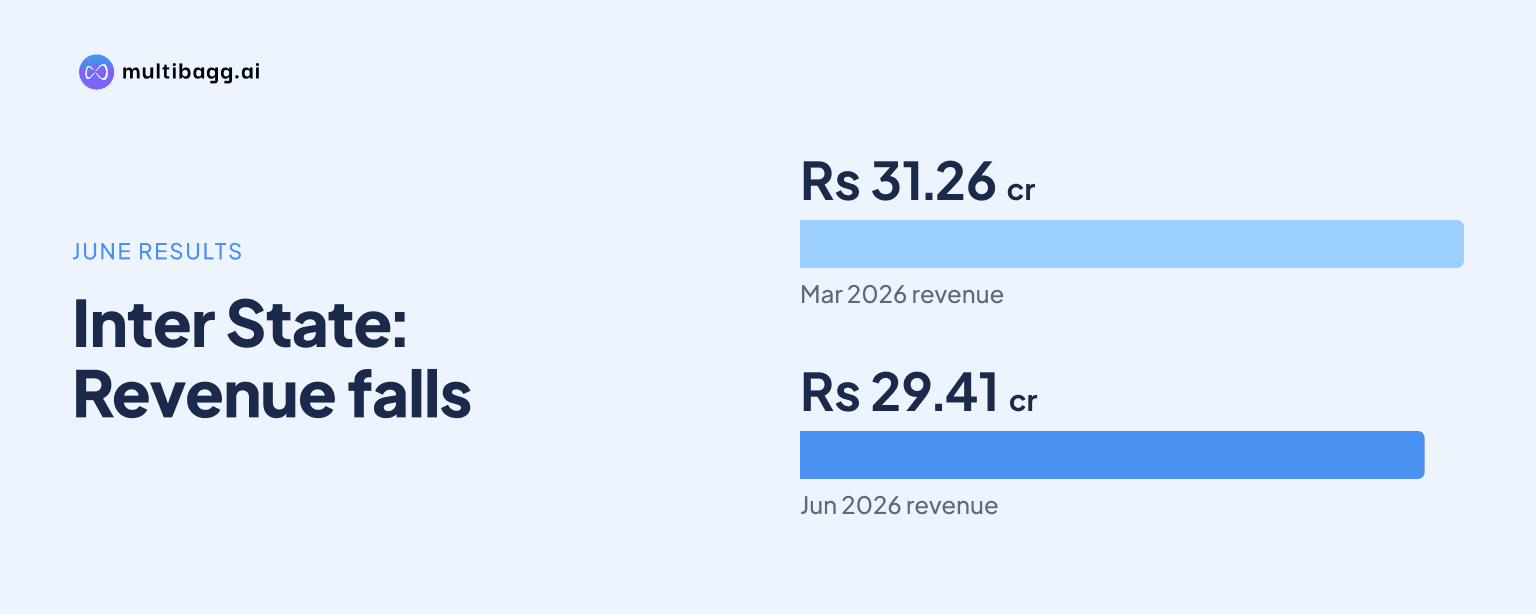
- June 2026 revenue was ₹29.41 crore, down 5.92% from ₹31.26 crore in March 2026.
- June 2026 net profit was ₹0.63 crore, down 47.93% quarter on quarter from ₹1.21 crore.
powered by IRIS
Inter State Oil Carrier Limited will consider its unaudited Q2 FY27 and half-year results on November 13, 2026, after reporting September cargo volume growth of 31.69% year on year to 27.88 thousand metric tonnes. The board meeting is scheduled for 3:00 PM in Kolkata and will cover the quarter ended September 30, 2026.
Know Inter State Oil Carrier inside out
Results, valuation, peers and who's buying, in one view.
When will Inter State Oil Carrier announce Q2 FY27 results?
Inter State Oil Carrier will consider and approve its unaudited financial results for Q2 FY27 and the first half of FY27 at a board meeting on Friday, November 13, 2026. The meeting is scheduled at 3:00 PM in Kolkata and relates to the period ended September 30, 2026.
The announcement is part of the September-quarter earnings season. Inter State Oil Carrier operates in transportation of bulk liquids and gases, serving customers across India and neighbouring countries. Its quarterly disclosure will provide the next formal financial update after the June 2026 quarter.
The company had issued a monthly business-performance update for September 2026 before the board meeting. That update focused on cargo handled rather than revenue, profit or margins. As a result, the Q2 results will be important for assessing whether higher activity translated into financial growth during the quarter.
What was Inter State Oil Carrier's September cargo performance?
Inter State Oil Carrier handled 27.88 thousand metric tonnes of cargo in September 2026, up 31.69% from 21.17 thousand metric tonnes in September 2025. Management attributed the year-on-year expansion to sustained transportation demand and operational fleet capacity.
The company said its ongoing transportation operations and dedicated fleet capacity had supported a consistent year-on-year growth path across recent quarters. The disclosed volume figure indicates higher physical activity in its bulk-transportation network during the month.
Volume growth alone does not establish revenue or earnings growth because billing rates, route mix, fuel and operating costs, and fleet utilisation can affect quarterly financial performance. The September-quarter results are expected to show the revenue, operating-profit and net-profit outcomes associated with the reported operational data.
How did Inter State Oil Carrier perform in the June 2026 quarter?
Inter State Oil Carrier reported June 2026 quarterly revenue of ₹29.41 crore, compared with ₹31.26 crore in March 2026, a sequential decline of 5.92%. Operating profit was ₹0.66 crore, down 57.69% from ₹1.56 crore in the preceding quarter.
Net profit for June 2026 stood at ₹0.63 crore, compared with ₹1.21 crore in March 2026, a quarter-on-quarter decrease of 47.93%. The June-quarter operating-profit margin was reported at 8%, versus 9.3% in March 2026, based on the quarterly financial table provided.
A separate standalone disclosure placed June 2026 net sales at ₹29.13 crore, up 12.43% year on year. The supplied summary also stated that June-quarter sales rose 12% and profit rose 215% from a year earlier. These year-on-year comparisons point to improvement from the prior-year quarter, while the sequential figures show lower revenue and profitability than in March 2026.
Got a follow-up? Ask IRIS
Why do the September-quarter results matter for investors?
Inter State Oil Carrier's Q2 FY27 report matters because it will show whether the September increase in cargo volumes has supported revenue and profit after the sequential moderation seen in June. For a bulk-liquid and gas transporter, activity levels are a relevant operating indicator, but profitability also depends on cost control and pricing.
The company reported ₹1 crore of interest expense in each of the September 2025, December 2025, March 2026 and June 2026 quarters in the supplied financial table. Investors may therefore examine whether operating profit provides sufficient coverage for financing costs, particularly after operating profit declined in June from the March level.
The September results will also provide half-year figures for FY27. Those disclosures can help investors compare first-half business momentum with the prior period using reported revenue, margins, profit and earnings per share, rather than relying only on the monthly cargo update.
What should investors review in the Q2 FY27 disclosure?
Investors should review Inter State Oil Carrier's revenue, operating profit, operating-profit margin and net profit against both the June 2026 and September 2025 quarters. The September cargo update gives a reference point for operational growth, while the financial statements will determine whether that growth was accompanied by stronger earnings.
The board's statements on transportation demand, fleet capacity and costs will also be relevant. The provided information does not disclose a target, forecast, capital-expenditure plan or dividend proposal for FY27. Any such information should therefore be assessed only if it is included in the formal outcome of the November 13 meeting.
Conclusion
Inter State Oil Carrier enters its Q2 FY27 results meeting with September cargo volume up 31.69% year on year to 27.88 thousand metric tonnes, indicating higher operational activity. Its June-quarter financials, however, showed revenue, operating profit and net profit below the March-quarter levels, making the upcoming disclosure important for assessing the conversion of volume into earnings.
The next confirmed event is the board meeting at 3:00 PM in Kolkata on November 13, 2026, for approval of unaudited Q2 and half-year results. Investors should watch for the reported financial figures, margins and any management commentary on fleet capacity, demand and operating costs.