










Chemopharm's ₹448.62 crore loans fund refinancing, Thai acquisition
Key highlights
- Chemopharm had ₹448.62 crore outstanding under two HSBC term loans on August 31, 2025.
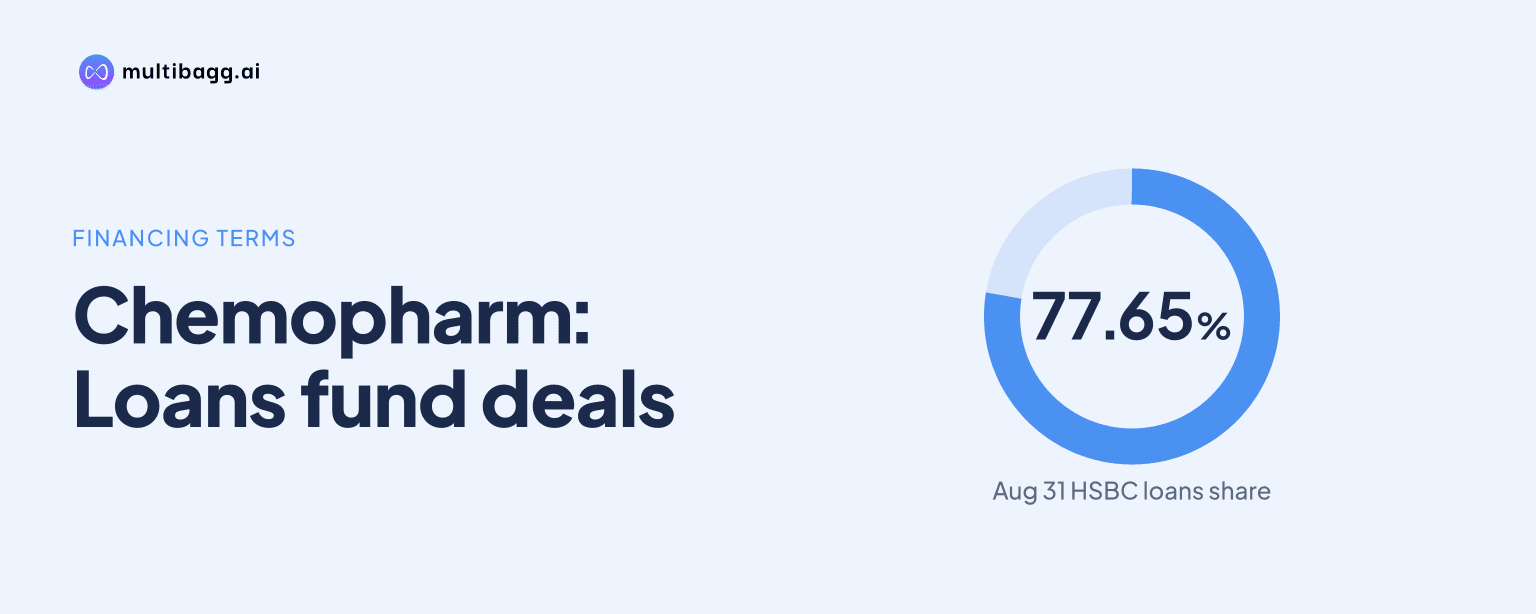
- The HSBC loans represented 77.65% of ₹577.73 crore in listed step-down subsidiary borrowings outstanding.
- The two facilities funded debt refinancing, deferred consideration for Thai Material Entity 1 and finance-document costs.
- The HSBC terms identify change of control and an unapproved flotation as mandatory-prepayment events.
powered by IRIS
Chemopharm Sdn. Bhd. had ₹448.62 crore outstanding under two HSBC Bank term loans on August 31, 2025; their stated uses were refinancing existing debt, deferred consideration for Thai Material Entity 1 and finance-document costs, while their terms list an unapproved flotation or change of control as mandatory-prepayment events.
What did Chemopharm's HSBC term loans finance?
Chemopharm used the two HSBC Bank term loans for refinancing, deferred acquisition consideration and finance-document costs rather than routine working-capital funding. The facilities, sanctioned on October 28, 2024, permit repayment or prepayment of existing financial indebtedness, including through an intercompany loan route, and payment of deferred consideration related to the acquisition of Thai Material Entity 1.
The permitted uses combine a refinancing exercise with an acquisition-related payment. Existing financial indebtedness refers to debt already owed by Chemopharm or debt addressed through the stated intercompany arrangement, while deferred consideration is acquisition consideration payable after the transaction. The disclosure does not quantify how much of the two facilities funded refinancing, Thai Material Entity 1 consideration or costs under the finance documents.
Chemopharm states that the loans were utilised for the purposes in the sanction letters. J.C. Bhalla & Co., Chartered Accountants, certified the loan-utilisation information on October 9, 2025, as required under the Securities and Exchange Board of India Issue of Capital and Disclosure Requirements Regulations.
How large are Chemopharm's HSBC loans within subsidiary debt?
Chemopharm's two HSBC term loans accounted for ₹448.62 crore, or 77.65%, of the ₹577.73 crore outstanding across the listed step-down subsidiary borrowings as of August 31, 2025. The US-dollar facility had ₹187.99 crore outstanding and the Malaysian-ringgit facility had ₹260.63 crore outstanding.
Chemopharm's ₹448.62 crore HSBC balance represented 90.34% of its ₹496.60 crore total disclosed borrowings in the step-down-subsidiary table. The remaining ₹47.98 crore comprised ₹7.64 crore with Malayan Banking Berhad, ₹14.09 crore with CIMB Bank and ₹26.25 crore with Standard Chartered Bank, which were described as working-capital, trade-finance, foreign-exchange or multiple-bank facilities.
What are the repayment and interest terms of Chemopharm's HSBC loans?
Chemopharm's HSBC term loans are repayable at different intervals of 12, 18, 24, 30, 36, 42 or 48 months from utilisation, with a maximum available tenor of 60 months. Both facilities carry a margin of 2.20% a year above the applicable Primary Term Rate, which is the reference rate for the loan currency and interest period.
The disclosure does not provide an all-in interest rate as of August 31, 2025 for either HSBC loan, so their rupee borrowing cost cannot be calculated from the disclosed information. In contrast, Chemopharm's ₹26.25 crore Standard Chartered Bank facility had a maximum tenor of 150 days and pricing of 1.20% a year over cost of funds, showing that the HSBC loans had a substantially longer contractual maximum tenor.
The US-dollar loan's ₹187.99 crore outstanding amount was ₹2.89 crore above its ₹185.11 crore sanctioned or availed amount. The disclosure attributes an outstanding amount exceeding the sanctioned amount to exchange-rate fluctuations, meaning the rupee-reported debt can move even without an increase in foreign-currency principal.
Got a follow-up? Ask IRIS
When can a flotation or control change require Chemopharm to prepay?
Chemopharm's HSBC agreements identify a change of control, a flotation that is not an Approved Flotation, and the sale of all or substantially all group assets as mandatory-prepayment events. The Obligors' Agent must promptly notify the facility agent after becoming aware of any such event, under the clause titled “Mandatory prepayment - Flotation or Change of Control.”
The supplied terms do not define Approved Flotation, Change of Control or Obligors' Agent. They also do not state that any of these events had occurred by August 31, 2025, and do not quantify a prepayment premium for the two HSBC term loans.
The HSBC terms also address an illegality event. If it becomes unlawful for a lender in an applicable jurisdiction to perform, fund or maintain its loan participation, the lender must notify the agent, its available commitment is cancelled after agent notification, and Chemopharm must repay that participation by the earlier of the next interest-period end after notice or a lender-specified date subject to any legally permitted grace period.
How could offer proceeds affect Chemopharm's debt?
The company may use net proceeds to repay or prepay all or part of identified subsidiary loans, including Chemopharm's borrowings, but it has not determined the final facilities or amounts. Its selection will depend on contractual restrictions, time needed to meet repayment conditions, prepayment penalties, applicable law, interest rates, outstanding amounts, remaining tenor and other commercial considerations.
The company says it has obtained lender consents or no-objection certificates where applicable and may invest the allocated funds in subsidiaries through equity or debt, as permitted by law. Details of investment into step-down subsidiaries are to be provided in the Red Herring Prospectus, while Chemopharm and the other named subsidiaries have no stated dividend policy.
Conclusion
Chemopharm's ₹448.62 crore HSBC term-loan exposure was principally linked to refinancing existing indebtedness and meeting deferred consideration for Thai Material Entity 1, rather than ordinary operating funding. The two foreign-currency facilities made up 77.65% of the disclosed outstanding borrowings of listed step-down subsidiaries, leaving the group's refinancing and acquisition funding concentrated in those loans.
The next point to watch is the company's eventual selection of subsidiary facilities for repayment or prepayment from net proceeds, because neither the amount nor the loans have been fixed. The Red Herring Prospectus is intended to disclose the form of investment into step-down subsidiaries, while the meaning of an Approved Flotation remains unspecified in the supplied HSBC terms.