










ISGEC Heavy Engineering Reports ₹10,273 Crore Order Book
Key highlights
- ISGEC's standalone Q2 FY27 revenue from operations rose 17% year-on-year to ₹1,457 crore.
- ISGEC's standalone order book reached an all-time high of ₹8,757 crore on September 30, 2026.
- The supplied earnings summary placed ISGEC's consolidated order book at a record ₹10,273 crore.
- A ₹164 crore loss at the Philippines ethanol plant weighed on consolidated profitability.
powered by IRIS
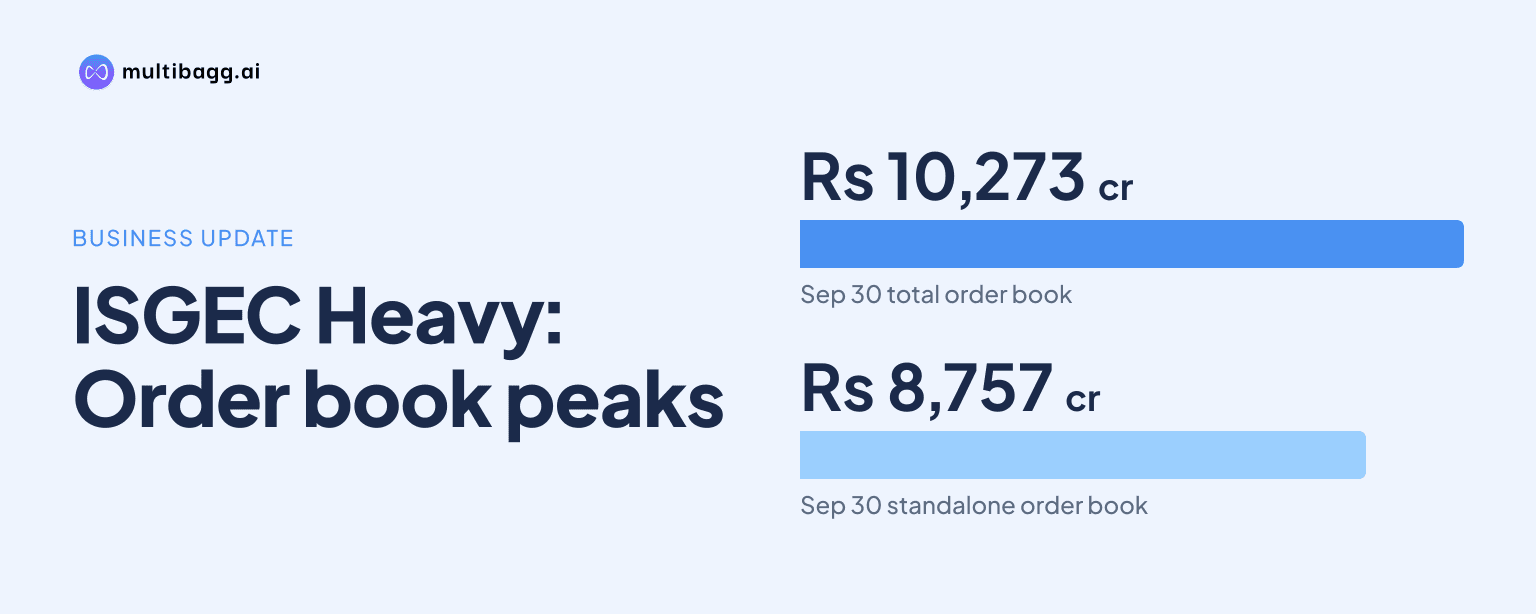
ISGEC Heavy Engineering Limited reported a record consolidated order book of ₹10,273 crore in Q2 FY27, supported by 17% standalone quarterly revenue growth, although a ₹164 crore loss at its Philippines ethanol plant affected consolidated profitability.
Know ISGEC Heavy Engineering inside out
Results, valuation, peers and who's buying, in one view.
What did ISGEC report in Q2 FY27?
ISGEC reported stronger standalone revenue, improved operating margins and its highest order book, while the overseas ethanol plant loss remained the main pressure point in consolidated results. Standalone revenue from operations rose 17% year-on-year to ₹1,457 crore in the September 2026 quarter. For the first half of FY27, standalone revenue increased 35% to ₹3,010 crore.
Including other income, standalone total income was ₹1,521 crore for the quarter and ₹3,106 crore for the first half. Standalone profit before tax increased 39% in Q2 and 24% in H1 on a year-on-year basis, according to Managing Director Aditya Puri's remarks during the November 5 earnings call.
At the consolidated level, total income for Q2 FY27 was ₹1,860 crore, compared with ₹1,696 crore in Q2 FY26, representing growth of about 10%. Consolidated profit before tax doubled to ₹102 crore from a restated ₹51 crore in the corresponding quarter a year earlier.
The reported consolidated profitability included the effect of the Philippines ethanol plant, where ISGEC recorded a loss of ₹164 crore. The company did not provide further operational or recovery details for the facility in the supplied call material.
How did ISGEC's order book and margins improve?
ISGEC's standalone order book reached an all-time high of ₹8,757 crore as of September 30, 2026, while the supplied earnings summary put the consolidated order book at a record ₹10,273 crore. Order booking during the first half stood at ₹4,844 crore on a standalone basis.
The scale of the order book gives the company a visible pipeline across its manufacturing and projects activities. It also provides context for management's FY27 standalone revenue growth guidance of about 15% to 17%, though the call included the usual warning that forward-looking statements are subject to risks and uncertainties.
Manufacturing EBIT margin improved to 13.7% in Q2, above management's indicated 12% to 13% range. The projects business recorded an EBIT margin of 5.7%, which management said was better than recent years and close to its 6% target.
Got a follow-up? Ask IRIS
Why did the Philippines ethanol plant matter to results?
The ₹164 crore loss at the Philippines ethanol plant mattered because it offset part of the benefit from growth in ISGEC's core standalone operations. The company delivered higher revenue and better manufacturing margins in India, but the overseas plant issue remained material at the consolidated level.
This difference between standalone and consolidated performance is important for investors assessing the quarter. Standalone profit before tax rose sharply, while consolidated profit before tax was ₹102 crore. Both measures improved from the prior year, but they reflect different business scopes and therefore should not be compared as like-for-like earnings measures.
Management's prepared remarks focused on the core business order pipeline, profitability and FY27 outlook. The supplied transcript excerpt did not include a specific timeline, capital requirement or operational target for resolving the Philippines plant loss. That leaves the plant's future financial effect as an unresolved item disclosed in the available material.
What does the Q2 update mean for investors and operations?
The Q2 update shows that ISGEC entered the second half with a larger execution pipeline and operating margins that were at or above the ranges indicated by management. The order book, particularly the ₹8,757 crore standalone balance, is relevant because the company will need to convert this backlog into revenue while maintaining project and manufacturing profitability.
Management expects FY27 standalone revenue to grow about 15% to 17%. It expects manufacturing margins to remain in the 12% to 13% range and projects margins to improve to around 6% by the end of the year. These are management targets rather than reported outcomes, and depend on order execution and business conditions.
ISGEC also stated that standalone net borrowings had nearly halved compared with March 2026. No absolute borrowing figure was provided in the supplied material, so the extent of the reduction cannot be quantified further. The earnings call was held after the market closed on November 5, when the cited closing share price was ₹974.05, meaning the call itself did not affect that day's intraday trading.
For customers and suppliers, the high order backlog indicates continued activity across ISGEC's manufacturing and project operations. For shareholders, the key reported factors are the strength of core order inflow and margins, balanced against the disclosed overseas plant loss.
Conclusion
ISGEC's Q2 FY27 update combined solid core-business momentum with a significant overseas operating setback. Standalone revenue growth of 17%, a 13.7% manufacturing EBIT margin and record order-book levels demonstrate stronger operating activity, while the ₹164 crore Philippines ethanol plant loss reduced the quality of consolidated profitability.
The next reported milestones will be execution of the ₹8,757 crore standalone order book, delivery against FY27 revenue growth guidance of 15% to 17%, and progress toward a 6% projects EBIT margin. Investors will also watch for any further company disclosure on the Philippines facility and its financial impact.