










Krishna Institute of Medical Sciences Q2 Revenue Rises 41.3%
Key highlights
- KIMS Q2 FY27 total revenue rose 41.3% year-on-year to ₹1,363 crore.
- Consolidated EBITDA increased 34.0% year-on-year to ₹279 crore, with a 20.5% margin.
- Inpatient volume grew 27.0% year-on-year to 81,668 in Q2 FY27.
- KIMS reported ₹420 crore of cash and cash equivalents as of September 30, 2026.
powered by IRIS
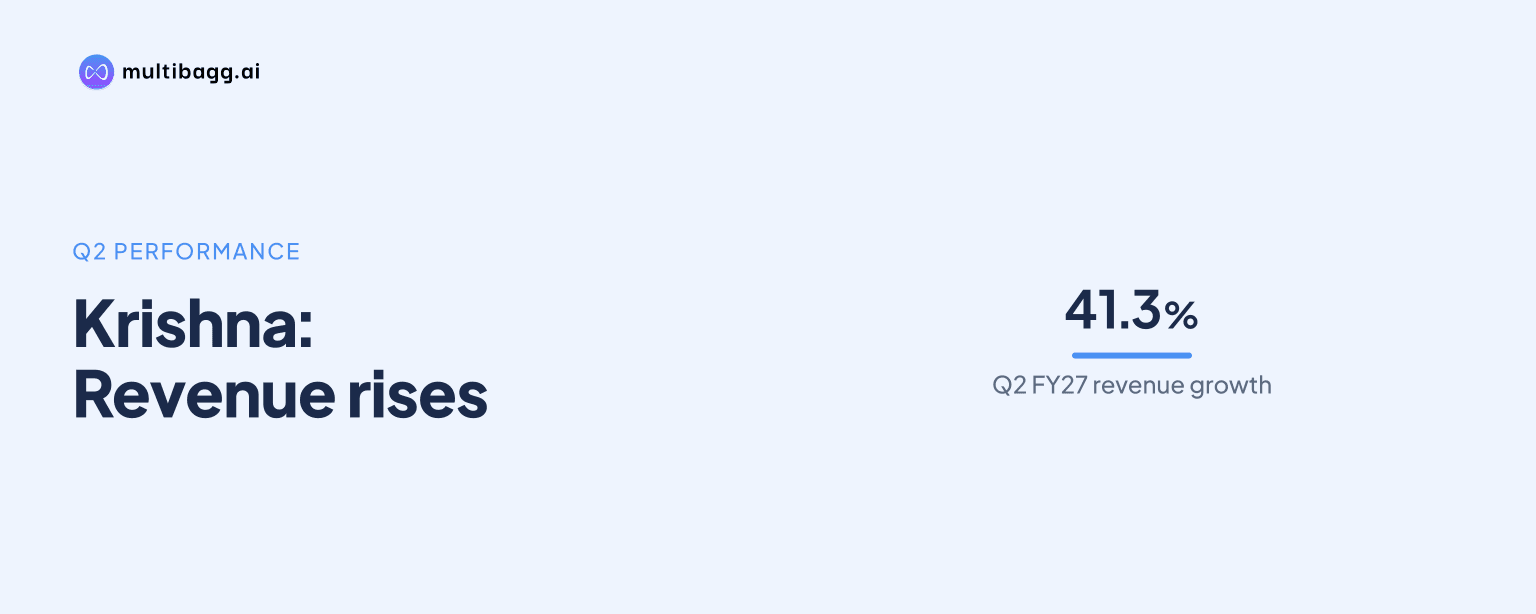
Krishna Institute of Medical Sciences Limited reported total revenue of ₹1,363 crore in Q2 FY27, up 41.3% year-on-year, supported by higher patient volumes, revenue per bed growth and expansion at newer facilities. Consolidated EBITDA increased 34.0% to ₹279 crore, while the reported EBITDA margin was 20.5%.
Know Krishna Institute of Medical Sciences inside out
Results, valuation, peers and who's buying, in one view.
What did Krishna Institute of Medical Sciences report for Q2 FY27?
Krishna Institute of Medical Sciences Limited, referred to as KIMS, reported consolidated revenue from operations of ₹1,344 crore for the quarter ended September 30, 2026. This represented growth of 39.9% year-on-year and 14.0% sequentially. Total revenue, including other income, stood at ₹1,363 crore, compared with the year-earlier period's base implied by the reported 41.3% growth.
Consolidated EBITDA was ₹279 crore, rising 34.0% from a year earlier and 16.3% from Q1 FY27. EBITDA margin improved from 20.1% in the preceding quarter to 20.5%, but was below 21.7% reported in Q2 FY26. Management described the second quarter as the margin bottom during the earnings call.
KIMS reported profit after tax of ₹76 crore, compared with ₹37 crore in Q1 FY27 and ₹72 crore in Q2 FY26. Consolidated earnings per share for the period ended September 30 were ₹1.80, up 8.5% year-on-year. The call material also cited cash and cash equivalents, including short-term deposits and mutual fund investments, of ₹420 crore at the end of the quarter.
Which operating factors supported KIMS revenue growth?
KIMS said its quarterly revenue growth was supported by higher inpatient and outpatient activity, improvement in average revenue per operating bed and the ramp-up of newer units. Inpatient volume reached 81,668 during Q2 FY27, increasing 27.0% year-on-year and 12.7% quarter-on-quarter.
Average revenue per operating bed rose 14.9% year-on-year and 2.3% sequentially. Average revenue per patient increased 9.9% from a year earlier and 1.2% from the prior quarter. These indicators show that both patient throughput and revenue intensity contributed to the revenue increase.
The earnings-call summary identified the Kondapur expansion as an important contributor to growth. It also linked temporary margin pressure to new oncology programmes. KIMS did not provide a separate financial contribution for Kondapur or quantify the cost of these programmes in the supplied material.
How did KIMS margins and adjusted EBITDA change?
KIMS reported a 20.5% consolidated EBITDA margin in Q2 FY27, 40 basis points above Q1 FY27 but 120 basis points below Q2 FY26. The difference between revenue growth and EBITDA growth indicates that costs rose as the company expanded operations and developed newer programmes.
On a pre-Ind AS 116 basis, consolidated EBITDA was ₹250 crore, up 24.7% year-on-year and 12.7% quarter-on-quarter. Pre-Ind AS 116 EBITDA excluding other income was ₹232 crore, growing 17.9% from Q2 FY26 and 12.6% from Q1 FY27. These measures provide an additional view of operating performance after removing lease-accounting effects and, in the latter case, other income.
Got a follow-up? Ask IRIS
What does the first-half performance show?
For H1 FY27, KIMS reported revenue from operations of ₹2,524 crore, up 37.7% year-on-year. EBITDA rose 27.2% to ₹519 crore over the first six months. The half-year figures reflect continued growth in the hospital network's operating revenue and EBITDA, following the Q2 volume and revenue-per-bed gains.
However, the supplied earnings summary said H1 FY27 profit after tax declined 28.0% year-on-year to ₹113 crore. This contrasts with the year-on-year increase in Q2 PAT and highlights the impact of the weaker first quarter on the six-month profit comparison. The call data showed Q2 PAT at ₹76 crore, more than double the ₹37 crore reported for Q1 FY27.
The company also reported that its Q2 consolidated profit before tax increased 10.1% year-on-year to ₹107 crore. The slower growth in profit measures relative to revenue and EBITDA is relevant for investors assessing the effect of operating costs, accounting items and other expenses during the period.
Why do the Q2 figures matter for investors and hospital operations?
The Q2 numbers show that KIMS expanded revenue faster than EBITDA, with total revenue up 41.3% and EBITDA up 34.0%. At the same time, sequential margin improvement from 20.1% to 20.5% followed the prior quarter, while the margin remained below the 21.7% level of Q2 FY26. Management's description of Q2 as the margin bottom provides context for the reported quarterly movement but does not constitute a quantified future outlook.
For hospital operations, the 27.0% rise in inpatient volumes and the increase in average revenue per operating bed point to broader utilisation and revenue gains. The Kondapur ramp-up and the rollout of oncology programmes were specifically referenced in the call summary, linking network expansion and service development to the quarter's revenue and cost profile.
For shareholders, the relevant reported measures include the 8.5% year-on-year rise in EPS to ₹1.80, the increase in quarterly PAT to ₹76 crore, and the ₹420 crore cash-and-investment balance. The provided material does not disclose a share-price reaction, new financial guidance, bed additions or a separate forecast for margins.
Conclusion
KIMS recorded strong Q2 FY27 operating growth, with total revenue reaching ₹1,363 crore and inpatient volumes rising to 81,668. EBITDA increased to ₹279 crore and the margin improved sequentially, though it remained lower than a year earlier amid the ramp-up of newer operations and oncology programmes.
The next reported developments to watch are the pace of the Kondapur expansion, the operating impact of oncology programmes and whether the sequential margin improvement continues. Management's margin-bottom comment makes subsequent quarterly margin and profitability disclosures particularly relevant.