










Mold-Tek says productivity can lift revenue another 15%
Key highlights
- Mold-Tek said revenue per employee rose to $5,220 from $4,500 in last year's Q2.
- Management sees scope for a further 15% productivity-led revenue increase without much additional headcount.
- Mold-Tek reduced BIW staffing from 155-160 people to about 50 people.
- Poles-and-towers staffing reached about 70-80 people from 30-40 last year, while demand exceeded 120 people.
powered by IRIS
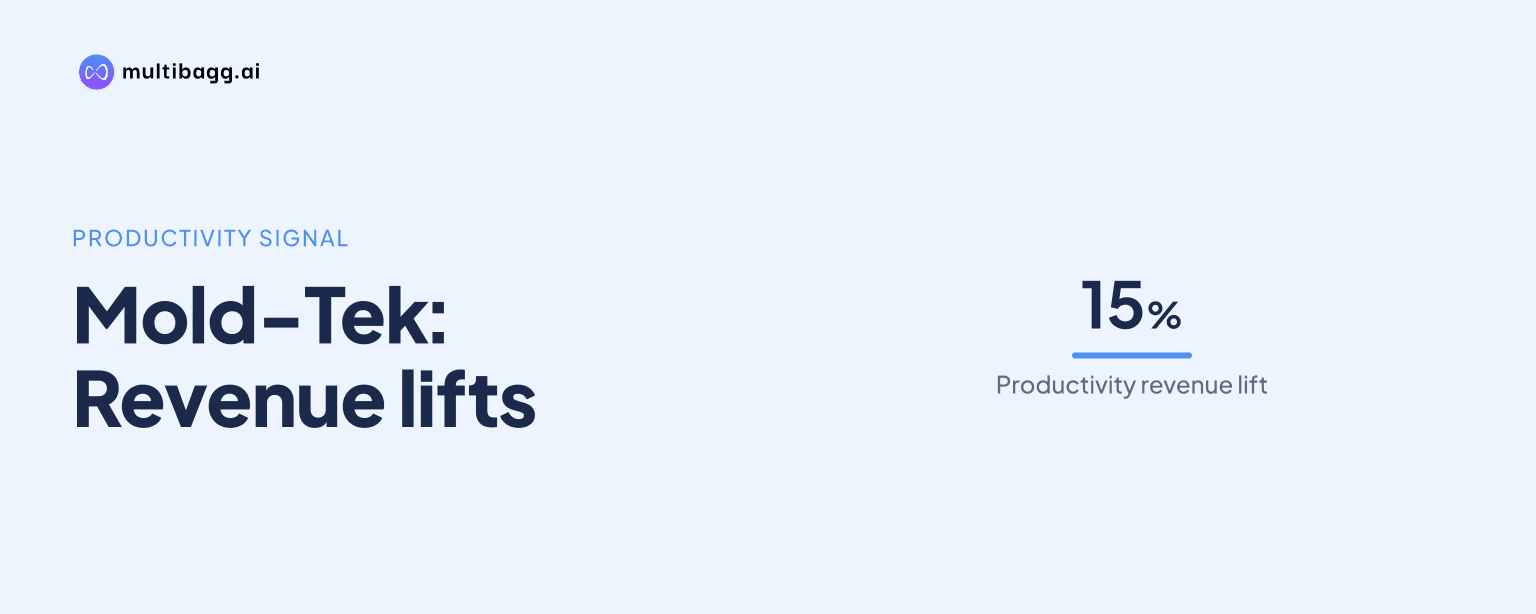
Mold-Tek said revenue per employee increased to $5,220 from $4,500 in last year's Q2, and management believes a further 15% productivity gain could raise revenue by a similar amount without materially increasing headcount. It attributed the improvement to incentives, retraining, multi-skilling and automation introduced over the past several months.
Know Mold-Tek Technologies inside out
Results, valuation, peers and who's buying, in one view.
How much has Mold-Tek's revenue per employee increased?
Mold-Tek said its per-capita revenue contribution rose by $720, to $5,220 from $4,500 in last year's Q2. That is a 16% increase on the figures cited, while management described the productivity improvement as more than 15% and said first-half per-person revenue was up by almost 15% from the previous financial year.
Management linked the higher per-employee measure to bottom-line improvement, but did not disclose a separate profit amount, margin figure or total employee count in this discussion. The $5,220 figure is therefore an operating indicator rather than a revenue forecast, and its significance depends on whether the company can sustain output and quality as work volumes expand.
What is driving Mold-Tek's productivity improvement?
Mold-Tek said incentives, retraining and multi-skilling programmes have improved manpower utilisation over the past year. Management said the newer system measures both output and quality through an open process intended to reward merit, and that the revised incentive and measurement approach began about seven to eight months before the November 4, 2026 call.
Automation is the second mechanism in the plan. Management said it had started introducing tools a few months before the call to improve output and quality without sacrificing quality, although it did not identify the software involved or disclose related spending. The company said the combination of training, incentives and automation was already yielding results and was being developed into a regular operating standard.
Can Mold-Tek gain another 15% without major hiring?
Mold-Tek said another 15% efficiency improvement is possible without increasing headcount by much, which management said could increase revenue by a similar 15% and improve the bottom line accordingly. Management qualified that view by saying it requires further training, automation systems and continued use of the new incentive methods.
The company said future recruitment will be driven by clients and projects rather than a large upfront hiring programme. Management contrasted that approach with Body in White, or BIW, where it built a substantial team after entering the segment three years earlier but could not find suitable work for that capacity during the subsequent two years, affecting performance.
Mold-Tek has reduced the BIW team from 155-160 people to about 50 people and may cut another five to 10 resources if they are found redundant. It said 20-25 people were being trained for redeployment into other domains, including poles and towers, showing a shift from holding capacity ahead of demand to moving staff toward confirmed specialist workloads.
Got a follow-up? Ask IRIS
Which segments could use the additional capacity?
Mold-Tek identified power-distribution engineering, particularly poles and towers, as the clearest area for trained capacity growth. The team increased to about 70-80 people from 30-40 people last year, while management said demand extended beyond 120 people because engineers with the required skills are scarce.
Management said 40-45 people were in different stages of training and expected staffing numbers to start adding from December, with better conditions from January. Separately, a three-year agreement with a plant-engineering company requires a fixed team of 25 people, but only 10-15 people were then being offered as Mold-Tek built the required team.
Data-centre drafting and detailing could also support workflow. Mold-Tek said it had completed five or six data-centre assignments over the preceding one to two years and had two or three projects on hand. Management said that accumulated experience could help the company become a preferred detailer for further US data-centre projects, though it did not quantify revenue from the vertical.
How does Beryl support Mold-Tek's efficiency strategy?
Mold-Tek said Beryl is intended to provide access to residential, county and municipal customers in the United States rather than deliver immediate profitability. Beryl won about $1 million of predominantly design-based work from Hillsborough County two months before the call, with execution expected over roughly six to 12 months as relevant decisions are issued.
One professional engineer was placed in Tampa and supported by a five-person Hyderabad team, creating a six-engineer design set-up for Beryl-related work. Management said Beryl had previously underdeveloped its design capabilities because it lacked suitable engineers, while Mold-Tek aims to use Beryl's permitting, inspection and related customer relationships to secure more design assignments.
Management said Beryl should turn positive from the next financial year, while fuller benefits from the acquisition were expected in 2027-28. It also said a suitable structural-engineering acquisition could help complete a civil-engineering offering across civil, structural, architectural and land-development work, but no deal has been confirmed and management remained dissatisfied with one prospective seller's ability to scale.
Conclusion
Mold-Tek's reported increase in revenue per employee from $4,500 to $5,220 indicates that management's current profit-improvement approach relies on improving deployment of existing staff rather than broad hiring. The reduction of BIW staffing from 155-160 people to about 50, alongside growth in poles-and-towers capacity, shows the company is reallocating resources toward segments with identified demand.
The next developments to watch are the addition of 40-45 trainees to the poles-and-towers workforce from December, the build-out of the 25-person plant-engineering team, and management's target for Beryl to turn positive from the next financial year. Any progress on the still-unconfirmed structural-engineering acquisition would also affect the company's plan to broaden its civil-engineering offering.