










Mufin digital lending reaches 44% of AUM as climate falls
Key highlights
- Mufin's Mediclaim Financing and Salary Saathi products represented about 44% of Rs 1,766 crore AUM at September 30, 2026.
- Climate financing declined from 29.8% to 19.1% of AUM, while sustainable financing stood at about Rs 338 crore.
- Gross NPA fell to 1.77% in Q2 FY27 from 1.91% in Q1 FY27, and net NPA declined to 1.50% from 1.63%.
- Mufin reduced employee count from around 500 in FY26 to 306, while AUM per employee rose from Rs 1.89 crore to Rs 5.77 crore.
powered by IRIS
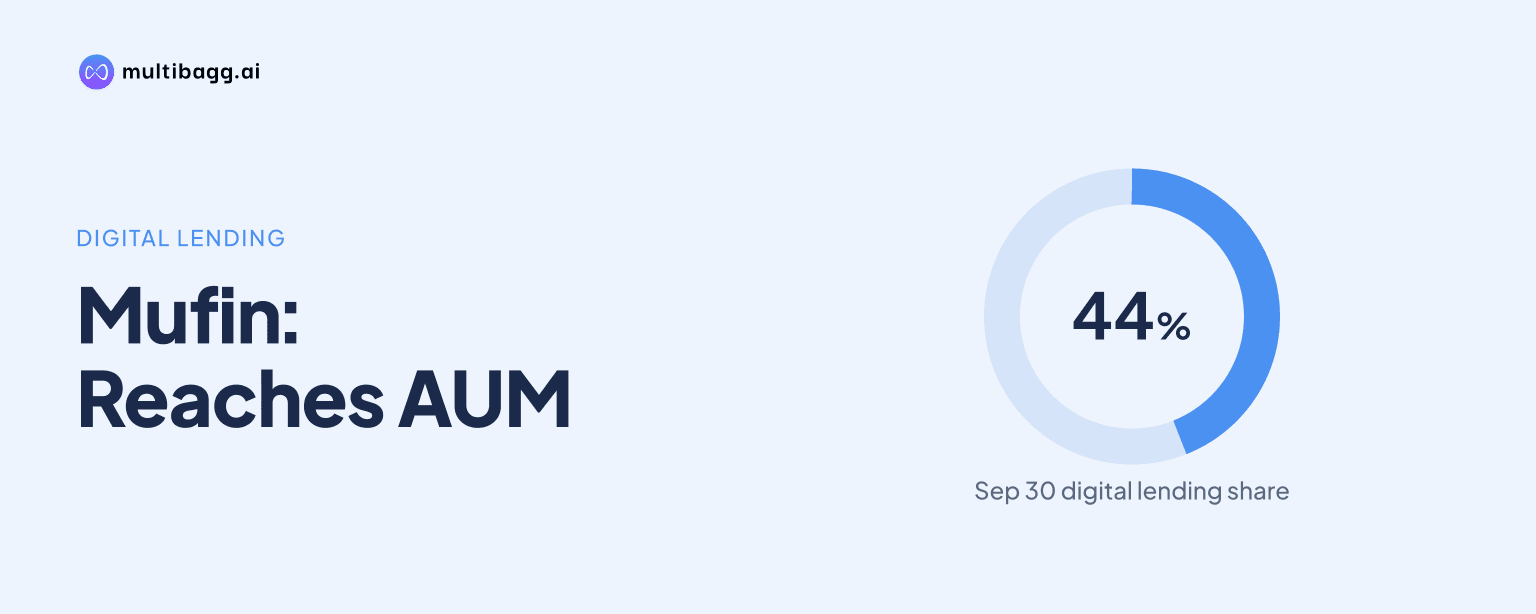
Mufin Green Finance Limited said digital lending reached about 44% of Rs 1,766 crore assets under management, or AUM, at September 30, 2026, led by Rs 686.90 crore of Mediclaim Financing. The shift accompanied a decline in climate financing to 19.1% of AUM and a fall in gross non-performing assets, or NPA, to 1.77% in Q2 FY27.
Know Mufin Green Finance inside out
Results, valuation, peers and who's buying, in one view.
Why is Mufin reducing climate finance?
Mufin is running down climate financing because management said the segment has high operating expenses, while its newer digital products are intended to improve margins. Climate financing accounted for 19.1% of AUM at September 30, 2026, compared with 29.8% in the earlier mix cited by management. Managing Director Kapil Garg said sustainable financing was about Rs 338 crore, down from more than Rs 1,000 crore at an earlier point when the portfolio included rickshaws, buses and battery infrastructure.
Mufin is still making selected retail climate-finance disbursements because some funding lines must be used for electric mobility. Management said its current policies in the electric-vehicle segment are tighter and that about 25% to 30% of lenders had switched, or were switching, towards recognising newer products as impact lending. The remaining climate portfolio included about Rs 100 crore to Rs 110 crore of L3/L5 vehicle loans and Rs 60 crore to Rs 70 crore of battery loans.
Management estimated that about Rs 25 crore of potential pain remained in the climate book, while saying it did not expect a large further slippage to affect the balance sheet. It said 99% of NPA in the electric-vehicle book related to the old portfolio and had already been provided for, distinguishing legacy issues from the newer digital products.
What digital loans now drive Mufin's AUM?
Mufin's Mediclaim Financing and Salary Saathi products together represented about 44% of its Rs 1,766 crore AUM at September 30, 2026. Mediclaim Financing accounted for Rs 686.90 crore, or 38.9% of AUM, while Salary Saathi accounted for Rs 90.61 crore, or 5.1%. Salary Saathi was launched only in February 2026.
Mediclaim Financing funds health-insurance premiums through a digital process that management said sanctions a loan within five minutes. Mufin said it was integrated with more than 10 insurance partners, with an average ticket size of about Rs 51,000, tenures of two to 60 months and yields of 18% to 24%. The company has used both pass-through certificate, or PTC, and direct-assignment, or DA, securitisations for this book.
Salary Saathi provides personal loans to employees of the Rajasthan and Assam governments through their human resource management system, or HRMS, portals. Management said the application journey takes five minutes and disbursement can follow within one to two hours. Mufin also said it had completed integrations with additional states and had added a product through workforce platform Arthum for contract workers with a one-month tenure.
How did the lending-mix shift affect Mufin's results?
Mufin reported lower NPA ratios alongside AUM growth in Q2 FY27, and management attributed much of the improvement to the move towards digital lending. Gross NPA declined to 1.77% from 1.91% in Q1 FY27, while net NPA fell to 1.50% from 1.63%. Gross NPA was also lower than 2.50% in Q4 FY25, and management said it aims to reduce the measure below 1.50%.
The quarterly figures show that profit before tax rose even as net interest income declined. Mufin reported Rs 19.47 crore of profit before tax in Q2 FY27, compared with Rs 18.82 crore in Q1, while net interest income was Rs 33.27 crore against Rs 35 crore. Management said interest income rose 80.2% year on year, operating expenses increased 27.7%, and profit after tax increased 148.5%.
Management said total NPA was about Rs 30 crore, of which only about Rs 1 crore came from the new book. It said recovery remained possible on that Rs 1 crore, while the balance was from electric-vehicle retail lending. This split supports management's explanation that the 1.77% gross-NPA ratio still mainly reflects the legacy portfolio.
Got a follow-up? Ask IRIS
Can Mufin grow digital lending without more staff or equity?
Mufin said its digital model has increased AUM per employee while reducing headcount, and management does not expect to need fresh equity before AUM reaches about Rs 3,000 crore to Rs 3,500 crore. Employee count fell from around 500 in FY26 to 306 in Q2 FY27, against management's FY27 target of 300. AUM per employee increased from Rs 1.89 crore to Rs 5.77 crore.
The company is targeting approximately Rs 2,500 crore of AUM by the end of FY27, compared with Rs 1,766 crore at September 30, 2026. From March 2026 to September 2026, AUM rose from Rs 1,541 crore to Rs 1,766 crore, borrowings increased from Rs 1,398 crore to Rs 1,746 crore, and net worth rose from Rs 575 crore to Rs 604 crore. Total assets increased from Rs 2,027 crore to approximately Rs 2,400 crore.
Debt-to-equity rose to 2.89 times at September 30, 2026, from 2.43 times in March 2026. Management said lenders generally permit leverage of about four times and cited profits, lower salary costs and lower borrowing costs as support for funding requirements over the next two financial years. Mufin also said its cost of borrowing had fallen by more than 100 basis points over the preceding year as it added lenders including State Bank of India, Indian Overseas Bank, Union Bank of India and IDBI Bank.
What is Mufin's next lending model through Arthum?
Mufin plans to finance contract workers through Arthum using a wallet-based repayment mechanism, with management indicating pricing of about 3% to 5% per month. Mufin holds a 20% stake in Arthum. Under the proposed model, worker eligibility would depend on days worked and salary, while contractor payments would enter the wallet before the instalment and interest are deducted.
Management said Arthum loans could have a 45-day duration, requiring continuous funding rather than a large outstanding loan book. Mr. Garg said monthly disbursements could reach Rs 1,200 crore to Rs 1,500 crore, which was an aspiration rather than reported performance. Separately, management said Mufin planned to enter life-insurance financing in about a month, subject to hurdles it did not specify.
Conclusion
Mufin's Q2 FY27 disclosures show a substantive lending-mix shift: Mediclaim Financing and Salary Saathi made up about 44% of Rs 1,766 crore AUM, while climate financing fell to 19.1%. Gross NPA declined to 1.77%, and management said only about Rs 1 crore of approximately Rs 30 crore of total NPA arose from the new loan book.
The next measures to watch are Mufin's progress towards its approximately Rs 2,500 crore FY27 AUM target and management's stated goal of reducing gross NPA below 1.50%. The disclosed plans to launch life-insurance financing in about a month, expand the Arthum product and transition lenders from climate-linked funding will determine how quickly the digital mix can expand further.