










Mukka Proteins Limited sets out 1,400-TPD BSF network in 3 cities
Key highlights
- Mukka Proteins discloses 1,400 TPD of Black Soldier Fly capacity across Bengaluru, Mangaluru and Kochi.
- Bengaluru represents 1,000 TPD of capacity, while Mangaluru and Kochi are each listed at 200 TPD.
- Mukka Proteins lists five BSF outputs: insect meal, insect oil, insect compost, humic acid and briquettes.
- Aquaculture accounts for 91% of Mukka Proteins’ disclosed fishmeal end use.
powered by IRIS
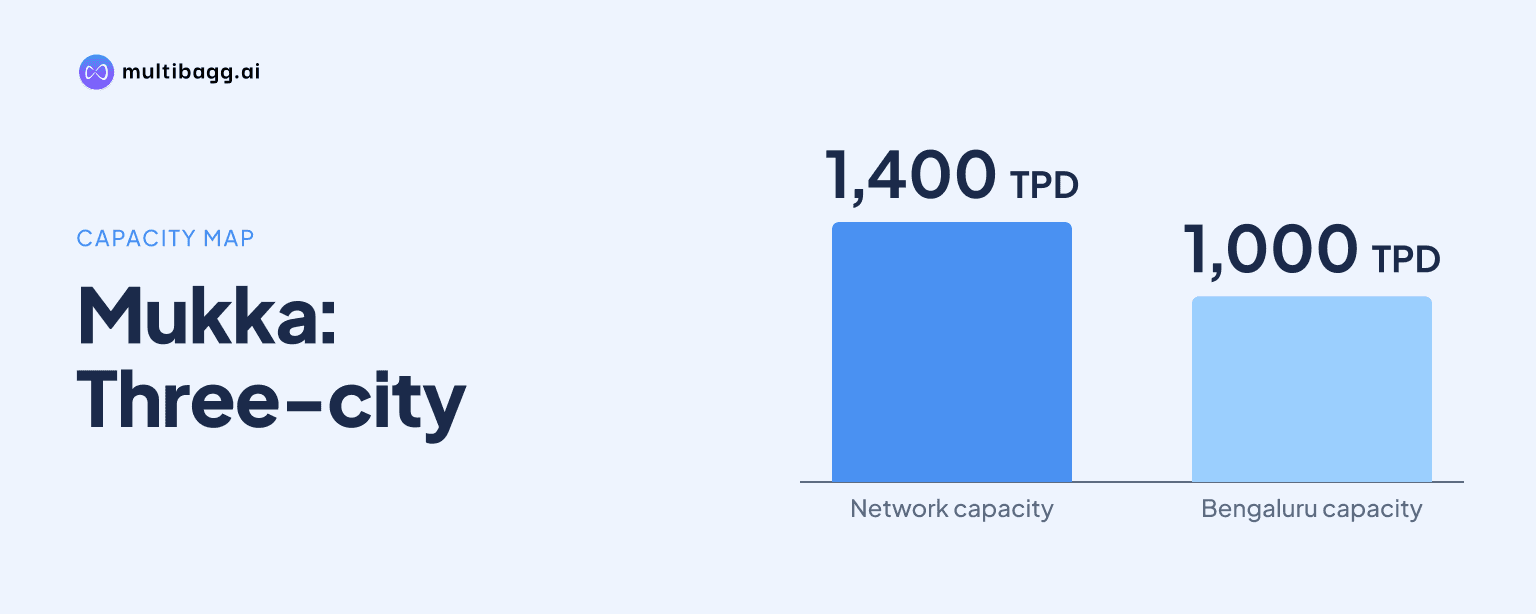
Mukka Proteins has set out a 1,400-tonnes-per-day, or TPD, Black Soldier Fly network across Bengaluru, Mangaluru and Kochi. The disclosed capacity is led by a 1,000-TPD Bengaluru site, with 200 TPD each in Mangaluru and Kochi, to convert organic waste into feed ingredients, soil inputs and briquettes.
Know Mukka Proteins inside out
Results, valuation, peers and who's buying, in one view.
What is Mukka Proteins’ Black Soldier Fly platform?
Mukka Proteins’ alternate-protein platform uses Black Soldier Fly, or BSF, insect biotechnology to convert organic waste into proteins, oils and soil nutrients. The presentation identifies municipal wet waste as the input, BSF processing as the mechanism and insect protein plus compost bio-inputs as high-value outputs.
The platform is broader than an insect-meal operation because Mukka Proteins lists five products: insect meal, insect oil, insect compost, humic acid and briquettes. It presents these products as a combined feed and agricultural-inputs portfolio, with applications spanning aqua feed, poultry feed, animal and pet feed, agriculture, horticulture, hydroponics and commercial heating.
Mukka Proteins describes itself as India’s first large-scale BSF processor at municipal solid-waste, or MSW, sites and as an official city-corporation waste partner. Those are company characterisations in the presentation, which also links BSF processing with a circular food economy, zero waste, zero landfill and zero leachate outcomes.
How is Mukka Proteins’ 1,400-TPD capacity distributed?
Mukka Proteins assigns 1,000 TPD of its stated 1,400-TPD BSF capacity to Bengaluru, while Mangaluru and Kochi are each listed at 200 TPD. Bengaluru therefore accounts for 71.4% of the disclosed capacity, compared with 14.3% for each of the two coastal locations.
Bengaluru’s 1,000-TPD listed capacity is five times the 200 TPD shown for either Mangaluru or Kochi, and 2.5 times their combined 400 TPD. The presentation does not disclose commissioning dates, capacity utilisation, output volumes, capital expenditure, waste-supply contracts or revenue for the three locations, so the 1,400-TPD figure is disclosed capacity rather than reported production.
Which products will Mukka Proteins make from BSF processing?
Mukka Proteins lists insect meal as a high-protein, digestible feed ingredient and insect oil as a high-energy, lauric-acid-rich oil. The presentation connects these two products with aqua feed, poultry feed and animal and pet feed, but provides no protein percentage for insect meal or nutritional specification for insect oil.
The other three products are positioned outside direct feed use. Mukka Proteins describes insect compost as a nutrient-rich compost for soil fertility and plant health, humic acid as a natural soil enhancer that improves nutrient availability, and briquettes as high-energy fuel made from BSF waste residues.
The product range means that Mukka Proteins presents residual material from BSF processing as an input for compost, humic acid or briquettes rather than only as waste. The source does not give sales volumes, realised prices, customer names or revenue by any of the five products.
Got a follow-up? Ask IRIS
How does Mukka Proteins’ BSF platform relate to its fishmeal business?
Mukka Proteins positions insect protein as a fishmeal substitute intended to reduce dependence on marine protein while serving its core aquafeed customers. The stated connection is relevant because aquaculture accounts for 91% of the company’s disclosed fishmeal end use, compared with 5% for poultry, 3% for swine and 1% for other uses.
The BSF platform and fishmeal business use different raw materials and processes. Mukka Proteins describes fishmeal as being produced from sustainably sourced pelagic fish at a mechanised coastal plant in Mangalore, while the BSF platform uses organic and municipal wet waste to produce insect protein and bio-inputs.
The presentation gives fishmeal a protein content of 60% to 65%, but calls insect meal only high-protein without a percentage. As a result, the supplied material supports a strategic comparison between fishmeal and insect protein, but not a numerical comparison of protein content, feed performance or substitution rates.
What environmental outcomes does Mukka Proteins associate with BSF processing?
Mukka Proteins associates BSF processing with zero leachate, zero landfill, zero waste and the elimination of greenhouse gas. Its stated mechanism is to process municipal wet waste into insect protein and compost bio-inputs rather than disposing of organic waste as landfill.
The presentation does not quantify wet waste processed, landfill diversion, emissions avoided, water use, carbon credits or the environmental performance of the 1,400-TPD network. Its environmental claims therefore describe the intended circular-processing model rather than measured outcomes for the three listed capacities.
The BSF business is presented alongside a separate waste-management and environmental-solutions activity that includes municipal wet-waste processing and leachate treatment for government bodies. That segment identifies municipal fees as its revenue source and future carbon credits as potential upside, but the presentation does not state that the BSF sites form part of the Bengaluru leachate-treatment project valued at Rs 474.89 crore excluding goods and services tax.
Conclusion
Mukka Proteins has disclosed a three-city BSF platform with 1,400 TPD of capacity, centred on Bengaluru’s 1,000 TPD and supplemented by 200 TPD each in Mangaluru and Kochi. Its strategic model combines potential fishmeal-substitute feed products, including insect meal and oil, with compost, humic acid and briquettes derived from the same waste-to-value process.
What to watch next is whether Mukka Proteins discloses commissioning status, utilisation, waste-supply arrangements, product specifications, sales volumes and revenue from the five-product portfolio. Management’s presentation identifies municipal partnerships and 1,400 TPD of capacity, but does not provide an operational target, financial target or production timeline for the BSF network.