










Nath Seeds H1 revenue rises 13% while EBITDA declines 11%
Key highlights
- Nath Seeds’ H1FY27 revenue rose 13% to Rs 360.1 crore.
- Nath Seeds’ H1FY27 EBITDA declined 11% to Rs 41 crore, with margin falling to 11% from 14%.
- Nath Seeds’ H1FY27 finance cost rose 50% to Rs 9.3 crore.
- Paddy, cotton and bajra accounted for 76% of Nath Seeds’ H1FY27 sales.
powered by IRIS
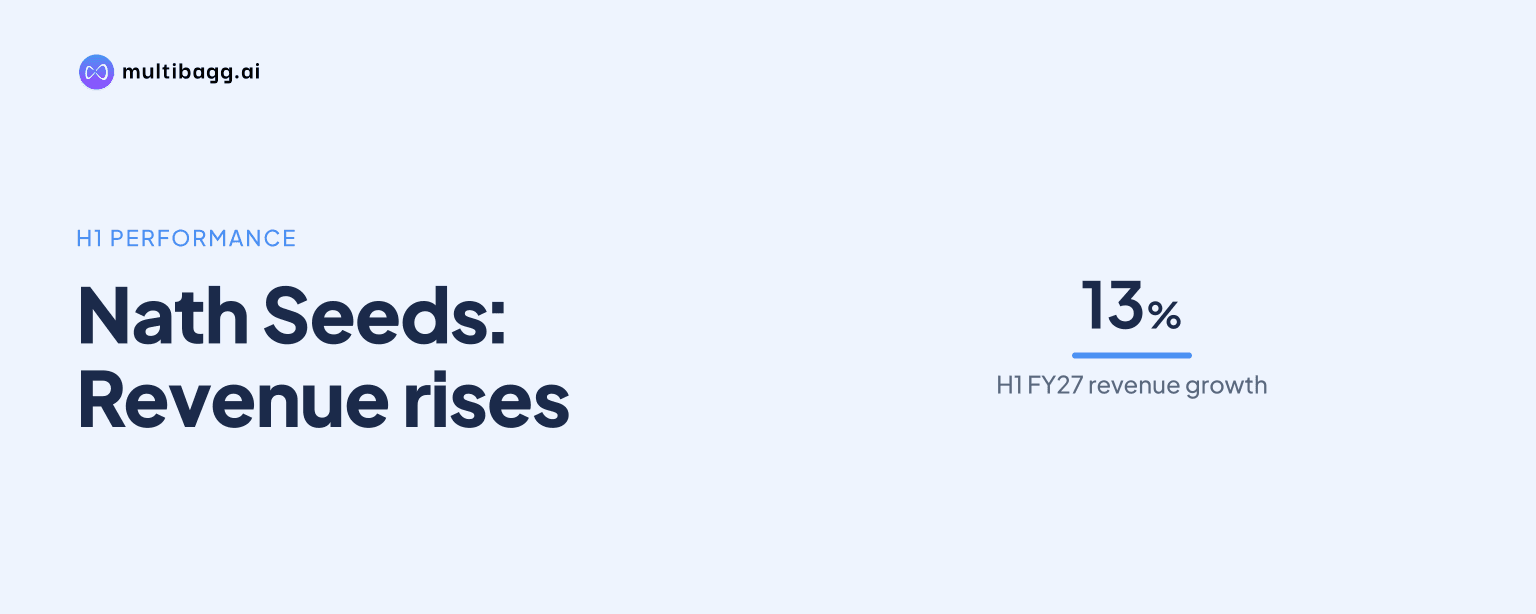
Nath Bio-Genes reported H1FY27 revenue of Rs 360.1 crore, up 13% year on year, but EBITDA declined 11% to Rs 41 crore and PAT excluding extraordinary items fell 18% to Rs 34.9 crore. Finance cost increased 50% to Rs 9.3 crore, while EBITDA margin declined to 11% from 14%.
Know Nath Bio-Genes (India) inside out
Results, valuation, peers and who's buying, in one view.
Why did Nath Seeds’ H1FY27 earnings decline despite revenue growth?
Nath Seeds’ earnings declined below the gross-profit line even as H1FY27 revenue and gross profit each increased 13%. Revenue rose by Rs 40.2 crore to Rs 360.1 crore from Rs 319.9 crore in H1FY26, while gross profit increased by Rs 21.5 crore to Rs 192.2 crore. EBITDA fell by Rs 5.1 crore, and profit before tax, after adjustment for an exceptional item, declined by Rs 7.2 crore.
Nath Seeds reported a 53% gross margin in both H1FY27 and H1FY26, but EBITDA margin declined to 11% from 14%. Finance cost, which is recorded after EBITDA, rose to Rs 9.3 crore from Rs 6.2 crore, while depreciation was unchanged at Rs 2 crore. The presentation does not identify the operating-cost movements behind the decline in EBITDA.
Which crops accounted for Nath Seeds’ H1FY27 sales?
Nath Seeds’ H1FY27 crop mix was led by paddy at 37% of sales, cotton at 26% and bajra at 13%, together representing 76% of reported sales. Management said paddy maintained stable performance because of a good monsoon in the Northern region. Cotton remained the second-largest contributor by sales value.
The segmental revenue mix shifted from H1FY26, when cotton contributed 36% and paddy contributed 27%. In H1FY27, paddy’s share was 10 percentage points higher at 37%, while cotton’s share was 10 percentage points lower at 26%; other segments remained at 37% in both periods. The presentation defines others in this comparison as jowar, bajra, maize, mustard and wheat.
Cotton packet volume was 10.6 lakh in H1FY27 and declined 2.29%, which management attributed to the monsoon. Beyond the three largest crops, maize contributed 6% of sales, mustard and vegetables each contributed 5%, PNS contributed 3%, jowar contributed 2%, and wheat and other field crops contributed 1%.
Got a follow-up? Ask IRIS
What did Nath Seeds report for Q2FY27?
Nath Seeds reported a 6% year-on-year decline in Q2FY27 revenue to Rs 37.3 crore, in contrast with the 13% increase for H1FY27. Q2 gross profit rose 9% to Rs 29.3 crore, and gross margin increased to 79% from 68%. EBITDA nevertheless declined 17% to Rs 6 crore, with EBITDA margin falling to 16% from 18%.
Finance cost rose by Rs 2.2 crore in Q2FY27 to Rs 5.5 crore, while other income declined to Rs 1.8 crore from Rs 1.9 crore. Tax was Rs 90 lakh compared with Rs 60 lakh, and the tax rate was 28% versus 13%. Earnings per share were Rs 1.19, down from Rs 2.21 in Q2FY26.
How have Nath Seeds’ debt and margins changed through FY26?
Nath Seeds reported FY26 net debt of Rs 51 crore, compared with Rs 23.5 crore in FY25 and Rs 32.8 crore in FY24. Net worth increased to Rs 689.3 crore in FY26 from Rs 648.7 crore in FY25. The historical net-debt series shows Rs 88.8 crore in FY22 and Rs 67.2 crore in FY23.
Nath Seeds’ FY26 EBITDA margin was 12%, compared with 14% in FY25 and 15% in FY24, while PAT margin was 9%, down from 11% and 12%, respectively. H1FY27 EBITDA margin of 11% was therefore below the FY26 full-year figure of 12%. The presentation does not disclose an FY27 margin target, debt-reduction plan or explanation for the higher H1FY27 finance cost.
Conclusion
Nath Seeds delivered higher H1FY27 revenue and gross profit, with paddy, cotton and bajra accounting for 76% of sales, but those gains did not translate into higher operating or net profit. EBITDA declined to Rs 41 crore, PBT declined to Rs 36.5 crore and PAT declined to Rs 34.9 crore as EBITDA margin reduced by 3 percentage points and finance cost rose by Rs 3.1 crore.
The disclosed unresolved issues are the operating-cost movements behind the 11% EBITDA decline and the factors behind the 50% rise in finance cost. Management provided no FY27 revenue target, margin target or debt-reduction plan, leaving subsequent results to show whether Q2FY27’s 6% revenue decline and the higher borrowing cost persist.