










NCC Receivable Days Fall to 53 as H1 Operating Cash Turns Positive
Key highlights
- NCC reduced standalone receivable days to 53 in Q2 FY27 from 68 in Q1 FY27.
- NCC reported standalone H1 FY27 operating cash flow of Rs 138 crore, versus a Rs 379 crore outflow in H1 FY26.
- NCC's consolidated H1 FY27 operating cash flow was a Rs 100 crore outflow, compared with a Rs 1,343 crore outflow a year earlier.
- NCC's consolidated net debt rose to Rs 3,887 crore at 30 September 2026 from Rs 2,815 crore at 31 March 2026.
powered by IRIS
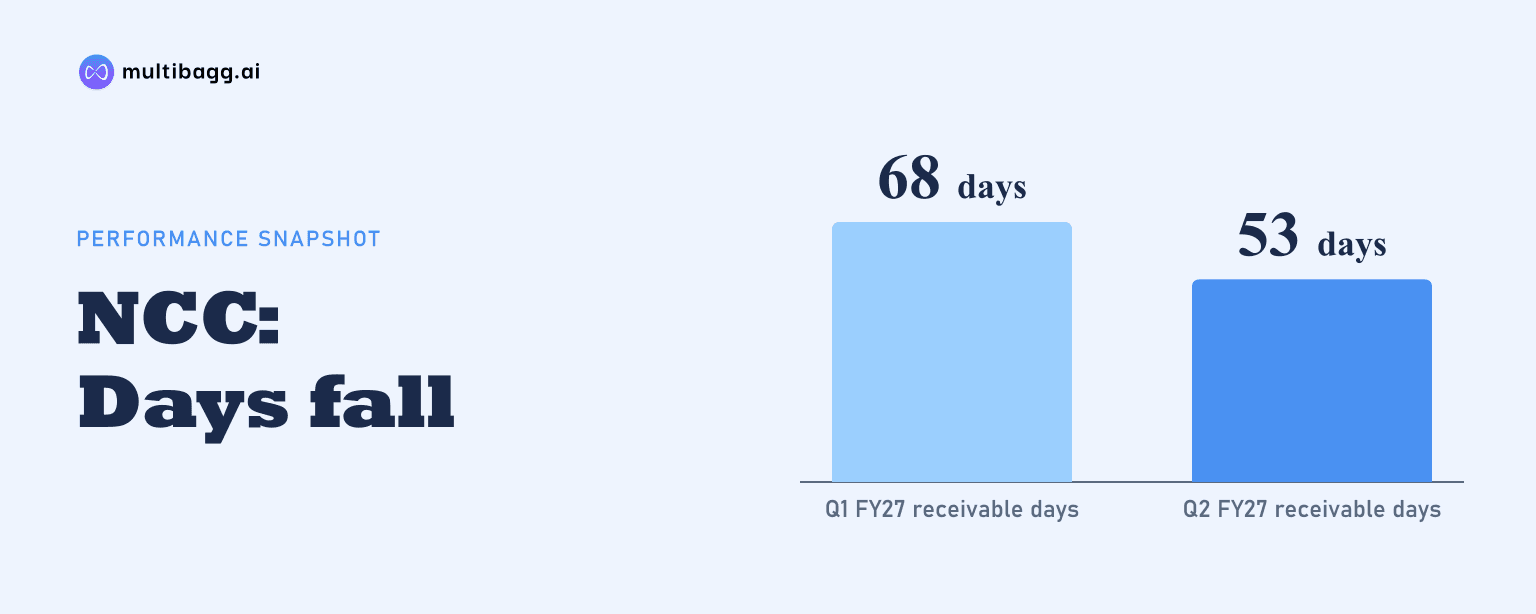
NCC Limited reduced standalone receivable days to 53 in Q2 FY27 from 68 in Q1 FY27, while its H1 FY27 operating cash flow turned positive at Rs 138 crore from an outflow of Rs 379 crore a year earlier. The presentation linked the Q2 improvement to better collections, lower receivables and lower unbilled revenue than at 30 June 2026.
Know NCC inside out
Results, valuation, peers and who's buying, in one view.
How did NCC reduce receivable days in Q2 FY27?
NCC reduced standalone receivable days to 53 in Q2 FY27, down 15 days from 68 in Q1 FY27 and 20 days from 73 in FY26. Trade receivables declined to Rs 2,697 crore at 30 September 2026, compared with Rs 3,055 crore at 30 June 2026 and Rs 3,336 crore at 31 March 2026.
The presentation said collections improved in Q2 FY27. It defines trade receivables as certified bills awaiting payment, so the Rs 358 crore sequential reduction in receivables followed payments against bills that had already received certification.
Unbilled revenue, defined by NCC as work done awaiting client certification, also declined during Q2. It was Rs 7,175 crore at 30 September 2026, Rs 239 crore below the Rs 7,414 crore reported at 30 June, although it remained Rs 500 crore above the Rs 6,675 crore balance at 31 March.
The fall in receivable days did not reduce overall net working-capital days sequentially. Net working-capital days were 96 in Q2 FY27, one day above Q1 FY27's 95 days, while working capital excluding cash and margin-money deposits increased to Rs 5,532 crore from Rs 5,334 crore; both Q2 FY27 and FY26 working capital were 28% of turnover.
Did lower receivables turn NCC's operating cash flow positive?
Yes. NCC reported standalone net cash from operating activities of Rs 138 crore in H1 FY27, compared with an operating cash outflow of Rs 379 crore in H1 FY26. This was a Rs 517 crore year-on-year change and coincided with the lower Q2 balances for trade receivables and unbilled revenue.
Standalone profit after tax, or PAT, was Rs 350 crore in H1 FY27, compared with Rs 292 crore in H1 FY26. The company reported Rs 138 crore of operating cash flow alongside that Rs 350 crore PAT, whereas the prior-year half had Rs 292 crore PAT but a Rs 379 crore operating cash outflow.
Quarterly standalone revenue from operations was broadly unchanged during the collection improvement. Revenue was Rs 4,917 crore in Q2 FY27, compared with Rs 4,912 crore in Q1 FY27, while NCC said certified billing increased and unbilled revenue reduced in Q2.
Positive operating cash flow did not stop cash and cash equivalents from falling during the half. Standalone investing cash flow was an outflow of Rs 284 crore and financing cash flow was an outflow of Rs 261 crore, including the FY26 dividend paid in Q2, resulting in a Rs 407 crore decline in cash and cash equivalents.
Got a follow-up? Ask IRIS
Why did NCC's consolidated operating cash flow remain negative?
NCC's consolidated net cash used in operating activities was Rs 100 crore in H1 FY27, despite the Rs 138 crore standalone operating inflow. The consolidated operating outflow improved from Rs 1,343 crore in H1 FY26, but the presentation does not provide a segment-level reconciliation between standalone and consolidated operating cash flow.
The consolidated cash reduction was also affected by investing activity. Consolidated investing cash flow was an outflow of Rs 390 crore in H1 FY27, compared with an outflow of Rs 247 crore in H1 FY26, while financing cash flow was an inflow of Rs 71 crore against an inflow of Rs 813 crore a year earlier.
Consolidated cash and cash equivalents declined by Rs 419 crore in H1 FY27, compared with a Rs 777 crore decline in H1 FY26. The smaller cash reduction occurred even though the consolidated operating result remained an outflow, because the operating outflow narrowed by Rs 1,243 crore year on year.
NCC's longer standalone record shows that operating cash conversion has varied during interim periods. Full-year FY26 operating cash flow was Rs 886 crore after the Rs 379 crore H1 FY26 outflow, and cumulative operating cash flow from FY22 through FY26 was Rs 5,169 crore against cumulative PAT of Rs 3,026 crore; NCC says cash generation is weighted to the second half.
What changed in NCC's debt and working-capital balances?
NCC's standalone gross debt increased to Rs 2,471 crore at 30 September 2026 from Rs 2,251 crore at 31 March 2026, while net debt increased to Rs 2,293 crore from Rs 2,008 crore. Debt-equity rose to 0.32 times from 0.30 times, even as standalone net worth increased by Rs 212 crore to Rs 7,786 crore.
Working-capital demand loans, cash credit and PID accounted for 59% of standalone gross debt at Q2 FY27. Short-term loans, including current maturities, represented 25%, while long-term loans accounted for 16% of the Rs 2,471 crore gross-debt balance.
At the consolidated level, gross debt rose to Rs 4,110 crore at 30 September from Rs 3,457 crore at 31 March, and net debt increased to Rs 3,887 crore from Rs 2,815 crore. Consolidated current assets increased by Rs 709 crore to Rs 22,952 crore, while current liabilities rose by Rs 315 crore to Rs 16,648 crore.
Other standalone working-capital balances moved differently from receivables in Q2. Retention money increased to Rs 2,547 crore at 30 September from Rs 2,396 crore at 30 June, while mobilisation advances fell to Rs 2,925 crore from Rs 3,163 crore; inventories declined to Rs 1,742 crore from Rs 1,815 crore.
Conclusion
NCC's lower standalone receivable days, reduced Q2 trade receivables and positive H1 operating cash flow show a better cash outcome than in H1 FY26. However, total standalone working capital increased to Rs 5,532 crore, consolidated operating cash flow remained a Rs 100 crore outflow, and consolidated net debt rose by Rs 1,072 crore during the half year.
The next results will indicate whether collections remain sufficient to support NCC's stated second-half-weighted cash generation. Items to watch include unbilled revenue of Rs 7,175 crore, retention money of Rs 2,547 crore, standalone gross debt of Rs 2,471 crore and execution from the Rs 80,167 crore consolidated order book at 30 September 2026.