










Nesterra limits stores to 485 as 10 new collections launch
Key highlights
- Nesterra limits its active retail network to 485 stores to maintain premium positioning.
- Nesterra launched 10 premium collections in addition to 64 existing collections.
- Nesterra was launched in FY21 as Sutlej’s first retail brand.
- Sutlej’s Gujarat home-furnishing facility has capacity of 8.97 million metres per year.
powered by IRIS
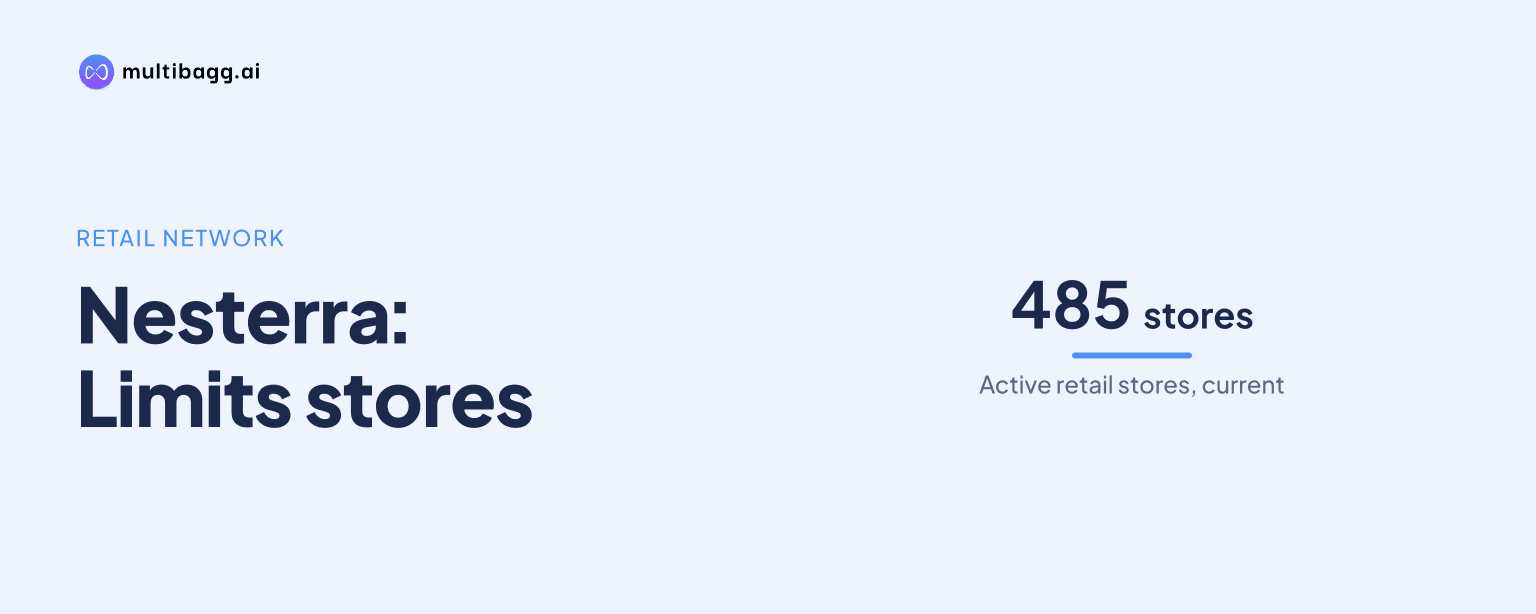
Nesterra limits its active network to 485 stores to maintain premium positioning while adding 10 premium collections to its existing 64 collections. Launched in FY21 as Sutlej Textiles and Industries Limited’s first retail brand, Nesterra is supported by Sutlej’s proprietary yarns, home-furnishing manufacturing capability and trade ordering portal.
Know Sutlej Textiles and Industries inside out
Results, valuation, peers and who's buying, in one view.
Why does Nesterra limit its retail network to 485 stores?
Nesterra limits its total active stores to 485 because management says the restriction maintains the brand’s premiumness. The presentation calls its distribution network fast-growing, but it does not position higher outlet numbers as the stated objective. Instead, the disclosed model combines a controlled physical footprint with expansion of the home-decor product range through 10 new premium collections.
The 485-store figure is a distribution policy, not a disclosed measure of revenue, market share or store productivity. Nesterra provides no prior-period store count, future store-opening target, state-level split or description of the ownership format of the outlets. The available comparison is therefore between the fixed active-store limit of 485 and the collection range, which increased by 10 from the pre-existing 64 collections.
How has Nesterra’s collection range changed?
Nesterra has expanded its disclosed collection range by 10 premium collections, in addition to the 64 collections already available. This gives a total disclosed range of 74 collections following the additions. The presentation does not provide launch dates for individual collections, their price points, sales volumes or their contribution to domestic and export revenue.
The increase in collections alongside the 485-store limit indicates that product variety is being added without a stated increase in physical points of sale. Management says Nesterra has earned recognition from architects and the interior-design community for its distinct offering since its FY21 launch, including use in major projects. However, the presentation gives no count of architects, projects, customers or repeat purchases.
Nesterra sits within Sutlej’s home-textile activities, which list curtains, upholstery and made-ups as product offerings. These three categories establish the group’s furnishing context for a collection-led brand strategy. Sutlej does not identify how the 74 disclosed collections are divided among curtains, upholstery and made-ups, so category mix cannot be quantified from the presentation.
Got a follow-up? Ask IRIS
What manufacturing platform supports Nesterra’s products?
Nesterra’s stated product proposition is supported by Sutlej’s proprietary yarns and manufacturing capability, according to management. This means the brand is intended to draw on an existing textile platform rather than rely solely on front-end retail distribution. The presentation does not disclose the volume of proprietary yarn supplied to Nesterra or the proportion of its collections using particular yarn types.
Sutlej’s Gujarat home-furnishing facility has annual capacity of 8.97 million metres, with 126 shuttleless looms and 42 single-width Dobby shedding looms. The facility makes home-textile products including curtains, upholstery and made-ups. These are group manufacturing figures, and Sutlej does not state how much of the 8.97 million-metre capacity is assigned specifically to Nesterra.
The wider specialised-yarn operation has 408,489 dyed-yarn spindles, of which about 38% are dedicated to mélange yarn and about 62% to various blends. That allocation relates to Sutlej’s yarn business rather than a Nesterra product or sales split. It nevertheless identifies the yarn platform underlying management’s reference to proprietary inputs and manufacturing expertise for the brand.
How does Nesterra serve trade customers and major markets?
Nesterra serves trade customers through a seamless ordering portal developed for the trade. The portal is the only specified digital ordering mechanism in the presentation and operates alongside the 485-store network. Nesterra does not disclose portal user numbers, digital order value, order frequency or the share of trade orders placed online.
Management also says the front-end team’s long-term relationships are intended to help Nesterra enter and grow in major markets. The presentation shows Nesterra serving both domestic and export channels, but gives no country list, export revenue, timing or market-entry milestones for the brand. As a result, the stated market-development mechanism is clear, while its commercial outcome is not quantified.
What should readers separate from Sutlej’s wider textile strategy?
Nesterra’s 485-store cap and 10 new collections are brand-specific disclosures, whereas Sutlej’s strategic priorities apply across the group. Those priorities include portfolio value addition, diversification of customers and geographies, and milestone-based capital triggers. Sutlej does not disclose a Nesterra-specific capital-allocation amount, collection-launch calendar or financial target within those group priorities.
Sutlej reports that Korea and Egypt, opened in FY26, are generating repeat orders for its yarn business. This FY26 development should not be treated as evidence of Nesterra’s overseas retail progress because the presentation assigns it to the specialised-yarn segment. Similarly, the yarn business exports to more than 60 countries, while Nesterra’s own export-country footprint is not disclosed.
Conclusion
Nesterra’s disclosed approach pairs a controlled network of 485 active stores with a broader range of 74 collections after 10 premium additions. The strategy uses Sutlej’s home-furnishing base, including 8.97 million metres of annual Gujarat capacity, and a trade ordering portal to support a premium home-decor offer across domestic and export channels.
The next disclosed item to watch is management’s plan to enter and grow in major markets using the front-end team’s long-term relationships. Sutlej also uses milestone-based capital triggers as a group priority, but the presentation leaves unresolved whether Nesterra will disclose store productivity, portal usage, collection turnover, export contribution or a future store target.