










National Stock Exchange of India GMP Falls 32% Before Listing
Key highlights
- NSE’s GMP fell from Rs 218 on September 11 to around Rs 148 on September 17, a decline of nearly 32%.
- NSE’s GMP was quoted at Rs 125 on September 17 before recovering to around Rs 148 by 3 p.m.
- A September 19 update placed NSE’s GMP at Rs 84, down 61.46% from the Rs 218 peak.
- The Rs 22,562-crore NSE issue crossed full subscription on day two despite the weaker GMP.
powered by IRIS
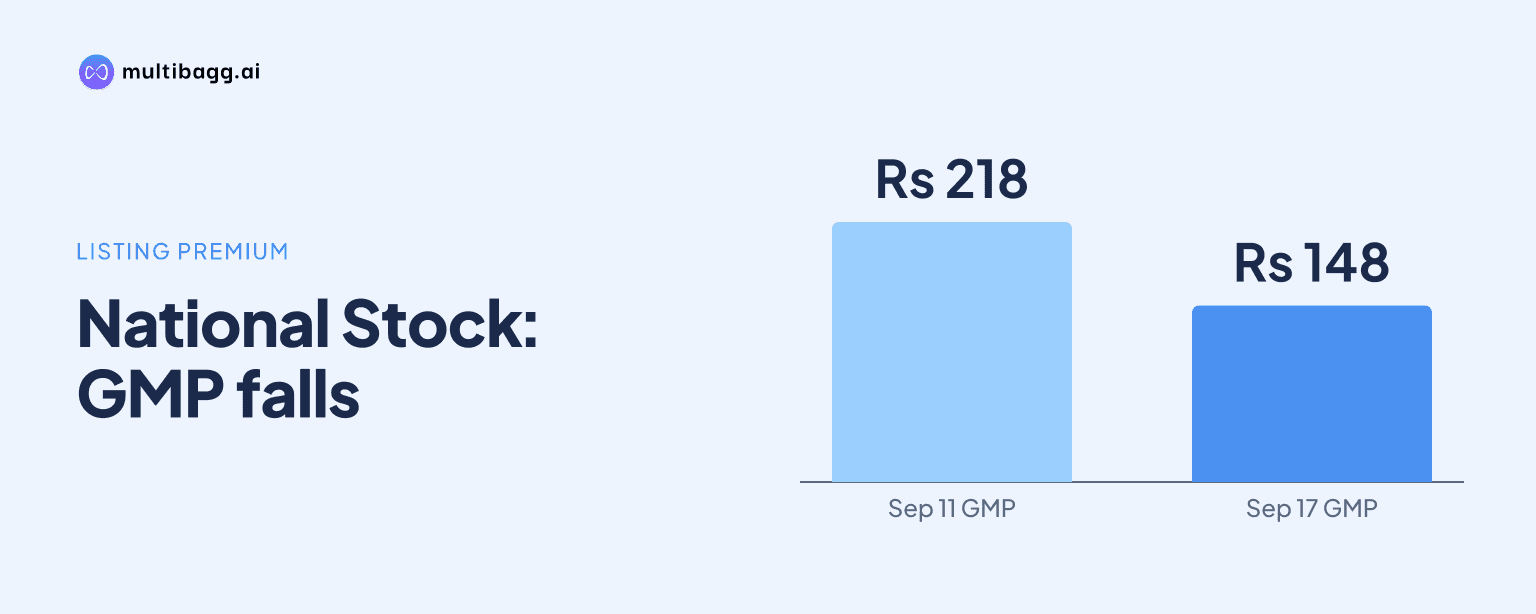
National Stock Exchange of India’s IPO grey market premium fell nearly 32% from Rs 218 on September 11 to around Rs 148 by 3 p.m. on September 17, signalling softer pre-listing sentiment even as the issue opened for public subscription. The move highlights uneven demand across IPOs rather than a uniform decline in investor appetite.
Why did NSE’s grey market premium fall before listing?
NSE’s grey market premium weakened sharply over the week leading into the IPO subscription period. Market reports placed the premium at Rs 218 per share on September 11, followed by Rs 208 on September 12, Rs 210 on September 13, Rs 208 on September 14, Rs 160 on September 15 and Rs 145 on September 16. It was quoted at Rs 125 on September 17 before recovering to around Rs 148 by 3 p.m.
That recovery did not reverse the broader decline. The Rs 148 level was still nearly 32% below Rs 218. A later market update reported that the premium had fallen as much as 61.46% to Rs 84 by 2 p.m. on September 19 from the September 11 peak, showing that pre-listing expectations remained volatile after the issue opened.
What does a lower GMP indicate for an IPO?
A lower GMP indicates that buyers in the unofficial market may be willing to pay less above an IPO’s issue price before listing. It can reflect more cautious expectations for listing-day gains, particularly when the secondary market is volatile or weak.
However, GMP is not an official market metric and does not guarantee a listing premium. It is an informal indication of pre-listing demand, not a confirmed valuation or a substitute for an investor’s assessment of the issue. The NSE issue crossing full subscription on day two despite a reported premium decline also illustrates that subscription activity and grey-market trading can move differently.
Is the decline limited to NSE’s IPO?
The available reports point to a mixed IPO grey-market picture, not a decline confined solely to NSE. Several previous and current issues saw premiums weaken as the broader equity market cooled, while some issues retained substantial premiums.
Computer Age Management Services, or CAMS, reportedly saw its premium fall from Rs 500 to Rs 300 in one period, while UTI Asset Management’s premium halved from Rs 150 to Rs 75. In another update, CAMS and Chemcon Specialty Chemicals each saw premiums fall about 15% in a day. Mazagon Dock Shipbuilders also saw its quoted premium slip to Rs 125 from Rs 140, and Angel Broking was described at different times as thinly traded, at a discount of Rs 4, or facing a lower premium.
Got a follow-up? Ask IRIS
Why are IPO buyers becoming more selective?
The discussion around grey-market activity suggests investors are applying a stronger quality and valuation filter to new issues. Dealers linked softer interest to weakness in listed asset management company shares and redemption pressure on mutual funds in the case of asset-management-related offerings.
Broader market volatility has also influenced sentiment. A reported 812-point fall in the Sensex coincided with lower quoted premiums for CAMS, Chemcon Specialty Chemicals and Angel Broking. Market participants said that if weak momentum continued, some investors could bid less aggressively for IPOs, reducing expected subscription multiples and changing the appeal of buying in the grey market.
Can investors use GMP to estimate listing gains?
Investors can treat GMP as one informal signal of sentiment, but it should not be used as a reliable estimate of listing gains. The reported range of outcomes and changing premiums show how quickly expectations can shift before a stock begins trading.
The context also shows why a single GMP reading needs care. Some issues retained high premiums, including reported strong interest in Chemcon Specialty Chemicals and Mazagon Dock Shipbuilders at certain points, while other premiums declined or turned into discounts. Recent listing outcomes were described as ranging from strong gains to losses below the issue price.
Conclusion
NSE’s premium decline from Rs 218 to around Rs 148 by September 17, followed by the reported fall to Rs 84 by September 19, points to a more cautious grey market. The wider evidence supports a mixed view: volatility has compressed premiums for several IPOs, but demand has not disappeared and appears more selective across issuers.
The next point to watch is how NSE’s grey-market indication changes through the remaining subscription and pre-listing period, alongside broader equity-market conditions. Investors should also monitor the gap between informal premium quotes and actual listing performance, since the sources make clear that GMP does not guarantee a premium on debut.