










National Stock Exchange of India reports ₹2,578 crore Q2 profit
Key highlights
- NSE reported Q2 FY27 consolidated net profit of ₹2,578 crore, up 23% year-on-year.
- Q2 FY27 transaction-charge revenue rose 9% year-on-year to ₹3,035 crore.
- NSE's consolidated expenditure fell 51% year-on-year to ₹1,161 crore in Q2 FY27.
- NSE approved a secondary sale of up to 40% in wholly owned National Coal Exchange of India Limited.
powered by IRIS
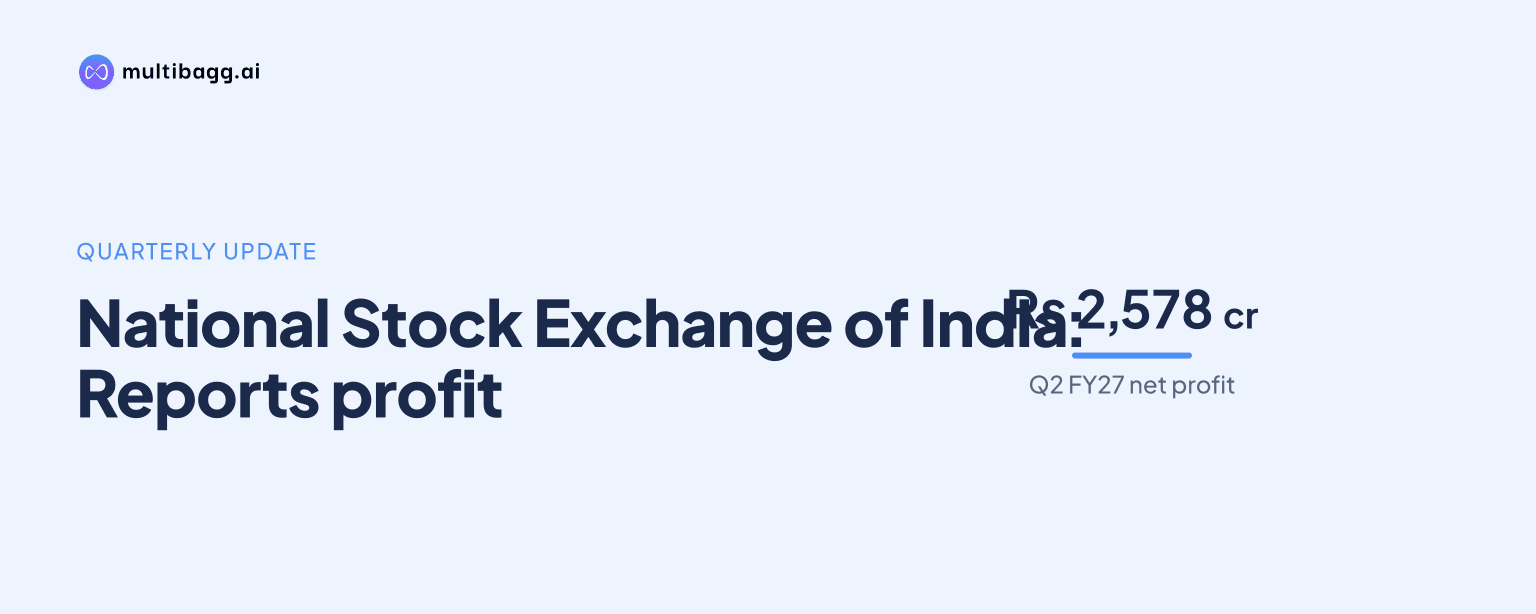
National Stock Exchange of India Ltd reported consolidated net profit of ₹2,578 crore for the quarter ended September 30, 2026, up 23% year-on-year, while its board also approved a plan to sell up to 40% of National Coal Exchange of India Limited. The result reflected higher transaction-charge income and sharply lower expenditure, although profit and revenue declined sequentially.
Know National Stock Exchange Of India inside out
Results, valuation, peers and who's buying, in one view.
What did NSE report for the September 2026 quarter?
National Stock Exchange of India Ltd, referred to as NSE, reported consolidated net profit of ₹2,578 crore in Q2 FY27, compared with ₹2,098 crore in the corresponding quarter a year earlier. Consolidated total income increased 9% year-on-year to ₹4,554 crore from ₹4,160 crore.
Revenue from operations stood at ₹4,067 crore, a rise of 11% from ₹3,677 crore in Q2 FY26. Transaction-charge revenue increased 9% to ₹3,035 crore from ₹2,789 crore. The company attributed this increase to higher volumes in the cash-market and equity-options segments.
Operating EBITDA more than doubled to ₹3,079 crore, representing growth of 107% from the year-ago quarter. EBITDA margin was 76%, while earnings per share, on a non-annualised basis, rose to ₹10.41 from ₹8.48.
The quarterly financial statements were audited, and the auditor issued an unmodified opinion. NSE had scheduled its November 3 board meeting to consider audited standalone and consolidated results for the quarter and half year ended September 30, 2026.
Why did NSE's profitability improve year-on-year?
NSE's year-on-year profit growth was supported by higher trading-related revenue and a substantial reduction in expenditure. Consolidated total expenditure fell 51% to ₹1,161 crore in Q2 FY27 from ₹2,354 crore in the corresponding period of the previous year.
Cash-market activity also increased. Average daily traded volume in the cash segment was ₹1,18,377 crore, up 24% year-on-year. This volume growth, together with activity in equity options, supported the increase in transaction-charge revenue.
For the first half of FY27, consolidated total income rose 9% year-on-year to ₹9,807 crore from ₹8,959 crore. Operating EBITDA increased 45% to ₹6,674 crore, with a 77% EBITDA margin, while consolidated net profit rose 13% to ₹5,698 crore.
The disclosed half-year figures also include revenue of ₹8,627.21 crore for the period ended September 30, 2026. NSE reported net profit of ₹10,302.06 crore and total income of ₹18,713.37 crore for FY26, providing context for the scale of its earnings base before the current financial year.
Got a follow-up? Ask IRIS
How did the Q2 FY27 result compare with the preceding quarter?
NSE's Q2 FY27 performance was lower than Q1 FY27 on a sequential basis despite the year-on-year gains. Net profit declined 17.4% from ₹3,120.1 crore in the preceding quarter to ₹2,575.9 crore, which is reported as ₹2,578 crore on a rounded basis in the year-on-year comparison.
Revenue declined 10.8% quarter-on-quarter to ₹4,066.8 crore from ₹4,560.4 crore. EBITDA fell 13.3% to ₹3,079 crore from ₹3,550.93 crore, and the EBITDA margin contracted to 75.7% from 77.86%.
The prior quarter had reported revenue of ₹4,560.41 crore, operating profit of ₹3,544.13 crore and net profit of ₹3,120.08 crore. Although the September-quarter figures were lower sequentially, the year-on-year comparisons showed increased operating income, profit and cash-market activity.
What is NSE's proposed National Coal Exchange divestment?
NSE approved the divestment of up to a 40% stake in National Coal Exchange of India Limited, its wholly owned subsidiary. The proposed transaction will be undertaken through a secondary sale of equity shares in one or more tranches.
The company said transaction terms remain to be finalised. The board decision is therefore a strategic approval rather than disclosure of a completed sale, valuation, purchaser, transaction timetable or financial proceeds.
A secondary sale would reduce NSE's ownership in the subsidiary if executed. The available disclosure does not state the subsidiary's revenue, profit, valuation or the expected effect of the sale on NSE's future consolidated earnings, so those matters cannot yet be quantified.
How did the result and board decision affect NSE shares?
NSE shares ended at ₹1,803.80 on the BSE on November 3, down ₹24.10, or 1.35%. Before the earnings announcement, the shares had settled 1.31% higher at ₹1,803 apiece, according to the reported intraday update.
For investors, the results showed a mixed sequential picture: annual comparisons improved, but quarterly revenue, EBITDA and profit were below Q1 FY27 levels. The proposed coal-exchange stake sale introduces a potential ownership change, but the financial significance will depend on terms that have not been disclosed.
The broader operating indicators remain relevant because NSE's transaction-charge income is linked to market activity. In the September quarter, cash-market average daily traded volume rose 24% year-on-year, which supported transaction income even as sequential revenue moderated.
Conclusion
NSE delivered a 23% year-on-year rise in Q2 FY27 consolidated net profit to ₹2,578 crore, aided by increased transaction charges and a 51% reduction in expenditure. At the same time, profit, revenue and EBITDA declined from Q1 FY27, showing that the quarterly comparison differed from the stronger year-on-year trend.
Investors will watch for final terms, timing, buyers and valuation for the proposed sale of up to 40% of National Coal Exchange of India Limited. They will also track whether cash-market and equity-options activity continues to support transaction-charge revenue in subsequent quarters.