










Orchid Pharma targets cefiderocol India launch by October 2027
Key highlights
- Orchid Pharma targets a September-October 2027 cefiderocol launch in India.
- The cefiderocol project had received Rs 173 crore of investment by September 30, 2026.
- Orchid Pharma expects manufacturing completion by March 2027 before applying for a new-drug licence.
- Management indicated a manufacturing PBT margin of about 20% to 25% for cefiderocol.
powered by IRIS
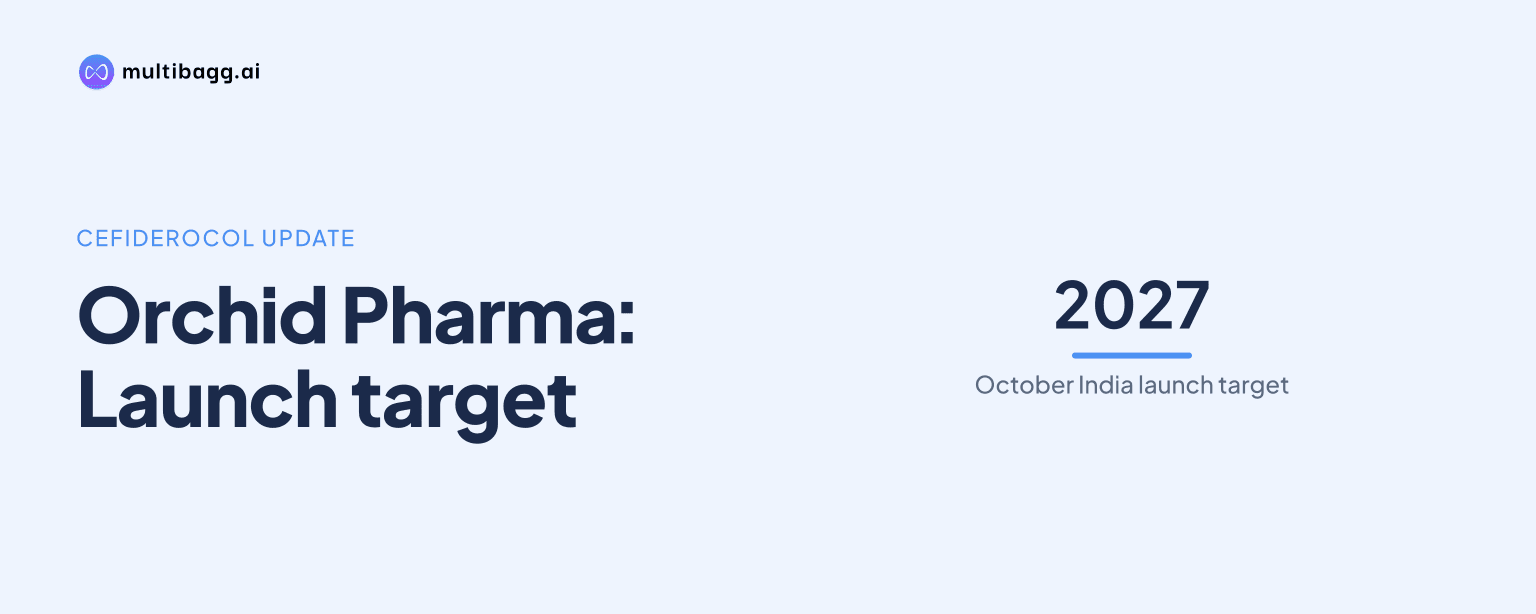
Orchid Pharma Limited is targeting a September-October 2027 cefiderocol launch in India, after investing Rs 173 crore in the project as of September 30, 2026. Management expects manufacturing to be completed by March 2027, followed by a new-drug licence process that it expects could take at least six months.
Know Orchid Pharma inside out
Results, valuation, peers and who's buying, in one view.
When will Orchid Pharma launch cefiderocol in India?
Orchid Pharma is targeting commercialisation in India by September or October 2027, management said on November 17, 2026. The estimate followed a statement that manufacturing should be completed by March 2027, after which Orchid Pharma plans to apply to the Drugs Controller General of India, or DCGI, for a new-drug licence.
The launch schedule has several stages rather than one fixed delivery date. In its prepared remarks, Orchid Pharma said the facility was targeted for commissioning by December 2026, with validation and initial batches planned between January and March 2027. During the question session, management described manufacturing completion by March 2027, followed by the licence application and a regulatory period it expects to take at least six months.
Orchid Pharma had also scheduled an inauguration for January 18, 2027, with Shionogi, the Global Antibiotic Research and Development Partnership, or GARDP, and the Clinton Health Access Initiative, or CHAI, expected to participate. The company distinguished this event from a commercial launch, linking sales to validation, manufacturing approval and other regulatory requirements.
What approvals does Orchid Pharma need before cefiderocol sales?
Orchid Pharma needs successful validation, a manufacturing licence, a new-drug licence and other regulatory clearances before it can sell cefiderocol in India. Management specifically said it was hoping to receive a clinical-trial waiver, which would be material to achieving the September-October 2027 target but was not presented as granted.
The DCGI application will follow manufacturing completion expected in March 2027, according to management. Its expectation of at least six months for the new-drug licence explains why the targeted commercialisation falls in September or October rather than immediately after validation batches in the January-March 2027 period.
Orchid Pharma also said India marketing rights were close to signature. Management stated that GARDP and Shionogi had agreed to grant the marketing licence to Orchid Pharma, while noting earlier that the arrangement was at an “almost signature level.” The commercial agreement therefore remained a closing item at the November 2026 call, even though the company said work towards the arrangement had begun.
How much has Orchid Pharma invested in cefiderocol production?
Orchid Pharma had invested Rs 173 crore in the cefiderocol project as of September 30, 2026. The disclosed investment supports a facility intended to manufacture for 135 low- and middle-income countries, including India, rather than a plant dedicated only to the Indian market.
India is expected to be an important destination within that licence territory. Management said it believed 30% to 40% of cefiderocol could be consumed in India because of the country’s antimicrobial-resistance burden. That is management’s expectation, not a sales forecast or committed purchase volume.
The project sits within Orchid Pharma’s antimicrobial stewardship, or AMS, platform, which management said is being built around products including ORBLICEF and cefiderocol. The AMS business had a quarterly earnings before interest, tax, depreciation and amortisation, or EBITDA, drag of about Rs 1.5 crore in Q2 FY27, showing that the platform was still being developed while cefiderocol remained pre-commercial in India.
Got a follow-up? Ask IRIS
What economics has Orchid Pharma disclosed for cefiderocol?
Orchid Pharma said the manufacturing arrangement is structured around a profit before tax, or PBT, margin of about 20% to 25%. Management clarified that this range applies to manufacturing, while a separate agreement was being negotiated to address the margin for Indian marketing, distribution and related commercial activities.
The distinction matters because manufacturing and Indian commercialisation are separate parts of the programme. Orchid Pharma has stated that it will manufacture cefiderocol for the 135-country territory including India, but the sale and marketing arrangement for India was still nearing signature as of November 17, 2026. No revenue, volume, price or total project-return forecast was disclosed for cefiderocol.
Funding needs were discussed in the context of Orchid Pharma’s broader capital plans. Management said potential fundraising could support cost overruns on the 7-ACA project, repayment of debt taken for the cefiderocol project, and downstream-product investment following environmental and other approvals in Chennai. The company did not disclose a fundraising amount, method or timetable.
How does cefiderocol fit into Orchid Pharma’s wider product plan?
Orchid Pharma is positioning cefiderocol as part of a domestic hospital-focused antimicrobial portfolio. As of the November 2026 call, the AMS platform sold 15 distinct products across 18 stock-keeping units and worked regularly with more than 120 hospitals, while having gained some entry at about 400 hospitals.
The company said its AMS platform had recorded quarterly growth of about 10% to 15% for the previous four quarters. It has added products such as ceftaroline and recently introduced aztreonam plus avibactam, while describing its longer-term focus as antibiotics and antimicrobials used by intensivists, infectious-disease specialists and intensive-care clinicians.
Cefiderocol is separate from Orchid Pharma’s EXBLIFEP licensing programme, although both support the company’s antimicrobial strategy. Management said EXBLIFEP royalties and licensing fees were improving each quarter, whereas cefiderocol had not yet entered Indian commercial sales. The distinction is important because the cefiderocol timetable depends on manufacturing validation and new-drug regulatory steps.
Conclusion
Orchid Pharma’s stated September-October 2027 cefiderocol launch target is supported by Rs 173 crore of investment and a planned manufacturing completion in March 2027, but it remains conditional. Validation, a manufacturing licence, a DCGI new-drug licence, a clinical-trial waiver and final commercial arrangements must all progress before India sales can begin.
The next milestones to watch are the December 2026 commissioning target, the January-March 2027 validation and initial-batch period, and the planned DCGI application after manufacturing completion in March 2027. Orchid Pharma may also provide updates on finalising the India marketing agreement with GARDP and Shionogi and on the hoped-for clinical-trial waiver.