








PBA Infrastructure Ltd. CoC clears resolutions by e-voting
Max Plan at ₹4,999/yr₹8,999

Find your next multibaggerBe a Pro Investor
Research stocks and track your picks on the go. Download the app.
Key highlights
- PBA Infrastructure’s second Committee of Creditors meeting was held on 28 October 2026.
- CoC resolutions were approved through e-voting with support of 78.45% to 95.79% of voting shares.
- The approved matters covered legal counsel, asset security, CIRP costs and GST registration.
- PBA Infrastructure reported FY26 revenue of ₹24.84 crore, compared with ₹45.88 crore in FY25.
powered by IRIS
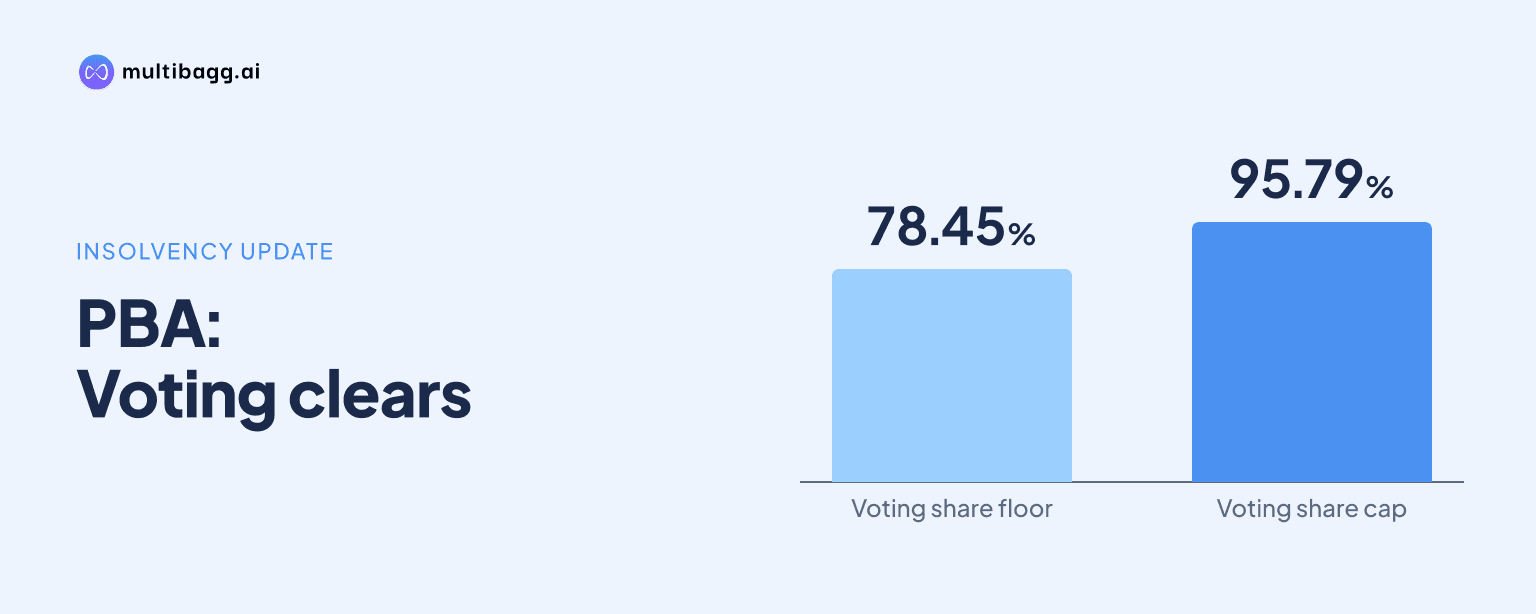
PBA Infrastructure Ltd. said resolutions at its second Committee of Creditors meeting, held on 28 October 2026, were approved through e-voting with support ranging from 78.45% to 95.79%. The decisions cover legal counsel, asset security, CIRP costs and GST registration during the company’s insolvency resolution process.
Know P B A Infrastructure inside out
Results, valuation, peers and who's buying, in one view.
What did PBA Infrastructure Ltd. disclose about the CoC meeting?
PBA Infrastructure Ltd. disclosed that its second Committee of Creditors, or CoC, meeting took place on 28 October 2026. The filing reported that resolutions placed before creditors were subsequently approved through the e-voting process.
The resolutions concerned the appointment or engagement of legal counsel, security of the company’s assets, costs associated with the Corporate Insolvency Resolution Process, or CIRP, and GST registration-related matters. The filing did not provide individual resolution-wise voting percentages, but stated that approval levels ranged from 78.45% to 95.79% of voting shares.
The disclosure is relevant because CoC approvals form part of the operating framework for a company undergoing CIRP. The decisions address administrative, legal and compliance requirements while the insolvency process is in progress.
Which resolutions received creditor approval?
The approved resolutions related to legal counsel, asset security, CIRP costs and GST registration. These are the four areas specifically identified in the filing as having been considered through the creditor voting process.
Legal counsel can assist the resolution professional and creditors on matters arising under the Insolvency and Bankruptcy Code and related proceedings. Asset security concerns the safeguarding of company property during CIRP, while CIRP costs concern expenses incurred in conducting the process.
The GST registration matter relates to indirect-tax compliance during the resolution period. The filing does not set out the detailed terms, counterparties, cost amounts or implementation dates for any of the resolutions. Therefore, the reported approval range is the available measure of creditor support.
Why is PBA Infrastructure under CIRP?
PBA Infrastructure entered corporate insolvency resolution after the National Company Law Tribunal, Mumbai Bench-VI, admitted a Section 7 petition filed by Canara Bank. The tribunal order dated 29 September 2026 appointed Vijay Pitambar Lulla as interim resolution professional and imposed a moratorium.
According to the reported background, the moratorium covers suits, asset transfers and enforcement actions against the company, subject to the provisions of the Insolvency and Bankruptcy Code. The resolution professional manages the process while the CoC, comprising financial creditors, considers matters requiring creditor approval.
The company’s recent financial disclosures provide context for the insolvency process. PBA Infrastructure reported revenue of ₹24.84 crore in FY26, compared with ₹45.88 crore in FY25. It also reported a net loss of ₹820.17 crore in FY26, against a net profit of ₹22.22 crore in the preceding year.
Got a follow-up? Ask IRIS
How does the creditor vote matter for PBA Infrastructure’s operations?
The creditor vote enables PBA Infrastructure to proceed with the disclosed legal, security, cost and GST-related actions under CIRP. These decisions relate to the management and administration of the process rather than an announced resolution plan or a conclusion of the insolvency proceedings.
For creditors and investors, the filing records the level of support behind the identified procedural resolutions. The 78.45% to 95.79% range indicates that each disclosed matter received approval, although the filing does not identify which specific resolution received each percentage.
For customers, vendors and employees, the disclosure does not announce changes to contracts, project activity, payments or employment. It also does not provide an update on claims, bidder interest, a resolution applicant or a proposed recovery for financial creditors.
What financial context accompanies the latest filing?
PBA Infrastructure’s latest CoC disclosure follows a period of weak reported financial performance. The company recorded FY26 revenue of ₹24.84 crore, down from ₹45.88 crore in FY25, alongside the reported FY26 net loss of ₹820.17 crore.
For the quarter ended 30 June 2026, PBA Infrastructure reported a standalone net loss of ₹118.10 crore, compared with a loss of ₹34.90 crore in the corresponding quarter of FY26. Reported quarterly revenue was ₹39.10 crore, following a stated 95% decline.
Conclusion
The second CoC meeting of PBA Infrastructure resulted in e-voting approval for resolutions covering legal counsel, asset security, CIRP costs and GST registration. Voting support ranged from 78.45% to 95.79%, documenting creditor consent for these process-related measures after the company entered CIRP in September 2026.
Investors will need to watch for future disclosures from PBA Infrastructure or the resolution professional on subsequent CoC decisions, CIRP milestones, claims, resolution-plan developments and the company’s financial reporting. The present filing does not disclose a resolution applicant, recovery proposal or timeline for completion of the insolvency process.

