










Petronet LNG Limited Q2 PAT rises 53% to ₹1,235 crore
Key highlights
- PLL's Q2 FY27 PAT rose 53% year-on-year to ₹1,235 crore.
- Q2 FY27 LNG throughput increased 12% sequentially to 231 TBTU.
- Operational and commercial efficiencies rose to ₹658 crore from ₹41 crore in Q2 FY26.
- PLL approved an interim dividend of ₹7 per share and has a FY27 capex target of ₹9,000 crore.
powered by IRIS
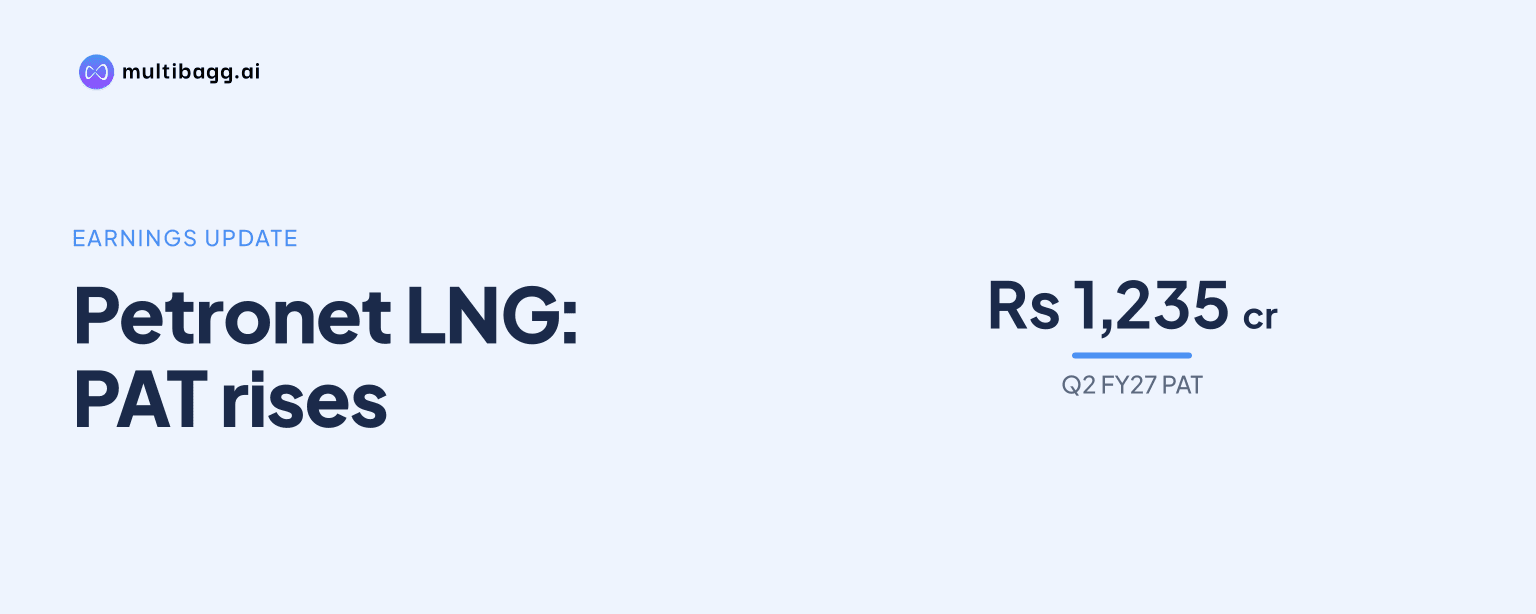
Petronet LNG Limited reported Q2 FY27 profit after tax of ₹1,235 crore, up 53% year-on-year from ₹806 crore, as operational and commercial efficiencies reached ₹658 crore despite disruption to Qatari LNG supplies. The company also processed 231 TBTU of LNG, 12% higher than the preceding quarter.
Know Petronet LNG inside out
Results, valuation, peers and who's buying, in one view.
What did Petronet LNG Limited report for Q2 FY27?
Petronet LNG Limited delivered its highest second-quarter and first-half PBT and PAT, according to management's 3 November 2026 earnings call. Q2 PBT rose 53% year-on-year to ₹1,659 crore from ₹1,083 crore, while PAT increased 9% sequentially from ₹1,133 crore in Q1 FY27.
For the first half of FY27, PLL reported PBT of ₹3,174 crore and PAT of ₹2,368 crore. Both measures were 43% above the corresponding period a year earlier. The board also approved an interim dividend of ₹7 per share, even as the company continued a large capital expenditure programme.
What drove PLL's profit growth during the quarter?
PLL's profit growth was led by operational and commercial efficiencies of ₹658 crore in Q2 FY27, compared with ₹41 crore in Q2 FY26. Management said it will no longer separately disclose trading and inventory gains, instead presenting one combined figure for these gains and related commercial efficiencies.
The company had earlier cited trading gains of ₹301 crore and inventory gains of ₹193 crore during the Apr-Jun 2026 quarter, when spot LNG prices exceeded long-term contract prices amid Gulf supply disruptions. In the latest quarter, the combined efficiency figure was higher than the ₹494 crore reported in Q1 FY27.
Regasification, or service, revenue stood at ₹1,272 crore in Q2 FY27. PLL also reported a foreign-exchange loss of ₹27 crore related to lease accounting. This charge added some earnings volatility but did not prevent the quarter's year-on-year profit expansion.
How did LNG volumes and terminal utilisation change?
PLL processed 231 TBTU of LNG in Q2 FY27, up 12% from 207 TBTU in the preceding quarter and 1% from 228 TBTU a year earlier. Dahej throughput was 216 TBTU, against 192 TBTU in Q1 FY27 and 211 TBTU in Q2 FY26.
Dahej terminal utilisation improved sequentially to 73% from 66%, but remained below 92% in the year-earlier quarter. Overall utilisation was 64%, compared with 58% in Q1 FY27 and 78% in Q2 FY26. The year-on-year decline reflects the expanded capacity base as well as lower available volumes under affected supply arrangements.
Management said force majeure persisted on Qatari long-term contracts. Only six cargoes were delivered against 28 cargoes scheduled in Q2 FY27, reducing the volume available for regasification. The company said Indian LNG demand nevertheless remained resilient, with city gas distribution, fertiliser and power among the supporting sectors.
Got a follow-up? Ask IRIS
What does disrupted Qatar supply mean for India's LNG market?
India imported about 20.15 million tonnes of LNG in the first nine months of calendar 2026, compared with 25.3 million tonnes in all of calendar 2025, according to management. PLL said volumes from the US, Oman, Nigeria, Angola, Trinidad and Australia helped offset lower deliveries from Qatar.
The supply disruption has increased the importance of spot purchases and other supply sources for Indian buyers. For PLL, elevated spot prices relative to long-term contract prices created commercial opportunities during the reported periods, while lower Qatari cargo deliveries constrained regasification volumes.
The Qatari contract situation also has a longer-term relevance for investors. PLL said discussions on renewing long-term contracts that expire in 2028 remain ongoing, with no disclosed timeline for finalisation. This remains an unresolved factor for future contracted LNG availability.
How is PLL funding its expansion and petrochemical project?
PLL has targeted FY27 capital expenditure of ₹9,000 crore. Total capex in the first half stood at ₹1,626 crore, while spending on the petrochemical project was about ₹3,300 crore as of 30 September 2026. Management said major orders have been placed and capex is expected to accelerate in the second half.
The company said the petrochemical project is progressing on schedule. However, no off-taker agreements have been signed for the additional 5 MMTPA capacity. The expansion therefore represents a key operating and commercial item to monitor alongside project execution and future customer arrangements.
The interim dividend indicates that PLL is continuing shareholder distributions while financing its investment plans. At the same time, the lower terminal utilisation and supply disruption show that financial performance is being influenced by both throughput conditions and commercial gains from the LNG market.
Conclusion
PLL's Q2 FY27 results combined higher quarterly LNG throughput with a sharp increase in operational and commercial efficiencies, lifting PAT 53% year-on-year to ₹1,235 crore. The figures also show the differing effects of the market environment: disrupted Qatari supply constrained contracted cargoes, while LNG price differences supported profitability.
Investors will watch the pace of FY27 capex against the ₹9,000 crore target, progress in the petrochemical project, and the signing of off-taker agreements for the additional 5 MMTPA capacity. Developments in talks over long-term contracts due to expire in 2028 and any change in Qatari cargo deliveries will also remain relevant.