










Precision Camshafts targets automation completion by December 2026
Key highlights
- Precision targets completion of phased machine-shop automation by December 2026.
- New grinding technology reduced cycle time by approximately 35% in Q2 FY2026-27.
- Insertable tapping tools delivered 2x tap life, while cutting-tool life improved by approximately 50%.
- Precision reported individual income of Rs 194.96 crore and individual EBITDA of Rs 25.84 crore in the presentation.
powered by IRIS
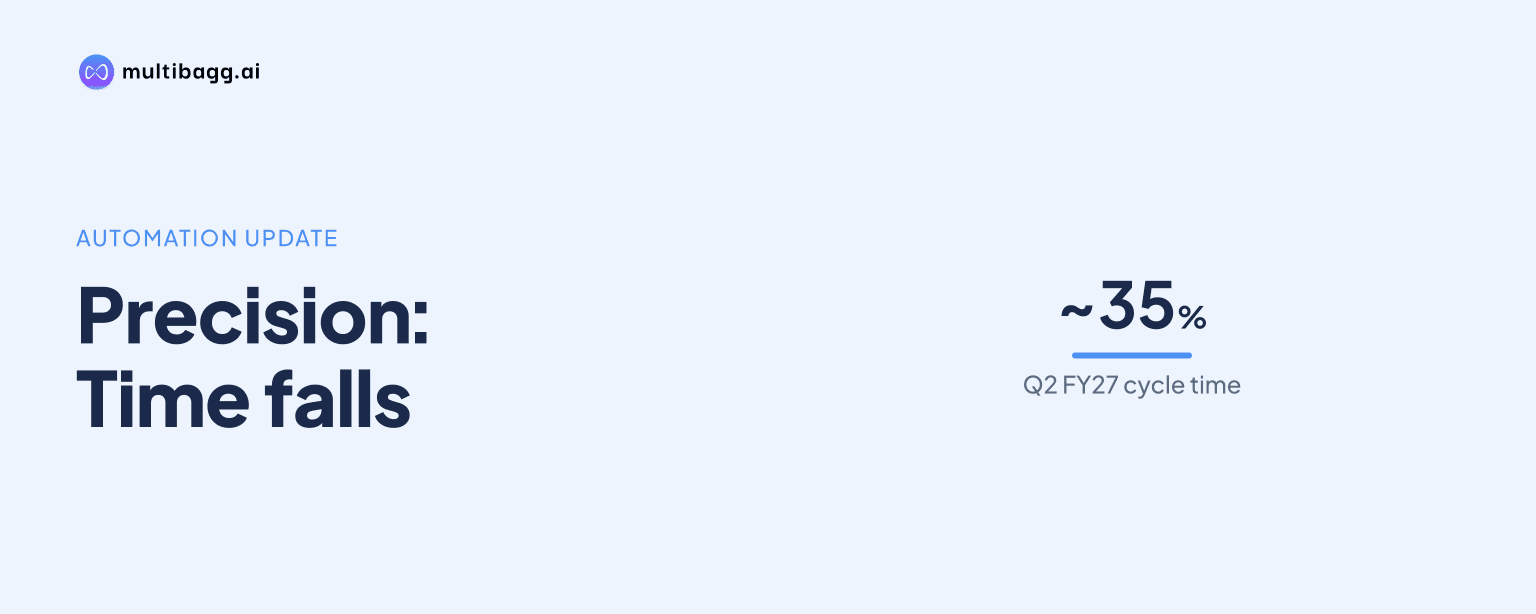
Precision targets completion of its phased machine-shop automation programme by December 2026, after reporting an approximately 35% reduction in grinding cycle time in Q2 FY2026-27. The programme is intended to reduce manpower requirements and conversion costs while improving machine utilisation, productivity and operational efficiency.
Know Precision Camshafts inside out
Results, valuation, peers and who's buying, in one view.
When will Precision complete machine-shop automation?
Precision plans to complete its phased machine-shop automation programme by December 2026. The Q2 FY2026-27 update does not provide a spending figure, number of machines, or interim milestones, but it states that the programme is intended to reduce manpower, improve machine utilisation and raise factory productivity.
The December 2026 target is an operational plan rather than a reported completion. Precision links automation to lower conversion costs, meaning the cost of transforming materials into finished components, and to wider operational efficiency. The presentation does not quantify the expected manpower reduction, machine-utilisation increase or conversion-cost saving from the programme.
What efficiency gains did Precision report in Q2 FY2026-27?
Precision reported several machining, tooling and cost-optimisation measures in Q2 FY2026-27, led by an approximately 35% reduction in grinding cycle time. The initiatives address separate manufacturing stages, from the bill of materials, or BOM, and foundry processes to grinding, tapping and cutting-tool consumption.
Precision said its advanced-grinding technology reduced cycle time by approximately 35% and improved machining accuracy. The presentation does not state the earlier or current cycle time in minutes, the number of machines using the technology, or the resulting output volume.
Precision separately said insertable tapping tools provide 2x tap life and reduce rework, while cutting-tool optimisation improved tool life by approximately 50%. The two measures cover different tool categories: tapping tools create threaded holes, while cutting tools apply more broadly across machining. Precision does not disclose baseline tool lives, unit tooling costs, or realised savings from either measure.
How does the efficiency programme fit Precision’s reported operations?
Precision was the largest contributor among the three businesses shown in the presentation’s individual-income chart, with income of Rs 194.96 crore, compared with Rs 15.83 crore for MEMCO and Rs 10.89 crore for EMOSS. The performance slide does not state the reporting period for these figures, so they cannot be treated as Q2 FY2026-27 revenue.
Precision reported individual earnings before interest, taxes, depreciation and amortisation, or EBITDA, of Rs 25.84 crore, versus Rs 1.25 crore for MEMCO and negative Rs 0.48 crore for EMOSS. This comparison places the machine-shop programme within the presentation’s largest reported individual business, but the company does not allocate the 35% grinding-cycle improvement or December 2026 automation plan to a stated income or EBITDA effect.
Got a follow-up? Ask IRIS
What is Precision doing beyond machine-shop automation?
Precision is retrofitting machines with a local technology partner to establish in-house assembled-camshaft capabilities. The Q2 FY2026-27 research and development update says this localisation initiative is intended to support growing assembled-camshaft demand, improve technological self-reliance and expand manufacturing capability.
The retrofitting initiative is distinct from the phased machine-shop automation target for December 2026. Automation is described through manpower, utilisation and conversion-cost objectives, whereas the retrofit work focuses on local assembly capability for camshafts. Precision does not disclose a completion date, capital cost, production capacity or customer programme for the assembled-camshaft initiative.
Which production programmes could follow these factory improvements?
Precision said a Maruti Suzuki project started production, or SOP, in July 2026 with estimated annual revenue potential of about Rs 50 crore, while M&M new projects began SOP in September 2026 with estimated annual revenue potential of about Rs 25 crore. These are separate customer-programme updates, and the presentation does not state that automation or grinding technology enabled their launches.
A Maruti Suzuki new-platform nomination received in September 2026 has a June 2030 SOP target and estimated annual revenue potential of about Rs 50 crore, according to Precision. Hyundai business awarded through a Tier 1 supplier covers about 7 lakh camshafts annually, with tentative SOPs in April 2027. These future dates make the December 2026 automation deadline a relevant operating milestone, although Precision gives no direct capacity linkage.
Conclusion
Precision’s Q2 FY2026-27 update combines a December 2026 automation target with reported process improvements, including an approximately 35% reduction in grinding cycle time, 2x tap life and approximately 50% longer cutting-tool life. Together, the measures target throughput, tooling consumption, rework, accuracy and conversion costs, rather than one disclosed financial outcome.
The next disclosed milestone is completion of automation by December 2026, with no quantified manpower, utilisation or conversion-cost outcome yet provided. Investors can also watch tentative Hyundai SOPs in April 2027, the June 2030 Maruti Suzuki new-platform SOP target, and progress on the assembled-camshaft retrofit initiative, for which Precision has not disclosed a completion date.