










PVR INOX says streamers favour theatrical-first film releases
Key highlights
- PVR INOX said streamers have retreated from aggressive direct-to-digital film acquisitions over the past three to four years.
- PVR INOX said micro-budget, mid-sized and big-budget films are all currently active in theatrical release pipelines.
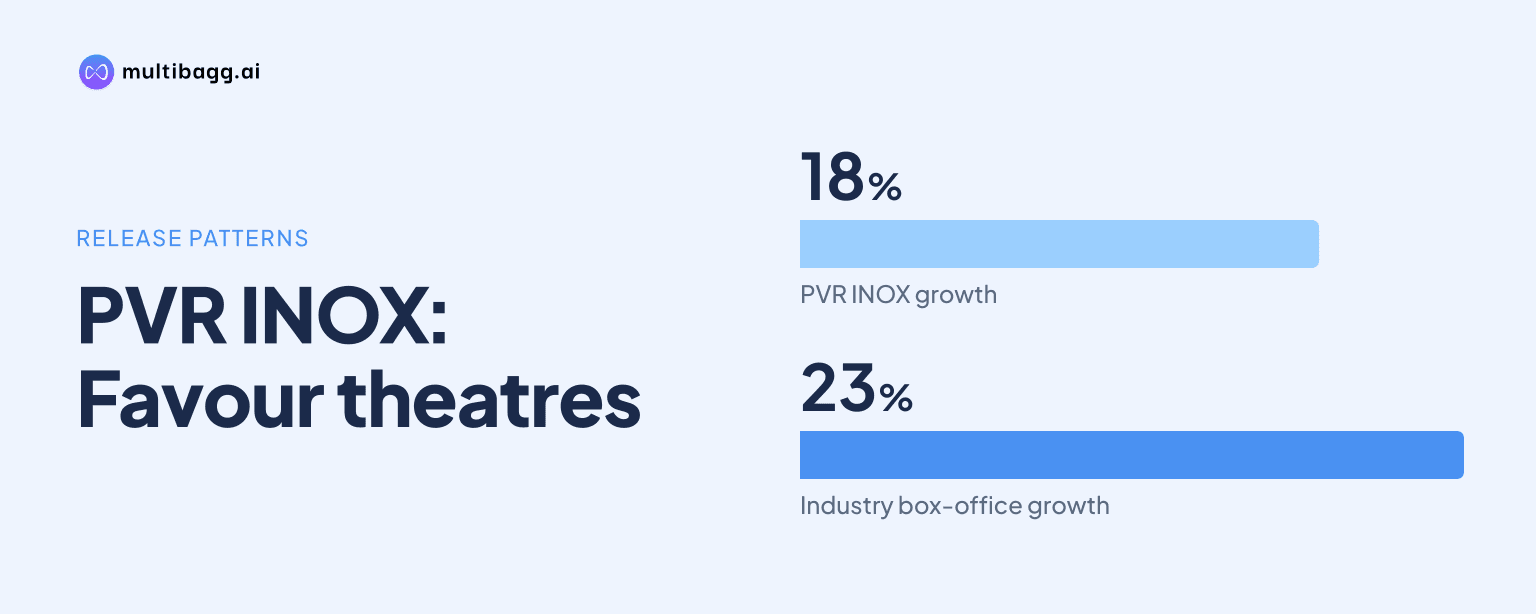
- PVR INOX growth was about 18% versus industry box-office growth of about 23% in the period discussed.
- PVR INOX said 35% to 40% of its annual new screens over the past two to three years opened in South India.
powered by IRIS
PVR INOX said in Q2 FY27 that streaming platforms had retreated from aggressive direct-to-digital film acquisitions seen over the previous three to four years, as theatrical-first releases provide a pay-per-view window before platform distribution. Management said the change has supported supply across micro-budget, mid-sized and large theatrical films.
Know PVR Inox inside out
Results, valuation, peers and who's buying, in one view.
Why are streamers changing film acquisition strategies?
PVR INOX said streamers are now less aggressive in acquiring films for direct release on their platforms than they were during the past three to four years. Kamal Gianchandani said platforms had concluded that the established sequence of releasing a film in cinemas before exploiting it on other platforms was more viable for both theatrical exhibition and streaming.
PVR INOX said the distinction is that theatrical exhibition operates as a pay-per-view model while streaming is primarily subscription-led. Management said this has introduced more rigour into film releases, alongside greater experimentation and marketing efforts from actors and producers. This was management’s assessment of the supply trend rather than a quantified forecast for streaming-film acquisitions.
Which film budgets are returning to PVR INOX screens?
PVR INOX said all three film categories are currently active: micro-budget films, small and mid-sized content-led films with less familiar actors, and high-budget productions involving visual effects and major actors. Gianchandani said more films had been greenlit because titles across these categories were performing at the box office, although the company gave no count of projects or forthcoming releases by budget.
PVR INOX said the recovery includes mid-budget content, an area that an analyst said had weakened in an earlier period. Management responded that every budget segment was currently “firing,” not only large releases. It linked the breadth of supply to India’s historically high volume of film production and said films in each segment were growing.
What does the content shift mean for PVR INOX box office?
PVR INOX said a broader content mix can support exhibition, although its recent box-office growth trailed the industry because several successful films had greater exposure in mass-market locations. An analyst cited industry growth of about 23% against PVR INOX growth of about 18%. Management attributed the gap to films including Hanuman Ansh and Mirzapur, as well as regional titles, performing in Tier 2, Tier 3 and Tier 4 towns where single-screen penetration is higher than multiplex presence.
PVR INOX also addressed an analyst’s observation that footfall growth for the year was about 4% while average ticket price, or ATP, rose about 14%. Management said it expected ATP to remain in line with its expectations, citing Ramayana, King, Avengers and Love & War among four large upcoming films, alongside other IMAX releases. It separately said audience response remained difficult to predict despite an encouraging release schedule.
Got a follow-up? Ask IRIS
How does South India affect PVR INOX’s content opportunity?
PVR INOX said South India is a priority expansion market because multiplex penetration and its share of South Indian film collections remain low. An analyst cited South India as accounting for 34% of PVR INOX screens. Management estimated that the five southern states account for roughly 45% to 50% of India’s approximately 10,500 cinema screens, while noting that it did not have exact industry data.
PVR INOX said nearly 35% to 40% of its new screens in each of the past two to three years had opened in South India. Management said average ticket prices in the region were about 25% below the rest of India, with variation by state and Tamil Nadu at the lower end. It added that higher occupancy in South India more than offsets lower ticket prices.
What other operating indicators did PVR INOX disclose?
PVR INOX said food and beverage, or F&B, growth has been supported by both volume and value, with roughly 40% of growth coming from volume and about 60% from spend per head, or SPH. Management said popcorn and Pepsi represent 60% of total F&B sales and that close to 85% of cinema visitors consume something at its locations.
PVR INOX attributed F&B margin improvement to the product mix, renegotiated supplier terms and a move towards fourth-party logistics, or 4PL. Management said automation helps it use products nearing expiry before they expire, reducing wastage and spillage. It also said free weekend refills on large popcorn and Pepsi packs have operated for two years and encourage customers to upgrade from smaller packs.
Conclusion
PVR INOX’s central message was that lower streamer appetite for direct-to-digital acquisitions is restoring a theatrical-first release sequence and widening cinema supply from micro-budget titles to visual-effects-led large productions. Management said this trend could support exhibition, though PVR INOX’s about 18% box-office growth lagged the roughly 23% industry growth cited because recent hits had a greater mass-market and single-screen skew.
The next indicators are the release schedules and audience response for Ramayana, King, Avengers and Love & War, which management cited in support of its ATP expectations. PVR INOX also plans to prioritise South India, where 35% to 40% of its annual new screens have opened during the past two to three years and where management sees scope for more multiplex expansion.