










Shaily targets Q4 FY27 semiconductor packaging shipments
Key highlights
- Shaily targets commercial semiconductor-packaging shipments from Q4 FY27 after customer qualification.
- Shaily's Korean partner works with more than 150 customers globally, according to management.
- The initial portfolio includes JEDEC trays, tapes, carrier tapes and wafer boxes.
- Management expects semiconductor-packaging margins above the average of its consumer and industrial businesses.
powered by IRIS
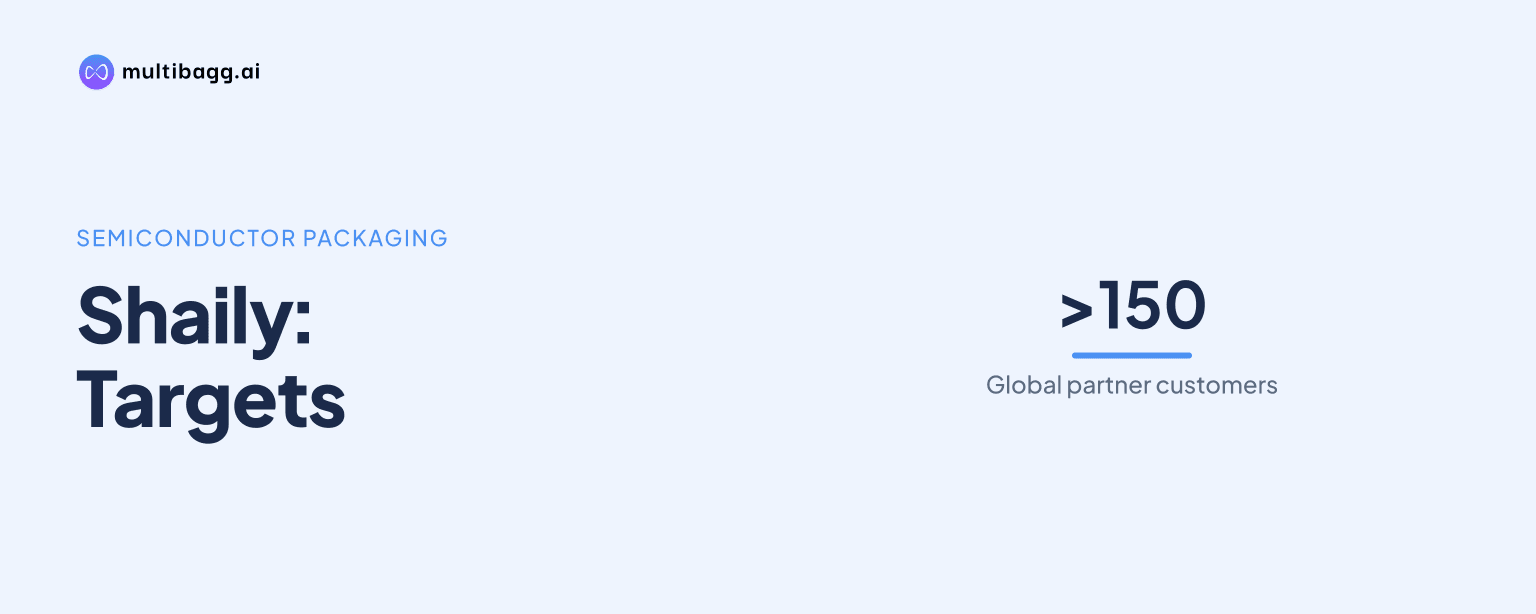
Shaily Engineering Plastics Limited plans to start commercial semiconductor-packaging shipments in Q4 FY27, beginning with small capacity for JEDEC trays, tapes, carrier tapes and wafer boxes and using a Korean partner that serves more than 150 global customers for contract manufacturing and exports to Korea or Taiwan.
Know Shaily Engineering Plastics inside out
Results, valuation, peers and who's buying, in one view.
What semiconductor packaging products will Shaily make?
Shaily will target JEDEC trays, tapes, carrier tapes and wafer boxes for semiconductor packaging. Management specified this portfolio when asked about formats including trays, ball-grid arrays, tape and integrated-circuit tubes, but did not commit to every product format raised by the analyst.
For Indian customers, management said the five players currently coming into India, including outsourced semiconductor assembly and test, or OSAT, and TSAT plants, will use combinations of JEDEC trays, carrier tapes and related products. Their product portfolios are still evolving, so Shaily did not provide an exact addressable-market estimate or a percentage of each customer portfolio it expects to serve.
The stated portfolio covers rigid handling formats, such as trays and wafer boxes, as well as carrier tapes. Shaily has positioned the activity as semiconductor packaging material manufacturing rather than semiconductor fabrication, and management did not disclose customer names, product-level pricing or revenue forecasts for the initial range.
How will Shaily work with its Korean partner?
Shaily will initially operate as a contract manufacturer and export products to its Korean partner in Korea or Taiwan. Management said the unnamed Korean partner is a large player in the segment, works with more than 150 customers globally, and has manufacturing processes operating in Korea, Taiwan and India.
Shaily plans to replicate the partner's manufacturing process, which management said should make product acceptance faster. This is the operating rationale for the partnership, rather than a disclosed commitment from any of the partner's 150-plus customers to buy products from Shaily.
The partnership creates an export route while Shaily also discusses supply requirements with the five semiconductor-related players entering India. Management said it did not have a volume target because volumes will depend on how semiconductor operations ramp up in India and on the product requirements those facilities ultimately develop.
When will Shaily begin commercial semiconductor shipments?
Shaily is targeting commercial semiconductor shipments from Q4 FY27 after qualifying products with customers. Management said the company will set up small capacity first, begin supply if qualifications are completed, and add capacity only after it understands demand.
The timetable makes qualification the immediate semiconductor milestone and commercial shipments the subsequent target. Management did not disclose a confirmed order book, production volume or revenue contribution for Q4 FY27, and it said an exact market size was difficult to determine while Indian customers' portfolios remain in development.
The semiconductor sequence differs from the consumer-electronics plan disclosed on the same call. Shaily said it expected to start supplies of five consumer-electronics components between Q3 and Q4, whereas semiconductor products must first complete customer qualification before the Q4 FY27 commercial-shipment target.
Management described semiconductors and consumer electronics together as significant scale-up opportunities over the next 36 months. That statement did not contain a stand-alone semiconductor sales target, but it sets a disclosed period over which the company expects the new activities to develop.
Got a follow-up? Ask IRIS
How do expected semiconductor margins compare with other segments?
Shaily expects semiconductor-packaging margins to be above the average margins of its consumer and industrial businesses. Management presented that as an expectation for the contract-manufacturing and export business and did not provide a percentage margin, profit target, capital-expenditure figure or break-even date.
The comparison is limited to the consumer and industrial segments, rather than healthcare. Management said healthcare contributed 55% of Shaily's revenue and grew 78% year on year in the quarter discussed, making it the company's primary growth engine according to its closing remarks.
Management did not disclose prices for trays, carrier tapes or wafer boxes. It said the products are similar to those of other suppliers and did not provide a pricing advantage, while pointing to process replication and the Korean partner's customer network as mechanisms that could support product acceptance.
Consumer conditions provide a separate contrast with the semiconductor initiative. Management said consumer demand in Europe and the United States was weak, while polymer-price increases in that business are passed through with customer-specific lags of two months or three to four months; the semiconductor plan instead begins with small capacity and export-oriented contract manufacturing.
What will determine the semiconductor capacity ramp-up?
Shaily will add semiconductor capacity after initial supply begins and the company gains a clearer view of demand. Management said the starting capacity will be small because the pace of ramp-up in India, rather than a disclosed volume assumption, will decide how much product is needed.
Demand can come from two channels under the stated plan: Indian OSAT and TSAT plants using trays and carrier tapes, and exports to the Korean partner in Korea or Taiwan. The company did not disclose how output will be divided between those channels or whether the initial capacity is sufficient for a particular number of customers.
The five prospective Indian players are relevant because management said they are expected to use combinations of JEDEC trays and carrier tapes. However, Shaily also said their evolving product portfolios prevent a precise market-size calculation, leaving customer qualification and early supply as the practical indicators of demand.
Conclusion
Shaily's semiconductor entry is a staged packaging-materials expansion built around JEDEC trays, tapes, carrier tapes and wafer boxes, rather than a quantified sales launch. The Korean relationship offers a contract-manufacturing and export route linked to more than 150 global customers, while management expects margins above the average of the consumer and industrial businesses.
The next disclosed milestone is customer qualification ahead of targeted Q4 FY27 commercial shipments. Management plans to begin with small capacity and expand only once supply starts and demand becomes clearer, so progress in Indian OSAT and TSAT projects, along with exports to Korea or Taiwan, will determine the pace of the planned 36-month scale-up.