










Shiprocket Ltd Q2 FY27 Revenue Rises 35% to ₹673.6 Crore
Key highlights
- Shiprocket Ltd’s Q2 FY27 revenue from operations rose 34.7% year-on-year to ₹673.6 crore.
- Adjusted EBITDA reached ₹14.2 crore in Q2 FY27, equivalent to a 2.1% margin.
- Shiprocket Ltd reported Q2 FY27 net profit of ₹0.6 crore versus a ₹20.3 crore loss in Q2 FY26.
- H1 FY27 revenue rose 34% to ₹1,265.7 crore, while loss before tax narrowed to ₹13.1 crore.
powered by IRIS
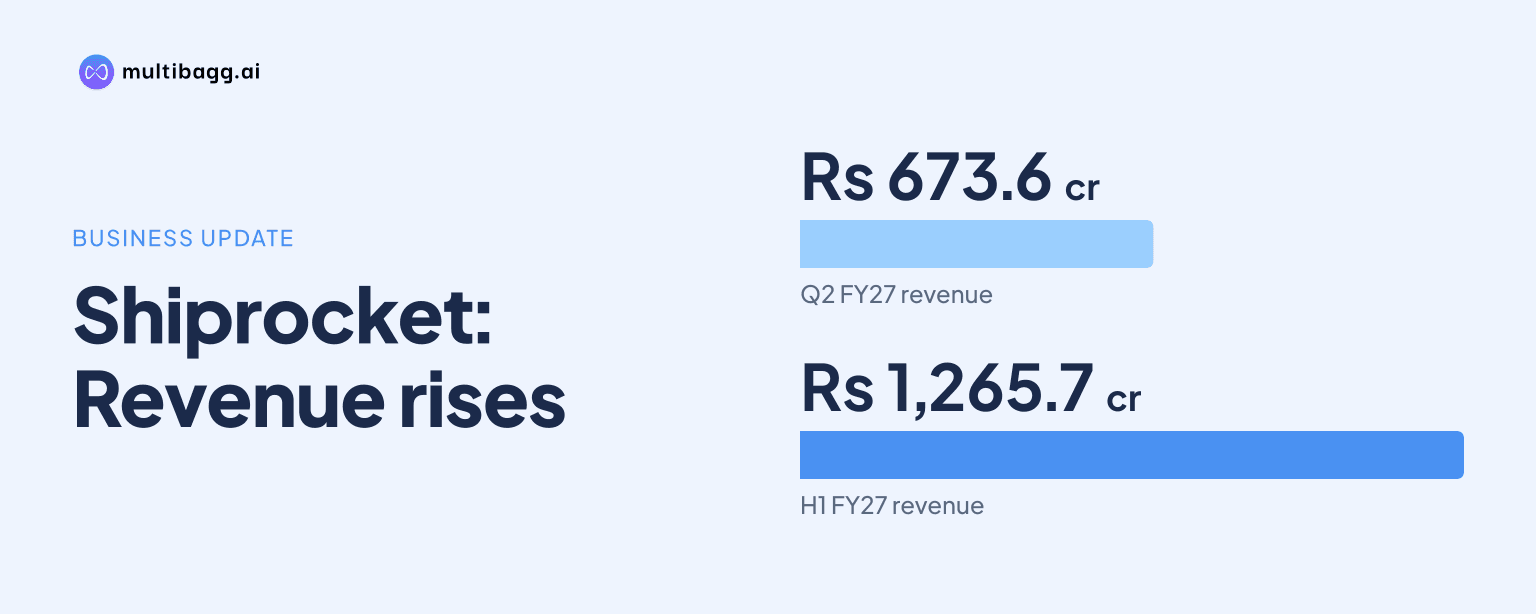
Shiprocket Ltd reported Q2 FY27 revenue from operations of ₹673.6 crore, up 34.7% year-on-year and 14% sequentially, while adjusted EBITDA rose to ₹14.2 crore and consolidated net profit turned positive at ₹0.6 crore. The September-quarter result marks a material improvement in the company’s reported profitability metrics.
Know Shiprocket inside out
Results, valuation, peers and who's buying, in one view.
What did Shiprocket report for Q2 FY27?
Shiprocket reported revenue from operations of ₹673.6 crore for the quarter ended September 30, 2026, compared with a 34.7% lower level a year earlier. The company’s revenue growth was also 14% quarter-on-quarter, according to the Q2 FY27 investor material and earnings-call summaries.
Adjusted EBITDA was ₹14.2 crore, representing a 2.1% adjusted EBITDA margin. Consolidated profit before tax and net profit were ₹0.6 crore, compared with a loss of ₹20.3 crore in Q2 FY26. This shift to a reported quarterly profit is one of the main developments in the company’s latest result.
How did Shiprocket’s first-half financial performance compare?
Shiprocket’s H1 FY27 revenue rose 34% year-on-year to ₹1,265.7 crore, showing that the second-quarter growth was part of a broader first-half increase. Adjusted EBITDA for the first half reached ₹23.1 crore, compared with ₹5.3 crore in the corresponding period of the previous financial year.
The loss before tax narrowed to ₹13.1 crore in H1 FY27 from ₹38.3 crore a year earlier. The first-half figures indicate an improvement in operating profitability and a substantial reduction in losses, although the company still reported a loss before tax for the six-month period.
The comparison also provides context for the Q2 net profit. While Shiprocket recorded a positive result in the September quarter, its first-half performance remained affected by the loss recorded in the earlier quarter. Investors assessing the company’s progress will therefore need to distinguish between quarterly profitability and first-half profitability.
What were the key operating and margin indicators?
Shiprocket reported quarterly contribution of ₹130.0 crore, up 43% year-on-year, with a contribution margin of 19.3%. The company separately said its core contribution margin was flat at 21.1%, indicating that the reported contribution performance included the effect of newer or emerging businesses.
Management said it was reinvesting core profits in areas including Checkout, Martech and Omnichannel. The earnings-call material described emerging adjusted EBITDA margin as negative 21%, which shows that these businesses remained loss-making despite the improvement in consolidated adjusted EBITDA.
Management did not provide a timeline for margin improvement in the emerging segment. This is relevant because Shiprocket’s current profitability improvement has been supported by its core operations, while its investments in newer offerings continue to carry operating losses.
Got a follow-up? Ask IRIS
What does Shiprocket’s platform strategy involve?
Shiprocket said it operates a full commerce stack for Indian direct commerce, covering discovery, data, payments, fulfilment, customer experience, returns, shipping, money and trust. Its presentation stated that more than 250 partners power the ecosystem, including 42 courier partners on one platform.
The company also clarified during the call that more than 90% of its business is G2C, described by management as Government to Consumer, rather than D2C. Management attributed a seasonally weaker period to brands temporarily reducing activity in certain programmes while pushing inventory into marketplaces, and said there was no change in margins from that activity.
The wide platform structure helps explain why Shiprocket tracks both core and emerging profitability. Shipping and fulfilment operations form the established part of the business, while Checkout, Martech and Omnichannel are being developed as additional commerce-service offerings.
How do the Q2 results affect investors and industry participants?
Shiprocket’s results provide measurable evidence of revenue growth, a positive quarterly net profit and higher adjusted EBITDA. For investors, the most important reported indicators are the 34.7% revenue increase, adjusted EBITDA of ₹14.2 crore and the move from a ₹20.3 crore loss to ₹0.6 crore net profit in Q2 FY27.
For merchants and logistics partners, the company’s stated network of 42 courier partners and more than 250 ecosystem partners remains central to its operating model. The presentation did not disclose changes in customer pricing, courier partner terms or service levels, so the financial disclosures do not establish a direct impact on users or partners.
Management’s discussion of continued investment in emerging products is also relevant to the broader commerce-enablement sector. The company reported growth in its core business while keeping investment in adjacent products, but it did not set a specific timetable for profitability in those newer segments.
Conclusion
Shiprocket’s Q2 FY27 disclosures show stronger scale and improved reported profitability. Revenue reached ₹673.6 crore, adjusted EBITDA was ₹14.2 crore and net profit was ₹0.6 crore, while H1 revenue rose to ₹1,265.7 crore and the first-half loss before tax narrowed substantially.
The next area to watch is the performance of the emerging businesses, where adjusted EBITDA margin remained negative 21%. Investors will also monitor whether revenue growth, contribution margins and the positive quarterly net profit are sustained in subsequent results, particularly as management continues to reinvest in Checkout, Martech and Omnichannel.