










Sigma Sri City campus begins operations, targets 500k+ sq ft
Key highlights
- Sigma’s Sri City Phase 1 facility is live with advanced precision machining and fabrication and special processes.
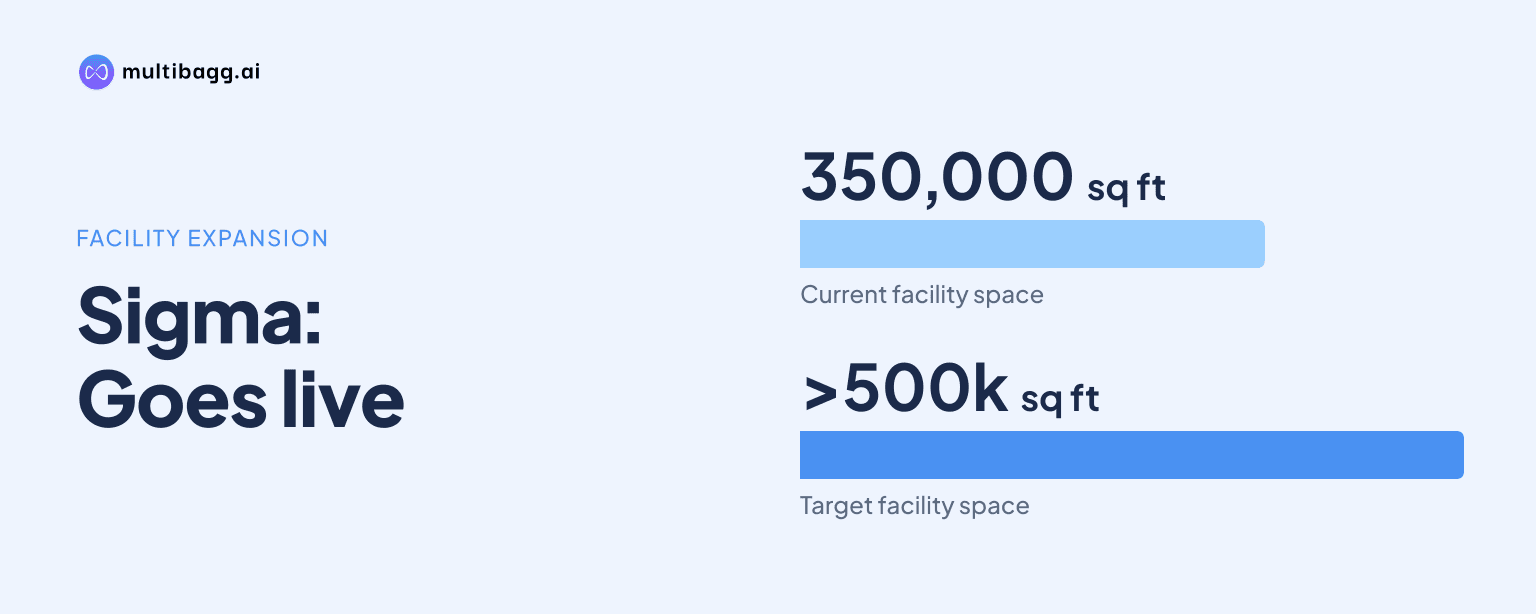
- Sigma’s Sri City masterplan covers 23 acres and targets more than 500,000 square feet of manufacturing capability.
- Sigma reports approximately 350,000 square feet of R&D and manufacturing space across 8 locations.
- International business represents 85% to 90% of Sigma’s current revenue, versus 10% to 15% from India.
powered by IRIS
Sigma Advanced Systems Ltd has put Phase 1 of its Sri City integrated aerospace campus into operation, establishing advanced precision machining and fabrication while planning a 23-acre, more-than-500,000-square-foot facility. The AS9100D-certified site is described as vertically integrated for aerospace and defense manufacturing, with further phases and dedicated treatment and support infrastructure shown in the masterplan.
Know Sigma Advanced System inside out
Results, valuation, peers and who's buying, in one view.
What is operating now at Sigma’s Sri City campus?
Sigma’s Phase 1 Sri City facility is live, with advanced precision machining and fabrication and special processes identified as its two operating production areas. The presentation describes the facility as a vertically integrated aerospace and defense manufacturing site with AS9100D certification.
The operating layout identifies Area A-1 as advanced precision machining and Area A-2 as fabrication and special processes. Within the same Phase 1 layout, Sigma lists a machine shop, turning cell, fabrication area, welding cell and tool room, indicating that machining and fabrication processes are housed within the initial building.
The facility plan also includes metrology, inspection, a hardness room and a CMM room, alongside a main store and material-in and material-out points. These named areas show that Phase 1 combines production space with measurement, inspection, materials handling and support functions rather than depicting machining capacity alone.
How large is Sigma’s Sri City expansion plan?
Sigma’s masterplan covers 23 acres and provides for more than 500,000 square feet of end-to-end manufacturing capability. The plan is divided into Phase 1, Phase 2 and Phase 3, with reserved land also marked, so the 500,000-plus-square-foot figure is an expansion objective for the campus rather than a stated size of the live Phase 1 facility.
The masterplan identifies 13 numbered elements, including administration, cafeteria, manufacturing facilities, heat treatment, surface treatment, staff changing rooms, a powerhouse, a chiller room and a fire pump room. It also marks an effluent treatment plant and services area, an existing building, executive dining and exhibition space.
This planned configuration is broader than the two manufacturing areas named in Phase 1. Phase 1 is presented around precision machining, fabrication and special processes, whereas the full 23-acre plan adds heat treatment and surface treatment as separate dedicated facilities, as well as utility and employee-support infrastructure.
The Sri City location is described as part of one of India’s largest special economic zones, or SEZs, with a manufacturing base. Sigma also says the campus will have access to an extensive skills base through an in-house skill development centre, linking the expansion plan to workforce development rather than only building area.
Got a follow-up? Ask IRIS
How does Sri City fit Sigma’s existing manufacturing footprint?
Sigma’s Sri City campus adds to a manufacturing network spanning 8 named locations across India and the United Kingdom. India has 3 listed locations, Bangalore, Hyderabad and Sri City, while the United Kingdom has 5, Nottingham, Leicester, Coventry, Bournemouth and Worthing.
Across those locations, Sigma reports approximately 350,000 square feet of research and development, or R&D, and manufacturing space, plus more than 800 skilled employees in India and the United Kingdom. The proposed Sri City capacity of more than 500,000 square feet is therefore larger than the approximately 350,000 square feet currently reported across the group’s locations; the two figures refer to planned campus capacity and the reported group footprint, respectively.
The presentation says the group has more than five decades of manufacturing experience across sites in India and the United Kingdom. It also identifies France, Germany and the United States as export markets, placing the India campus within a manufacturing base serving international activity.
Sigma reports that international business accounts for 85% to 90% of current revenue, compared with 10% to 15% from India. The Sri City campus is an Indian manufacturing site, but the presentation does not quantify its revenue contribution, production volume, customer programmes or timing for Phases 2 and 3.
What capabilities could the completed Sri City campus add?
Sigma’s completed Sri City plan could add on-site heat treatment and surface treatment to the Phase 1 machining and fabrication base, because both are separately labelled facilities in the masterplan. The plan also includes a powerhouse, chiller room, fire pump room and effluent treatment plant and services area, which are infrastructure elements alongside the manufacturing buildings.
The Phase 1 building already shows supporting operational areas including a compressor room, pump room, storage tank, office area, staff entry and changing-related access arrangements. It also labels a future expansion area within the facility layout, providing a direct indication that the initial building design anticipates additional activity.
Material movement is explicitly separated in the layout, with material-in and material-out points, while staff entry and emergency exits are also marked. These features, together with inspection, metrology and the CMM room, show a planned flow from incoming materials through production and measurement to outgoing material, although Sigma does not provide throughput, equipment counts or utilisation data.
The certification statement applies to the Sri City aerospace and defense facility as presented, while Sigma’s group-level list also includes EASA Part 21G, ISO 9001, Nadcap, Federal Aviation Administration and other certifications or registrations. The presentation does not specify which of those group certifications attach to each Sri City process or future phase, apart from describing the site as AS9100D certified.
Conclusion
Taken together, the presentation shows that Sri City combines machining, fabrication, inspection, metrology and materials-handling functions in an operating aerospace and defense facility, while its wider design incorporates dedicated processing buildings, utilities and employee-support infrastructure. The campus is also positioned within Sigma’s 8-location India and United Kingdom manufacturing network, where international activity represents 85% to 90% of current revenue.
The next development to watch is execution of the disclosed Phase 2 and Phase 3 masterplan, including the planned heat-treatment and surface-treatment facilities and the future expansion area shown in Phase 1. Sigma has not disclosed a construction timetable, capital cost, capacity ramp, customer allocation or revenue target for the Sri City expansion, leaving those matters unresolved in the presentation.