










Softsol India Ltd Q2 FY27 Revenue Rises 13.27%, Loss Rs 6.27 Cr
Key highlights
- Softsol India reported Q2 FY27 standalone revenue of Rs 3.84 crore, up 13.27% year on year.
- Operating profit fell 47.93% year on year to Rs 1.13 crore in Q2 FY27.
- Softsol India recorded a Q2 FY27 net loss of Rs 6.27 crore versus a Rs 1.86 crore profit a year earlier.
- The company declared its Q2 FY27 results on 10 November 2026.
powered by IRIS
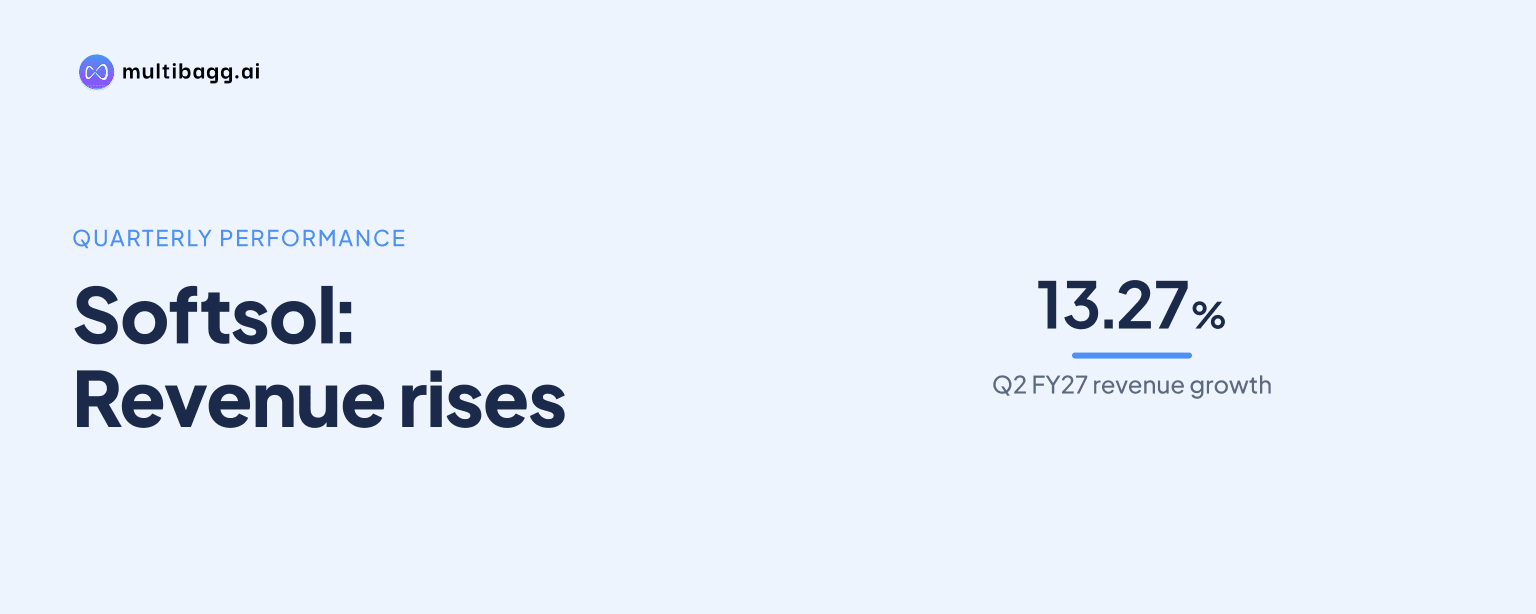
Softsol India Ltd reported standalone revenue of Rs 3.84 crore for the July to September 2026 quarter, a 13.27% increase from Rs 3.39 crore a year earlier, but recorded a net loss of Rs 6.27 crore against a net profit of Rs 1.86 crore in Q2 FY26.
Know Covance Softsol inside out
Results, valuation, peers and who's buying, in one view.
What did Softsol India report for Q2 FY27?
Softsol India declared its Q2 FY27 results on 10 November 2026 for the quarter ended September 2026. The reported figures are on a standalone basis and show that revenue increased year on year, while profitability weakened sharply from the corresponding quarter of the previous financial year.
Revenue was Rs 3.84 crore in Q2 FY27, compared with Rs 3.39 crore in Q2 FY26. Operating profit stood at Rs 1.13 crore, down from Rs 2.17 crore in the year-earlier period. The company consequently reported a net loss of Rs 6.27 crore, compared with a net profit of Rs 1.86 crore a year earlier.
How did Softsol India's operating performance change?
Softsol India's revenue grew by Rs 0.45 crore from the year-earlier quarter, indicating higher standalone revenue during the period. However, operating profit fell by Rs 1.04 crore, or 47.93%, despite the increase in revenue.
The difference between revenue growth and lower operating profit is the central feature of the quarterly update. The available result summary reports the operating-profit movement but does not specify the cost items, exceptional charges, or other factors that led to the decline. Therefore, the published figures establish the change in performance without attributing a cause.
The movement in the bottom line was more pronounced. The company moved from a Rs 1.86 crore net profit in Q2 FY26 to a Rs 6.27 crore net loss in Q2 FY27. This represents a deterioration of Rs 8.13 crore in reported net results compared with the corresponding quarter last year.
What disclosures accompanied the September quarter results?
Softsol India's board meeting calendar lists 10 November 2026 as the date for quarterly results. The company had earlier held board meetings for quarterly results on 14 August 2026 and 14 February 2026, while audited results for the quarter and year ended 31 March 2026 were considered on 30 May 2026.
A board-meeting intimation referred to consideration and approval of unaudited standalone and consolidated financial results for the second quarter and half year ended 30 September 2026. The figures cited in this report are specifically the standalone Q2 FY27 results. Investors should distinguish these from consolidated figures where both sets of accounts are disclosed.
The reported quarter covers July to September 2026. It follows the June 2026 quarter, for which company-related quarterly-result information in the supplied disclosures referred to separate financial metrics. Comparisons in the current result summary are instead made with September 2025, which is the corresponding quarter for year-on-year analysis.
Got a follow-up? Ask IRIS
Why does the shift from profit to loss matter for investors?
Softsol India's Q2 FY27 results present a mixed financial picture. Revenue expanded 13.27% year on year, but operating profit nearly halved and the company moved into a net loss. For investors, this means topline growth did not translate into stronger reported earnings for the period.
The fall in operating profit also matters because it occurred before the final net-result line. With operating profit at Rs 1.13 crore versus Rs 2.17 crore a year earlier, the quarterly data indicate reduced operating earnings compared with Q2 FY26. The result release provided in the source does not disclose management commentary on profitability or a specific corrective plan.
The company had also disclosed regulatory and corporate updates during the year, including confirmation of processing of dematerialisation requests for the quarter ended 30 September 2026. At its third annual general meeting on 30 September 2026, resolutions included adoption of audited standalone and consolidated financial statements for the year ended 31 March 2026.
How should the Q2 FY27 data be read alongside earlier disclosures?
Softsol India's latest numbers should be assessed as standalone quarterly figures rather than as a full-year measure. A single quarter can show a different revenue and profit pattern from earlier periods, particularly when the available disclosure does not provide a detailed explanation for changes in expenses, other income, or one-off items.
The immediate factual comparison is clear: Q2 FY27 revenue was higher than Q2 FY26, while operating profit and net results were lower. The reported loss of Rs 6.27 crore is the strongest change in the filing because it contrasts with the Rs 1.86 crore profit reported in the same quarter of the prior year.
For market participants, the main information requirement will be additional detail in subsequent company disclosures. This includes whether revenue growth continues, whether operating profit recovers from the Q2 FY27 level, and what factors the company identifies behind the shift from profit to loss. None of these outcomes can be concluded from the reported quarterly figures alone.
Conclusion
Softsol India's Q2 FY27 standalone result combined a 13.27% rise in revenue to Rs 3.84 crore with a substantial decline in operating profit and a Rs 6.27 crore net loss. The comparison with Q2 FY26 shows that higher revenue was not accompanied by improved profitability during the July to September 2026 quarter.
The next disclosed quarterly-results board meeting and any detailed financial filing will be important for assessing the trend after Q2 FY27. Investors can watch for updates on operating-profit performance, the factors behind the quarterly loss, and the distinction between standalone and consolidated financial results.