










Sun Pharma says lerodalcibep Europe access takes 6-12 months
Key highlights
- Sun Pharma said European lerodalcibep reimbursement reviews usually take 6 to 12 months after approval.
- Sun Pharma’s lerodalcibep territory excludes the US and China.
- Emerging Markets represented 20.7% of Sun Pharma’s consolidated revenue in Q2 FY27.
- Sun Pharma reported Rs 778.4 crore of research and development spending in Q2 FY27, equal to 4.8% of sales.
powered by IRIS
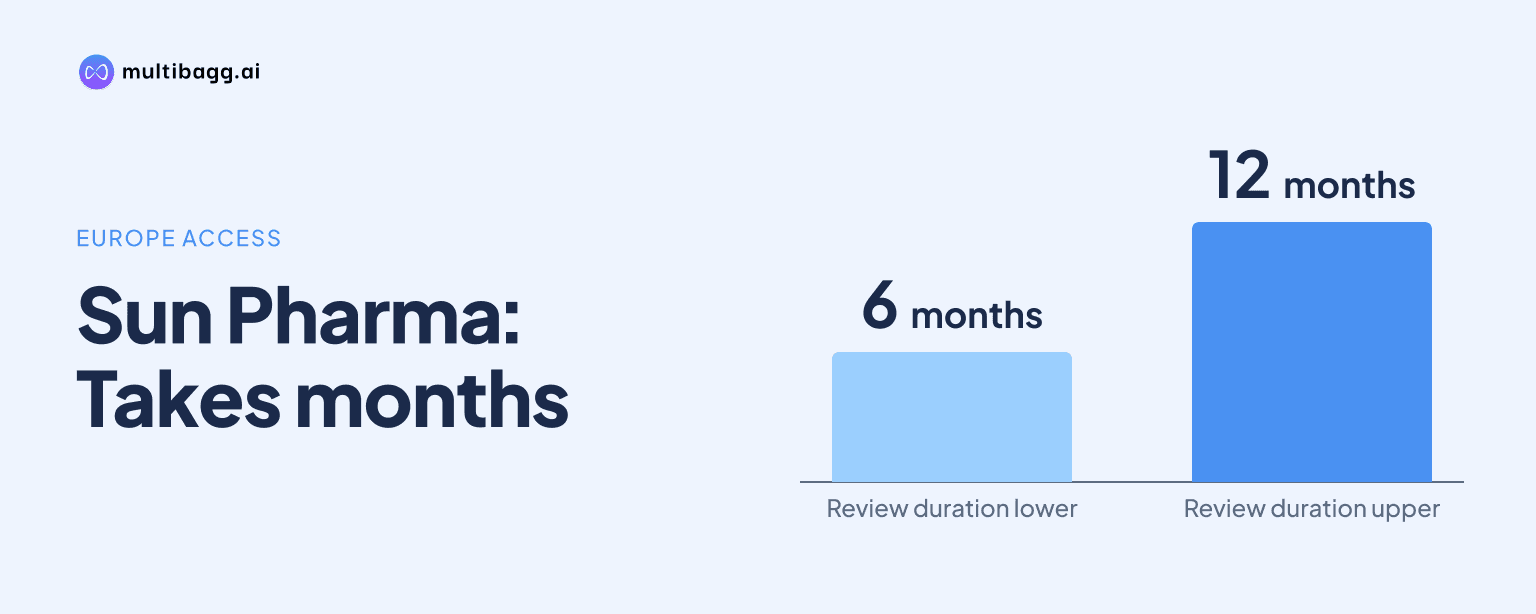
Sun Pharma said on October 30, 2026, that lerodalcibep’s European commercial launches will follow country-by-country pricing and reimbursement reviews that usually last 6 to 12 months, even though it has European approval. Management said the licensed proprotein convertase subtilisin/kexin type 9 (PCSK9) inhibitor remains in prelaunch.
Know Sun Pharmaceutical Industries inside out
Results, valuation, peers and who's buying, in one view.
When will Sun Pharma launch lerodalcibep in Europe?
Sun Pharma will launch lerodalcibep in individual European countries only after pricing and reimbursement reviews, which management said usually take 6 to 12 months. Kirti Ganorkar said a European approval requires subsequent country-by-country dossier submissions for pricing and reimbursement, with timing varying by market and the questions raised on each dossier.
European approval is therefore not a single commercial launch date for Sun Pharma. Management said the company is in a prelaunch phase and will update investors as it moves from one market to another. It also said it would announce commercial launches once they occur, but did not name a first country or set a Europe-wide launch deadline.
The 6-to-12-month period applies to a national reimbursement process rather than to every European launch collectively. Sun Pharma did not disclose expected prices, reimbursement outcomes, market-share targets or sales estimates for lerodalcibep. Those omissions mean the call established a route to access, not a quantified revenue timetable.
Where can Sun Pharma commercialise lerodalcibep?
Sun Pharma said its lerodalcibep territory is outside the US and China, while confirming approval in Europe. When asked whether the product would be launched as broadly as possible outside those two markets, Ganorkar answered that the scope was “ex US, ex China” and confirmed the European approval.
The territory creates the potential for launches in Europe and other international markets, but management described different regulatory paths outside Europe. Dilip Shanghvi said Sun Pharma’s plan is to file in all markets as soon as it can, while noting that countries have different approval timelines and some require local strategies. No number of target countries or first-wave markets was given.
Sun Pharma also said certain countries could allow it to leverage approvals in the US and Europe. Management did not identify those countries, the relevant regulatory mechanisms or the likely effect on timing. The disclosed position was therefore a broad filing ambition, subject to local approval requirements and country-specific commercial preparation.
Lerodalcibep was identified by management as a possible next product when an analyst asked which assets could affect specialty growth over the next two to three years. That statement did not constitute product guidance. Sun Pharma gave no forecast for revenue, patient uptake, profitability or the point at which the PCSK9 inhibitor could become material.
How will Sun Pharma sell lerodalcibep in different markets?
Sun Pharma plans to use existing cardiologist-facing field-force capabilities where they are already present and add them where they are not. Ganorkar said the company has capabilities to promote products to cardiologists in many markets and would build missing capabilities over the next couple of months.
This approach makes the commercial rollout dependent partly on the starting position in each country. Markets with established cardiology promotion may use existing infrastructure, while others require added capabilities before or alongside launch preparation. Management did not disclose field-force numbers, country-level staffing plans or the cost of these additions.
Sun Pharma said lerodalcibep spending would be included within its overall budget and guidance rather than disclosed as a standalone launch investment. The company did not provide an exact sales-and-marketing budget, promotional-spend estimate or separate commercial expense for the product during the October 30 call.
The company’s reported research and development spending provides broader financial context but does not measure lerodalcibep launch costs. Consolidated research and development investment was Rs 778.4 crore in Q2 FY27, equal to 4.8% of sales, and innovative research and development represented 32.4% of the total. Shanghvi said spending was below intended levels and was expected to pick up in the second half as infrastructure and clinical-trial recruitment progressed.
Got a follow-up? Ask IRIS
What does reimbursement mean for lerodalcibep revenue timing?
Sun Pharma’s reimbursement sequence means European revenue can emerge country by country rather than through one regional launch. The company has approval in Europe, but each market still requires a pricing and reimbursement dossier, and management said the resulting review typically lasts 6 to 12 months.
The outcome and duration of those reviews remain unresolved. Management said timing depends on the specific market and dossier queries, so an approval in one country does not establish a timetable for another. Sun Pharma did not disclose whether any reimbursement dossiers had already been filed or whether discussions had begun in particular European markets.
Outside Europe, local regulatory approvals create an additional step before commercial access. Shanghvi said countries have different approval timelines and may require local strategies, while Ganorkar said some markets could draw on US and European approvals. The call did not define which jurisdictions might use those approvals or when their filings would be submitted.
The staged process contrasts with a simultaneous international rollout. Europe is further advanced because approval is already in place, but reimbursement still determines when sales can begin in each country. Other markets may eventually expand the opportunity outside the US and China, though Sun Pharma gave no common timing range for their regulatory decisions.
How does lerodalcibep fit Sun Pharma’s international platform?
Sun Pharma is entering cardiology promotion for lerodalcibep through a mix of existing and new capabilities, rather than describing a fully separate global sales structure. Management’s comments focused on cardiologist access in individual markets, after an analyst noted the company’s prior emphasis on onco-derma and eye care.
The company said its Emerging Markets business accounted for 20.7% of consolidated revenue in Q2 FY27 and reported 7.6% year-on-year constant-currency growth in that segment. Management cited product launches across several markets as a driver of the quarterly improvement, but it did not assign any existing segment revenue to lerodalcibep because the product remains in prelaunch.
Sun Pharma’s Rest of World markets represented approximately 14.3% of consolidated revenue in Q2 FY27. That comparison shows Emerging Markets had the larger stated contribution, at 20.7% versus 14.3%, while management’s lerodalcibep plan did not specify how future sales would be divided between the two international reporting groups.
Management also did not set out a broader cardiology acquisition or portfolio strategy. Its disclosed plan was narrower: use current cardiology field-force coverage where available, add capabilities where required, submit filings as soon as possible and progress European reimbursement dossiers market by market.
Conclusion
Sun Pharma has established that European approval starts, rather than completes, the path to lerodalcibep revenue. The key commercial constraint is national pricing and reimbursement, with each review usually taking 6 to 12 months. Outside the US and China, the company intends to pursue filings while using existing cardiology capabilities and building them in selected markets.
The next developments to watch are country-specific reimbursement progress in Europe, the first commercial launch announcement and filings or approvals in other markets. Management has said it is in prelaunch, plans to file as soon as possible and will update investors as it moves between markets, but it has not provided country priorities, a sales target or a separate launch budget.