










Sybly Industries enters insolvency over Rs 1.63 crore default
Key highlights
- NCLT Allahabad admitted Sybly Industries into CIRP on 27 October 2026.
- Sital Leasing and Finance claimed Rs 1,63,49,258 in default on a Rs 1.5 crore unsecured loan.
- The loan to Sybly Industries was disbursed on 26 September 2024.
- The insolvency matter is next listed before NCLT Allahabad on 1 December 2026.
powered by IRIS
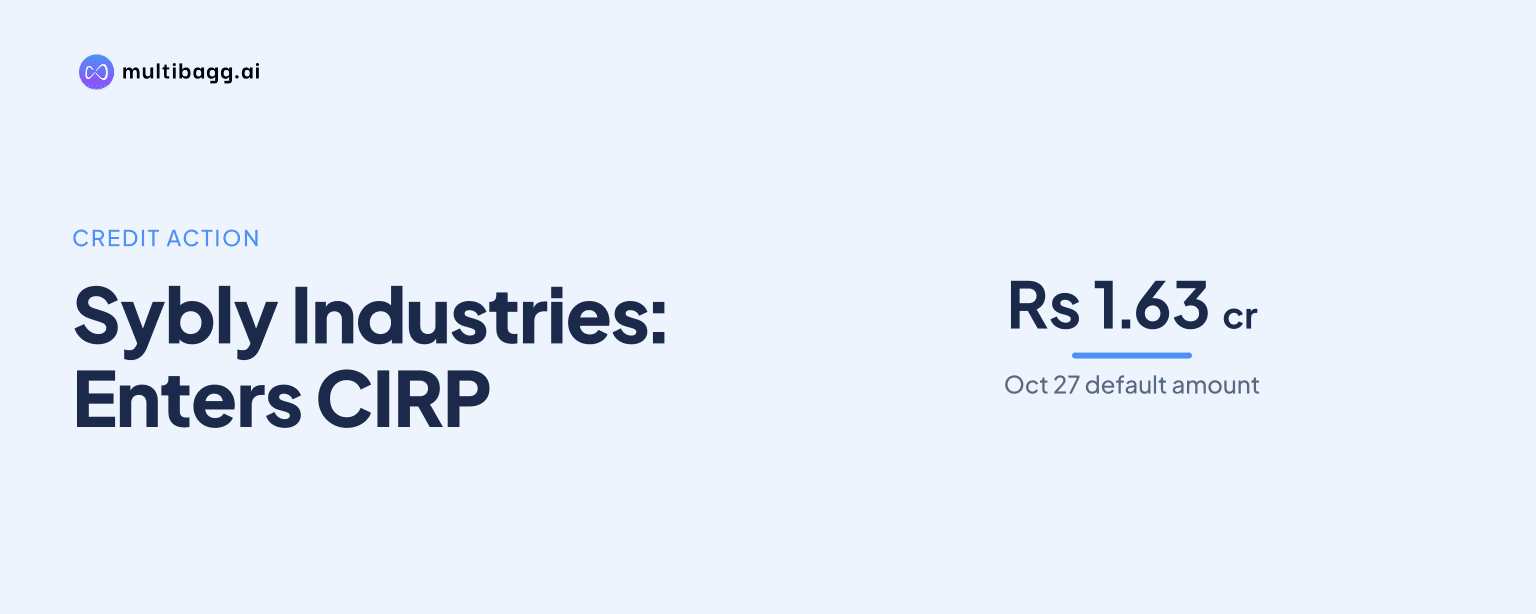
Sybly Industries Limited entered the corporate insolvency resolution process on 27 October 2026 after the NCLT Allahabad bench found a financial debt and default of Rs 1,63,49,258 on an unsecured Rs 1.5 crore term loan from Sital Leasing and Finance Limited.
Know Sybly Industries inside out
Results, valuation, peers and who's buying, in one view.
What did NCLT Allahabad rule on Sybly Industries?
The NCLT Allahabad bench at Prayagraj admitted Sybly Industries into the corporate insolvency resolution process, or CIRP, on a petition filed by Sital Leasing and Finance Limited. The lender is a non-banking finance company and sought insolvency proceedings over unpaid dues under an unsecured term loan.
The tribunal held that the existence of a financial debt and a default had been established. It also found that the lender's petition had been filed within the applicable limitation period. The admission places the company under the framework of the Insolvency and Bankruptcy Code, which governs the resolution of qualifying corporate defaults.
Sybly Industries is based in Muradnagar, Ghaziabad, and is identified in stock-market information as a trader of yarns and textile products. The tribunal's order concerns the insolvency process and does not amount to a finding of fraud or mismanagement by the company.
What was the loan dispute between Sybly Industries and the lender?
The dispute arose from an unsecured term loan of Rs 1.5 crore that Sital Leasing and Finance disbursed to Sybly Industries on 26 September 2024. The lender claimed total defaulted dues of Rs 1,63,49,258 when it approached the tribunal.
Sybly Industries opposed the insolvency petition. It argued that the filing was an effort to recover money, rather than a proper insolvency action. The company also said that payments due from its own customers had been delayed, affecting its ability to repay the lender.
The company further stated that it had signed a settlement under coercion, based on an assurance that it would receive a longer restructuring period. The tribunal nevertheless concluded that the evidence met the threshold for admission of the financial creditor's application.
What changes after Sybly Industries enters CIRP?
Sybly Industries is now subject to a moratorium that bars suits, recovery proceedings and enforcement of security interests against the company during the specified insolvency period. The moratorium is intended to preserve the company while the insolvency process is administered.
The NCLT has appointed an interim resolution professional to take control of the process. Under the order described, the company's board is suspended and management passes to the interim resolution professional. The professional is required to make a public announcement and invite claims from stakeholders.
Creditors, employees and suppliers with claims against Sybly Industries should submit them within the period stated in that public announcement. The process will determine the admitted claims and establish the creditor framework for the next stages of CIRP.
Got a follow-up? Ask IRIS
How does the order affect investors and business stakeholders?
The admission is a material legal and operational development for Sybly Industries because control shifts from the existing board to the interim resolution professional. For lenders and other creditors, the central immediate step is to file claims according to the timetable issued through the public announcement.
The available information does not provide a share-price movement, market-capitalisation figure or current financial results linked to the NCLT order. It therefore does not support a quantified conclusion on the immediate stock-market impact. Investors can, however, assess the development as an insolvency-process event rather than a final resolution of creditor claims.
For customers, suppliers and employees, the moratorium changes how outstanding claims and recovery actions are handled. It does not by itself establish the eventual outcome for the business, creditors or equity holders. Any resolution, liquidation decision or other subsequent process would depend on actions and decisions taken under the Insolvency and Bankruptcy Code.
Why does this insolvency case matter in the current framework?
The case shows how an NBFC lender can use the corporate insolvency route when it establishes a financial debt and default before the NCLT. In this instance, the tribunal considered Sybly Industries' objections but admitted the case after finding the debt, default and timing requirements satisfied.
CIRP admission is distinct from the approval of a resolution plan. At this stage, the process begins with an interim resolution professional, a moratorium and the collection of stakeholder claims. The matter is listed next on 1 December 2026, while the order may also be appealed before the National Company Law Appellate Tribunal.
The case is also relevant because Sybly Industries operates in the yarn and textile-products trading segment, where working-capital collections can be significant for day-to-day operations. The company's reference to delayed customer payments was part of its defence, but the NCLT's admission order means the insolvency process will now proceed under statutory supervision.
Conclusion
The NCLT Allahabad bench admitted Sybly Industries to CIRP after accepting Sital Leasing and Finance's case that Rs 1,63,49,258 was in default on a Rs 1.5 crore unsecured term loan. The decision activates a moratorium, suspends the board's control and moves management of the process to an interim resolution professional.
The next disclosed date is 1 December 2026, when the matter is listed before the tribunal. Stakeholders will also need to watch for the interim resolution professional's public announcement, the claim-submission timeline and any appeal filed before the NCLAT.