










Tata Power Renewable Energy Limited Commissions 100.8 MW Wind Project
Key highlights
- TPREL commissioned the 100.8 MW Jewali Wind Project in Dharashiv district, Maharashtra.
- The project has 28 SG 3.6-145 wind turbine generators.
- Jewali is expected to generate approximately 299 million kWh of electricity annually.
- TPREL estimates annual carbon dioxide emissions offset at nearly 245 million kg.
powered by IRIS
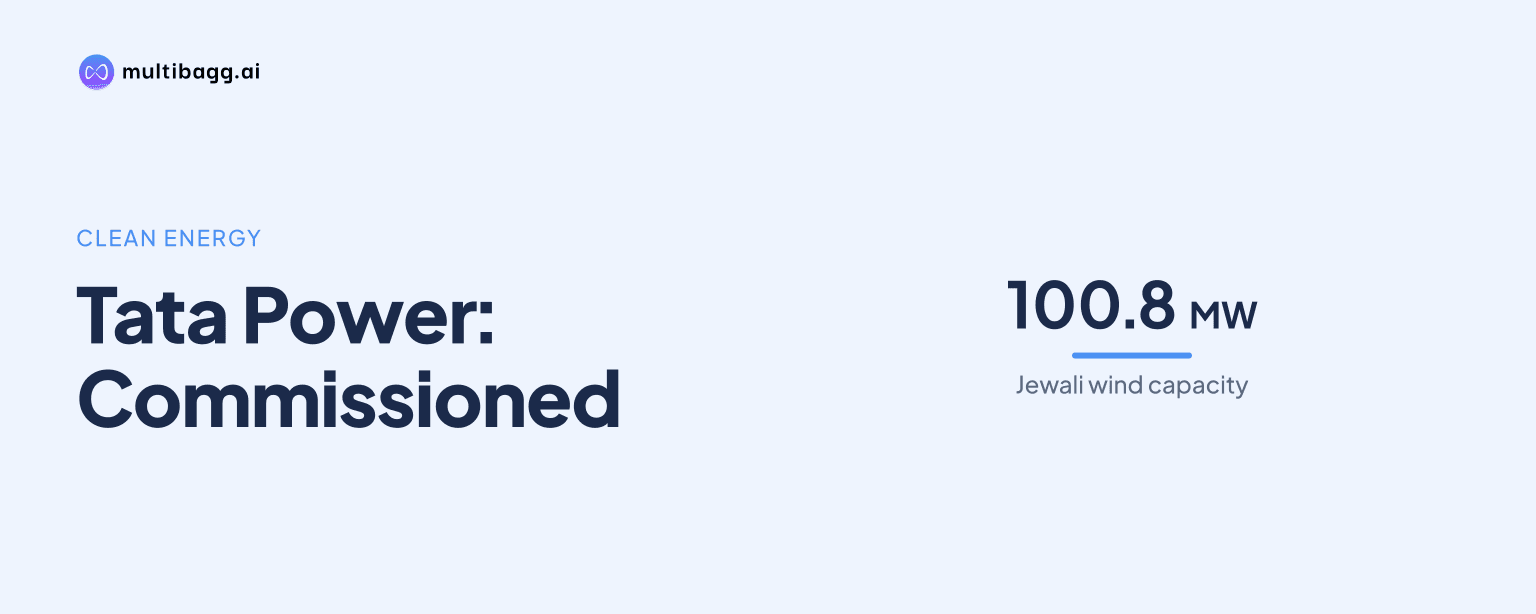
Tata Power Renewable Energy Limited has commissioned the 100.8 MW Jewali Wind Project in Maharashtra, which is expected to generate about 299 million kWh of electricity each year. The wind farm will supply Tata Power Mumbai Distribution and support its Renewable Purchase Obligation targets.
Know Tata Power Company inside out
Results, valuation, peers and who's buying, in one view.
What has Tata Power Renewable Energy Limited commissioned in Maharashtra?
TPREL has commissioned the 100.8 MW Jewali Wind Project in Dharashiv district, Maharashtra. The company disclosed the development in a July 3, 2026 announcement, identifying the project as an addition to its renewable energy generation portfolio.
The electricity generated at Jewali will be supplied to Tata Power Mumbai Distribution. TPREL said the supply will contribute to the distribution utility's Renewable Purchase Obligation, or RPO, requirements. RPOs require obligated entities to procure a specified share of electricity from renewable sources, making dedicated renewable supply important for distribution operations.
The project is part of Tata Power's wider clean-energy build-out. The available company information says the group aims to achieve 100% clean energy generation by 2045, while other renewable projects are expected to be commissioned in phases over the next six to 24 months.
How will the Jewali Wind Project generate electricity?
The Jewali Wind Project uses 28 SG 3.6-145 wind turbine generators based on horizontal-axis wind turbine technology. The installed capacity of 100.8 MW reflects the aggregate capacity of the 28 machines.
TPREL expects the facility to generate approximately 299 million units, or kWh, of clean electricity annually. Actual output from a wind project can vary with wind availability and operating conditions, but the stated annual generation figure sets out the company's expected production level for the asset.
The project gives Tata Power Mumbai Distribution a defined source of renewable electricity from within Maharashtra. This arrangement links the generation asset directly to the distribution utility's compliance and power-procurement requirements rather than leaving the project's offtake unspecified.
Got a follow-up? Ask IRIS
What is the expected emissions benefit from the project?
TPREL estimates that Jewali will offset nearly 245 million kg of carbon dioxide emissions each year. The estimate uses an emissions reduction factor of 0.82 kg of CO₂ for every unit of electricity generated.
The stated emissions calculation is tied to the project's expected generation of 299 million kWh annually. It provides a measurable indication of the renewable project's role in Tata Power's decarbonisation programme, although the estimate is based on the company-provided generation and emissions assumptions.
For the broader power sector, projects such as Jewali add non-fossil electricity generation that can be allocated to distribution demand. For Tata Power Mumbai Distribution, the supply can support RPO compliance while increasing the availability of renewable electricity within its procurement mix.
How does Jewali fit into TPREL's renewable capacity expansion?
Jewali adds 100.8 MW of wind capacity to TPREL's renewable utility portfolio. One report cited by the company said the commissioning lifted its total renewable utility capacity to 11.6 GW, including 6.7 GW of operational capacity comprising 5.4 GW of solar and 1.3 GW of wind.
During the first half of FY27, TPREL also cited the Kalasar FDRE Project, which includes 227.5 MW of solar capacity and a 101.2 MWh battery energy storage system. It also identified the 100 MW Kayathar Group Captive Project and the 72.5 MW Tata Steel Captive Project among its commissioned projects.
These additions show that TPREL's current expansion includes wind, solar, energy storage and captive projects. Jewali is specifically relevant to the Mumbai distribution business because its output has been allocated to Tata Power Mumbai Distribution, connecting new renewable capacity with an identified utility requirement.
Conclusion
The commissioning of the 100.8 MW Jewali Wind Project gives TPREL a new operational wind asset in Maharashtra with expected annual generation of 299 million kWh. The project is intended to support Tata Power Mumbai Distribution's RPO compliance and is estimated to offset nearly 245 million kg of CO₂ emissions each year.
The next developments to monitor are the phased commissioning of TPREL's remaining projects over the next six to 24 months and progress towards Tata Power's stated target of 100% clean energy generation by 2045. The operational performance of Jewali against its stated generation estimate will also be relevant to the company's renewable portfolio execution.