










Tunwal E-Motors Allots ₹10.20 Crore Promoter Warrants
Key highlights
- Tunwal E-Motors allotted 34 lakh convertible warrants at ₹30 each, aggregating to ₹10.20 crore.
- The company received ₹2.55 crore upfront, equal to 25% of the warrant issue price.
- The promoter group must pay the remaining ₹7.65 crore on exercise by May 10, 2028.
- Full warrant conversion would raise promoter holding to 65.91% from 63.90%.
powered by IRIS
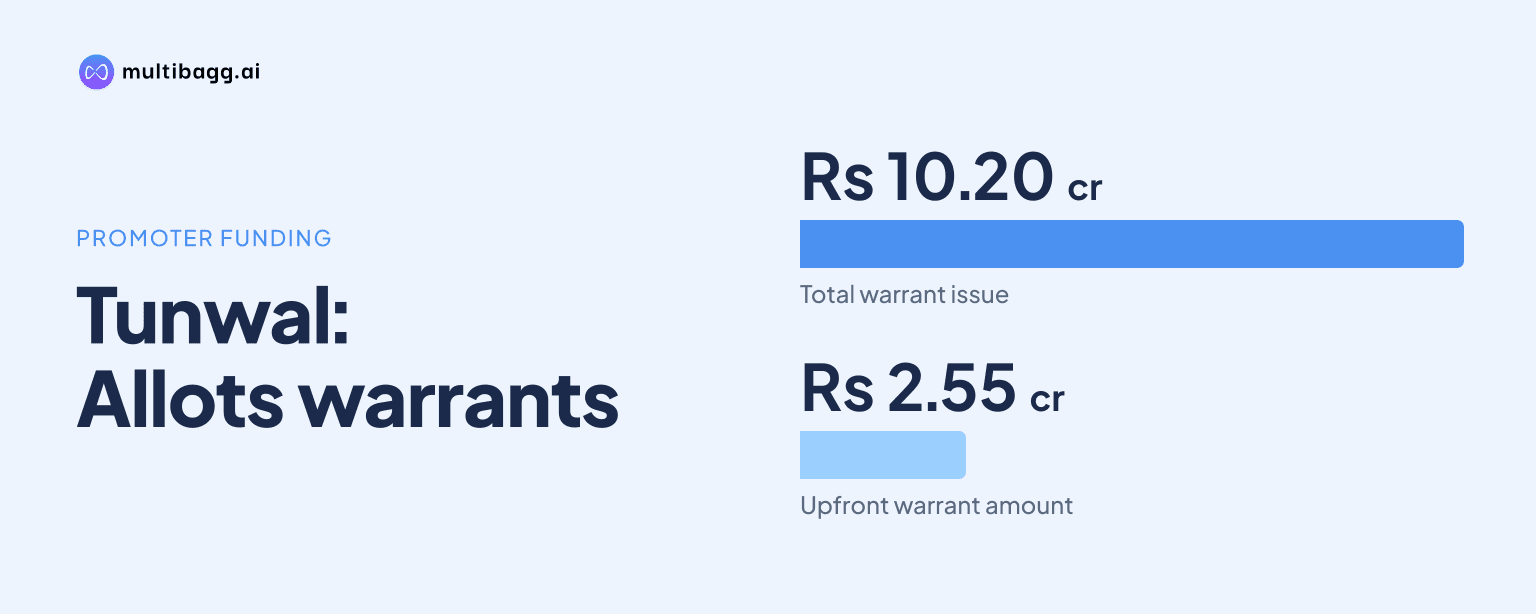
Tunwal E-Motors Limited has allotted 34 lakh convertible warrants to five promoter and promoter-group investors at ₹30 each, creating a potential ₹10.20 crore capital infusion. The company has received ₹2.55 crore upfront, while the remaining ₹7.65 crore is payable if the warrants are exercised by May 10, 2028.
Know Tunwal E-Motors inside out
Results, valuation, peers and who's buying, in one view.
What has Tunwal E-Motors allotted to its promoters?
Tunwal E-Motors has allotted 34,00,000 convertible warrants on a preferential basis to members of its promoter and promoter group. Each warrant carries an issue price of ₹30, including a premium of ₹28 over the equity share face value of ₹2, and can be converted into one fully paid-up equity share.
The allotment aggregates to ₹10.20 crore if all warrants are exercised. The company received 25% of the warrant issue price at allotment, equivalent to ₹7.50 per warrant or ₹2.55 crore in total. The remaining 75%, or ₹22.50 per warrant, will become payable when the allottees exercise their conversion rights.
The warrants may be exercised in one or more tranches within 18 months from the allotment date. The company stated that warrants not exercised within this period will lapse and the subscription amount paid towards those warrants will be forfeited.
Who received the 34 lakh convertible warrants?
The 34 lakh warrants were allotted to five identified investors from Tunwal E-Motors' promoter and promoter-group category. Managing Director Jhumarmal Pannaram Tunwal received the largest allocation of 25.50 lakh warrants, accounting for 75% of the total issue.
Tunwal Jhumarmal P HUF received 3.40 lakh warrants. Sangita Jhumarmal Tunwal, Spreta Jhumarmal Tunwal and Bhupesh Tunwal were each allotted 1.70 lakh warrants. All the securities were issued for cash consideration under the preferential allotment.
The concentration of allotment among existing promoters means the proposed capital raise is not being sourced from outside investors. The immediate cash receipt is limited to the 25% upfront payment, while the full ₹10.20 crore consideration depends on conversion of the warrants within the stipulated period.
How did the preferential allotment receive approval?
Tunwal E-Motors completed the allotment after obtaining shareholder approval and the requisite in-principle approval from the National Stock Exchange of India Limited. Shareholders approved the proposal through a special resolution at the company's eighth annual general meeting held on September 29, 2026.
The company received NSE's in-principle approval through a letter dated October 28, 2026. Its board then considered and approved the warrant allotment on November 9, 2026. The original proposal had been approved by the board on September 4, subject to shareholder and regulatory approvals.
The upfront subscription payment follows Regulation 169 of Chapter V of the Securities and Exchange Board of India (Issue of Capital and Disclosure Requirements) Regulations. Under the disclosed terms, 25% must be paid at subscription and allotment, with the balance payable upon exercise.
Got a follow-up? Ask IRIS
How will warrant conversion change promoter ownership?
If the entire issue is exercised, Tunwal E-Motors' promoter shareholding is expected to increase to 65.91% from 63.90% on a diluted equity base. The expanded share capital after full conversion is indicated at 6.11 crore shares.
The change reflects both the issue of new equity shares and the fact that the allottees belong to the promoter group. While the warrants do not become equity shares until exercised, the disclosed diluted ownership calculation shows the potential effect of full conversion on the company's shareholding pattern.
For existing public shareholders, the transaction creates potential dilution because 34 lakh new shares may be issued on conversion. The company has fixed the conversion price at ₹30 per share, so the number of shares issued will not change if all the warrants are exercised under the approved terms.
The preferential issue also closes the pending promoter-led fund-raise described by the company. However, the full funding will be available only if the allottees pay the balance amount and convert their respective warrants before the deadline.
Why does the warrant issue matter for investors?
The allotment gives Tunwal E-Motors an immediate inflow of ₹2.55 crore and a potential additional inflow of ₹7.65 crore over the exercise period. This structure gives the promoter group the right, but not the obligation, to convert the warrants into equity shares by the stated deadline.
The issue price, conversion period and upfront payment are the main terms investors can monitor. The company has specified that unexercised warrants will lapse after 18 months and that the amount already paid on such warrants will be forfeited. Therefore, the final equity dilution and the amount eventually raised will depend on the extent of exercise.
The transaction also increases the potential promoter holding after dilution, rather than bringing a new strategic or institutional shareholder into the company. The disclosed approvals and allotment process place the issue within the SEBI ICDR framework governing preferential issues by listed companies.
Conclusion
Tunwal E-Motors has completed the preferential allotment of 34 lakh convertible warrants to five promoter and promoter-group investors at ₹30 each. The issue represents a potential ₹10.20 crore fund-raise, with ₹2.55 crore received at allotment and the rest linked to subsequent warrant exercise. Full conversion would increase promoter holding to 65.91% while expanding the equity base.
Investors will now watch whether the allottees pay the remaining ₹7.65 crore and convert the warrants into shares. The disclosed exercise deadline is May 10, 2028, and warrants that remain unexercised by then will lapse under the terms announced by the company.