










Ventive Hospitality Q2 FY27 PAT Falls 47% as Depreciation Rises
Key highlights
- Ventive Hospitality's Q2 FY27 PAT fell 47% as depreciation increased to ₹102 crore from ₹79 crore.
- India operating revenue rose 11% year-on-year to ₹207 crore in Q2 FY27.
- India operating EBITDA increased 8% to ₹80 crore, with a 39% margin.
- India RevPAR rose 15% to ₹8,606, while occupancy improved to 68%.
powered by IRIS
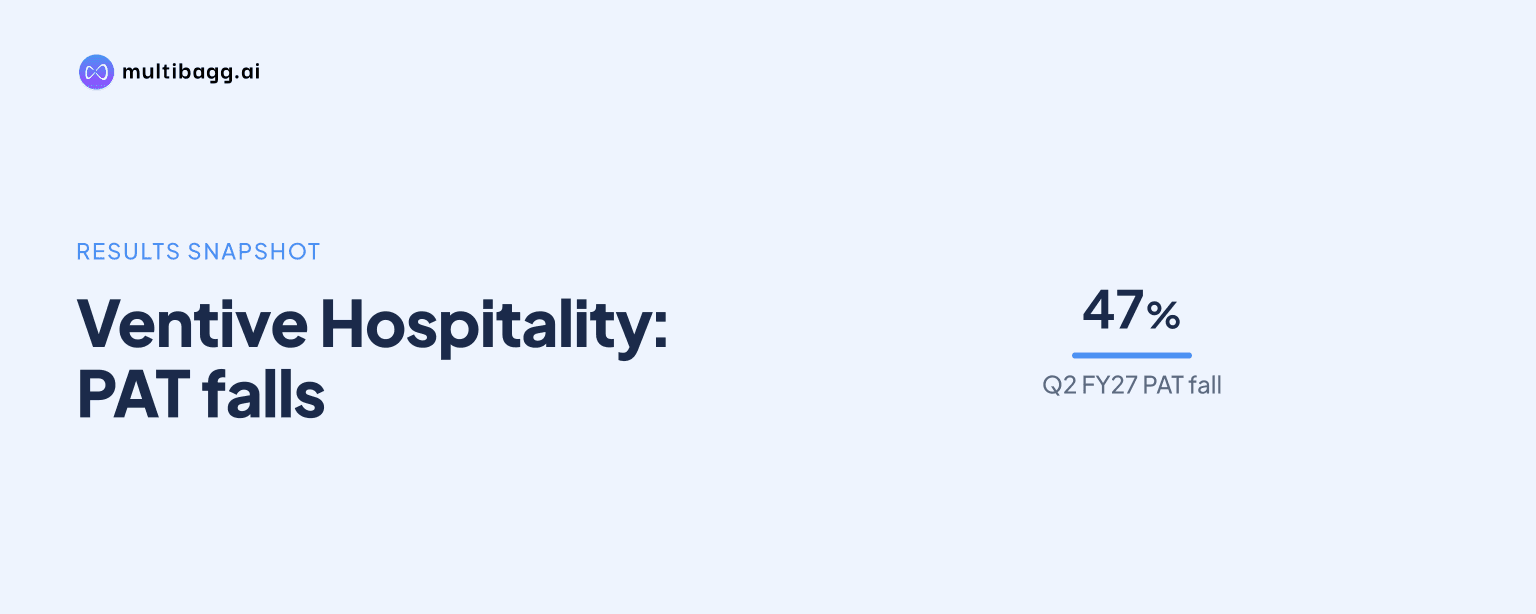
Ventive Hospitality Limited reported a 47% year-on-year decline in profit after tax for Q2 FY27, as depreciation increased to ₹102 crore from ₹79 crore, even as operating growth was supported by about 20% recovery in the Maldives and about 10% growth in India. The result highlights the difference between operating momentum and reported profit.
Know Ventive Hospitality inside out
Results, valuation, peers and who's buying, in one view.
Why did Ventive Hospitality's Q2 FY27 PAT decline?
Ventive Hospitality's reported PAT fell 47% year-on-year because depreciation rose by ₹23 crore to ₹102 crore during Q2 FY27. The company attributed the profit decline to the higher depreciation charge, while its underlying operating businesses recorded revenue and operating metric growth.
The contrast between operational performance and reported PAT is important for investors assessing the quarter. Depreciation is a non-cash accounting expense associated with assets and investments, but it reduces reported earnings. The supplied earnings-call summary did not disclose the absolute PAT figure, total consolidated revenue, or a consolidated EBITDA figure for Q2 FY27.
The company said the Maldives recovered by about 20%, while India grew by about 10% during the quarter. These trends supported the operating performance of the portfolio, but the higher depreciation expense outweighed this progress at the reported PAT level.
How did Ventive Hospitality's India business perform in Q2 FY27?
Ventive Hospitality's India operating revenue increased 11% year-on-year to ₹207 crore, while operating EBITDA rose 8% to ₹80 crore. The India operating EBITDA margin was 39%, and management said EBITDA growth would have been 11% after adjusting for one-off items.
India's revenue per available room, or RevPAR, rose 15% to ₹8,606. Total revenue per available room, or TRevPAR, increased 14%. Average daily rate, or ADR, was up 11% to ₹12,629, while occupancy rose by two percentage points to 68%.
Chief Executive Officer Ranjit Batra said the performance reflected continued demand across the India portfolio. Management also guided for India occupancy above 70% and ADR above ₹14,500, supported by MICE activity and events in Pune as well as improving air traffic. This is management guidance rather than a reported result.
What drove the operating growth in India and the Maldives?
Ventive Hospitality said the Maldives recovery of about 20% and India growth of about 10% were the key drivers of Q2 FY27 operating momentum. In India, the increase in ADR and occupancy contributed to the 15% rise in RevPAR, indicating that growth came from both room rates and utilisation.
The India portfolio's demand backdrop included healthy MICE and event activity in Pune, according to management. The company also cited improving air traffic in its forward guidance. These factors are relevant for premium hotels because corporate travel, conferences, weddings and leisure travel can influence occupancy and room pricing.
The Q2 operating result followed a strong Q1 FY27 for India hospitality. In the June quarter, India hospitality revenue rose 13% year-on-year to ₹203 crore, while EBITDA grew 16% to ₹74 crore. India EBITDA margin expanded to 36% from 35%, despite higher power and wage costs, according to the earlier earnings call.
Got a follow-up? Ask IRIS
How does Q2 compare with Ventive Hospitality's earlier performance?
Ventive Hospitality's Q2 India operating revenue of ₹207 crore was ₹4 crore above the ₹203 crore reported for India hospitality in Q1 FY27. However, the company described the periods using different operating disclosures, and the supplied material does not provide enough information for a like-for-like sequential profitability comparison.
In Q1 FY27, the company said India RevPAR grew 20% year-on-year, aided by a 7% increase in occupancy to 67% and an 8% increase in ADR. Q2 RevPAR growth was 15%, with occupancy at 68% and ADR at ₹12,629. Both quarters point to continued strength in India's room business, though the pace of each metric should be viewed in the context of their respective prior-year bases.
Ventive Hospitality had also reported consolidated revenue of ₹722 crore for Q3 FY26, up 27% year-on-year, with an EBITDA margin of 48%. That earlier period was attributed to premiumisation and higher ADRs in Pune and the Maldives. The Q3 FY26 figure provides historical context only and is not directly comparable with the Q2 FY27 India operating data disclosed in the latest call summary.
What does the quarter mean for investors and hotel operations?
Ventive Hospitality's Q2 FY27 results show that higher operating revenue and room metrics did not translate into higher reported PAT because depreciation increased sharply. For investors, the key distinction is between operating indicators such as revenue, EBITDA, ADR and RevPAR, and the accounting expenses that affect net profit.
The India margin of 39% remains a relevant operating data point. Management's statement that India EBITDA growth would have been 11% excluding one-offs also suggests that exceptional items affected the reported 8% growth rate, although the supplied material does not specify the nature or value of those items.
The company has outlined a separate energy-cost initiative in Pune. As disclosed in Q1 FY27, it had invested about ₹60 crore in a captive solar plant with battery storage, targeting commissioning in Q4 FY27. Ventive Hospitality said the project could raise green-energy use in its Pune hotel portfolio to about 85%, reduce the Pune energy bill by close to 45%, and have a 5% to 6% positive impact on India EBITDA, with a roughly three-year payback.
Conclusion
Ventive Hospitality delivered growth in India operating revenue, EBITDA, ADR, occupancy and RevPAR during Q2 FY27, alongside a recovery in the Maldives. Yet the 47% fall in PAT shows that the ₹23 crore increase in depreciation had a material effect on reported profitability, separating the quarter's operating progress from its net-profit outcome.
Investors will watch whether India occupancy moves above 70% and ADR exceeds ₹14,500, as guided by management. The scheduled Q4 FY27 commissioning target for the Pune captive solar project is another disclosed item to monitor because the company expects it to lower energy costs and support India EBITDA.