










VIL Overseas Oil Assets Stay Outside Insolvency Estate
Key highlights
- VIL’s CIRP began on 6 June 2018, while VOVL entered its own CIRP on 8 November 2019.
- Section 18 excludes Indian and foreign subsidiary assets from VIL’s insolvency estate.
- VOVL creditors approved BPRL’s Brazilian ROFR transaction with 99.96% voting share on 2 June 2023.
- BPRL’s Brazilian ROFR transaction concluded on 2 July 2026.
powered by IRIS
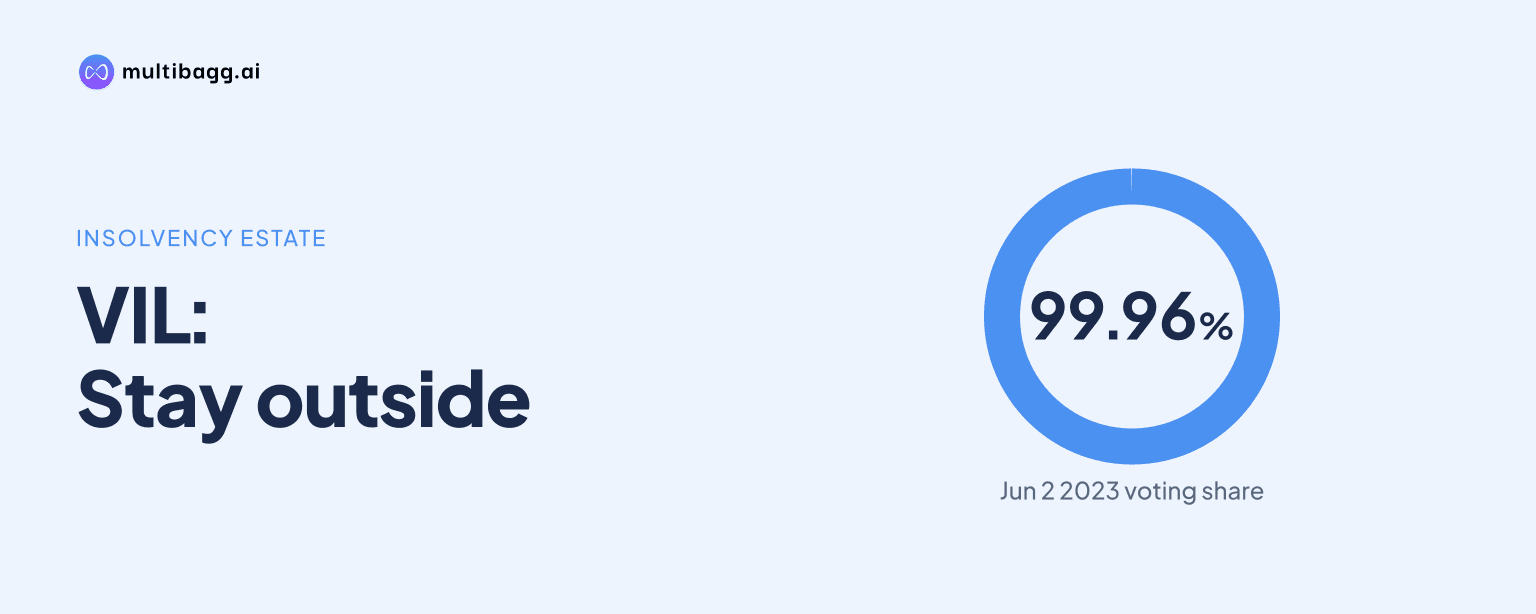
Videocon Industries Limited (VIL) cannot include its Brazilian and Indonesian oil and gas interests in its insolvency estate because they were held by subsidiaries, which Section 18 of the Insolvency and Bankruptcy Code, 2016 excludes; BPRL’s Brazilian right-of-first-refusal transaction concluded on 2 July 2026.
Know Value Industries inside out
Results, valuation, peers and who's buying, in one view.
Why are VIL’s overseas oil and gas assets outside its CIRP?
VIL’s overseas oil and gas assets are outside its corporate insolvency resolution process (CIRP) because clause (b) of the Explanation to Section 18 excludes assets of an Indian or foreign subsidiary from the parent company’s estate. Section 36(4)(d) applies the same exclusion to a liquidation estate, and the Court held that a holding company does not own a subsidiary’s assets merely through its shareholding.
The ownership chain was decisive in the Court’s finding. VIL held all shares of Videocon Oil Ventures Limited (VOVL) and 1% of Videocon Hydrocarbon Holdings Limited (VHHL), while VOVL held the remaining 99% of VHHL. VHHL wholly owned Videocon Energy Brasil Limited (VEBL) and Videocon Indonesia Nunukan Inc. (VINI), leaving VIL without a direct interest in the Brazilian or Indonesian operating assets.
The Brazilian interests were held through IBV Brasil Petróleo Limitada (IBV), in which VEBL and BPRL Ventures B.V. held quotas in equal proportion. VINI held the Indonesian participating interest in the Nunukan block. The Court ruled that indirect ownership through VOVL, VHHL, VEBL and VINI did not turn those underlying interests into property of VIL for the CIRP that began on 6 June 2018.
Which insolvency processes and orders shaped this dispute?
VIL entered CIRP on 6 June 2018, whereas VOVL entered a separate CIRP on 8 November 2019 after admission of an application under Section 9 of the Code. The dispute covered participating interests in four Brazilian oil and gas concessions and the Nunukan block in Indonesia, rather than assets held directly in VIL’s name.
The National Company Law Tribunal (NCLT) consolidated the CIRPs of VIL and 12 domestic group companies on 8 August 2019, but did not include VOVL. The NCLT later ordered, on 12 February 2020, that the foreign assets be included in VIL’s CIRP, but the National Company Law Appellate Tribunal (NCLAT) stayed that order on 19 February 2020.
A separate application to consolidate VOVL’s CIRP with VIL’s, M.A. No. 3944 of 2019, was dismissed for non-prosecution on 9 February 2022. The Court also noted that VIL’s resolution plan had shown VIL’s shares in VOVL as an asset, distinguishing those shares from assets owned by VOVL and its subsidiaries.
Why did beneficial ownership agreements not establish VIL ownership?
VIL’s beneficial ownership agreements did not establish ownership because the Court found that the three intra-group agreements of 2008, 2010 and 2015 did not transfer legal title from subsidiaries to VIL. The agreements stated that overseas subsidiaries would hold the foreign assets for VIL’s benefit, but they were not documents transferring the subsidiaries’ property to the parent.
The promoter argued that VIL was the original acquirer, provided performance guarantees and had claims of Rs 23,120.90 crore, described as about 40.2% of admitted claims, linked to the assets. The Court held that lender correspondence, loan documentation and related arrangements could not confer title on VIL where no transfer document existed and Section 18 expressly excluded subsidiary assets.
The Court also rejected the request to lift the corporate veil and treat the group as a single economic unit. It held that veil lifting cannot override clause (b) of the Explanation to Section 18, which contains no condition based on the source of funding or the way a subsidiary acquired an asset.
The Court further found that the promoter could not seek inclusion after taking inconsistent positions. It cited letters dated 21 November 2016 and 17 January 2017 seeking VIL’s release as co-obligor, participation in monetisation, and a Section 12A proposal that excluded offshore assets; that proposal was rejected with 98.14% of voting share.
Got a follow-up? Ask IRIS
What was the outcome of BPRL’s Brazilian ROFR transaction?
BPRL’s Brazilian right of first refusal (ROFR) transaction remains undisturbed because it arose from a pre-existing contractual right, received 99.96% approval from VOVL’s committee of creditors on 2 June 2023, and concluded on 2 July 2026. The Court found no basis to interfere with the completed transaction or VOVL’s separate CIRP.
The transfer of VEBL’s quotas in IBV triggered BPRL’s ROFR under the quotaholders’ agreement dated 12 September 2008. After PRIO S.A. and Eneva S.A. made offers for the Brazilian assets, VOVL issued a ROFR notice on 13 April 2023 and BPRL matched the offers on 26 May 2023.
The NCLT approved the transaction on 26 June 2024 while dismissing the promoter’s application to reject it. BPRL told the Court that it invested about USD 109.2 crore in the Brazilian assets after Cabinet Committee on Economic Affairs approval on 27 July 2022, and paid about USD 15.1 crore between December 2018 and December 2025 to cure VEBL defaults and prevent forfeiture.
The Indonesian interest followed a different path. Pertamina submitted that VINI’s 23% participating interest in the Nunukan block was deemed transferred on 11 July 2019 following VINI’s default and was formally effected by Indonesia on 8 July 2026, meaning that no VINI interest existed when the NCLT made its inclusion order on 12 February 2020.
What does the ruling mean for VIL creditors and vendors?
VIL creditors and vendors may recover from VIL’s own estate under the Code, but the Court held that they have no entitlement to recover from overseas assets belonging to subsidiaries. The VIL Vendors Association represented about 97 unpaid suppliers, mostly micro, small and medium enterprises, who were stated to receive 0.72% of their admitted claims.
The association argued that the foreign assets were valued at USD 702 crore and that common lenders might recover twice against claims of Rs 23,120.90 crore. The Court held that valuation was irrelevant to VIL’s CIRP because the assets did not belong to VIL, and described the vendors’ claimed injury from exclusion as derivative.
The Court said the association could pursue remedies available under law. If VIL transferred rights or provided guarantees without consideration, the Court identified Sections 43 to 51 and 66 of the Code as possible routes before the adjudicating authority, while recording that no such application had been filed in the proceedings before it.
The ruling also separates ownership questions from creditor voting and commercial assessment. The Court said inclusion under Section 18 is a legal issue, while matters including the resolution plan’s valuation and haircut are within the committee of creditors’ commercial wisdom; liquidation value had been placed before the committee on 2 September 2020.
Conclusion
The ruling confirms that VIL’s indirect economic connection to Brazilian and Indonesian oil and gas interests did not make them assets of VIL’s insolvency estate. The statutory exclusion for subsidiary property prevailed over beneficial ownership arrangements, claimed lender acknowledgements and the proposed single-economic-unit approach, while the completed Brazilian ROFR transaction remained intact.
What to watch next is whether the VIL Vendors Association or another eligible party pursues the remedies the Court identified under Sections 43 to 51 and 66 of the Code. The record also leaves VIL creditor recoveries dependent on VIL’s own estate, while the source states that VINI’s 23% Nunukan interest had already been transferred following the 2019 default process.