










Vishal Fabrics Limited Profit Rises 20% Despite Revenue Fall
Key highlights
- Vishal Fabrics Limited's consolidated Q2 FY27 profit rose 20.27% year-on-year to Rs 11.57 crore.
- Vishal Fabrics Limited's Q2 FY27 revenue declined 15.41% year-on-year to Rs 366.33 crore.
- Vishal Fabrics Limited's standalone EBITDA margin improved to 7.9% from 6.8% in Q2 FY26.
- Vishal Fabrics Limited's trade receivables rose to Rs 75.01 crore on September 30, 2026, from Rs 64.79 crore on March 31, 2026.
powered by IRIS
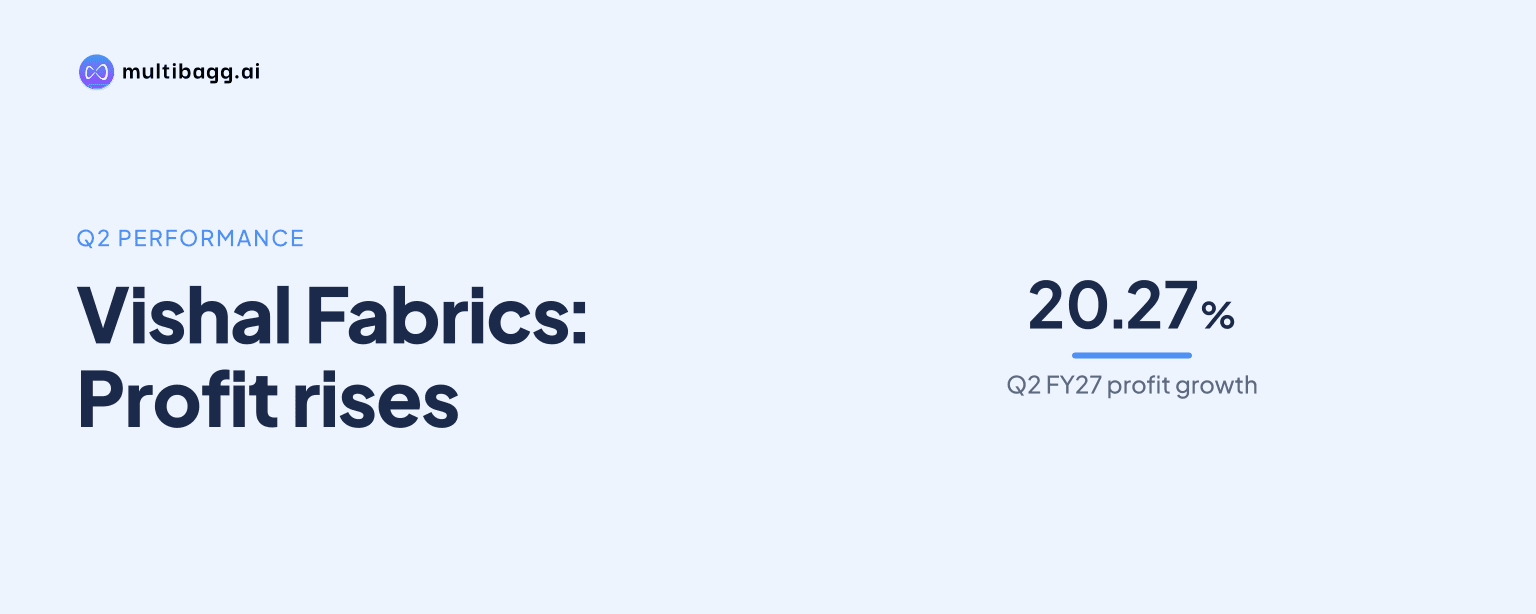
Vishal Fabrics Limited reported a 20.27% year-on-year rise in consolidated profit to Rs 11.57 crore for Q2 FY27, even as revenue from operations declined 15.41% to Rs 366.33 crore in the quarter ended September 30, 2026. The result points to improved profitability amid softer demand conditions.
Know Vishal Fabrics inside out
Results, valuation, peers and who's buying, in one view.
What did VFL report for Q2 FY27?
VFL reported consolidated profit after tax of Rs 11.57 crore in Q2 FY27, compared with Rs 9.62 crore in Q2 FY26. Revenue from operations declined to Rs 366.33 crore from Rs 433.09 crore a year earlier. The company announced the unaudited results after its board meeting on November 3, 2026.
The quarterly outcome showed a clear divergence between the top line and earnings. Revenue declined by 15.41% year-on-year, while consolidated profit increased by 20.27%. On a standalone basis, VFL reported profit after tax of Rs 10.63 crore, against Rs 8.81 crore in the corresponding quarter of the previous financial year.
The company also reported standalone profit before tax of Rs 13.17 crore for the September quarter. Standalone earnings per share stood at Rs 0.43. Revenue was the same Rs 366.33 crore on the standalone and consolidated reporting basis stated in the results information.
Why did VFL's profit increase despite lower revenue?
VFL's profit increased despite lower revenue because its operating margin improved to 7.9% from 6.8% a year earlier. Management attributed the improvement to tighter raw-material management and a leaner cost structure, while stating that it prioritised quality of earnings over sales volume in a softer demand environment.
The 110-basis-point improvement in the Q2 EBITDA margin is significant because it offset part of the pressure caused by lower sales. The company said its operating performance reflected greater efficiency in managing input costs and operations. The available results do not quantify the contribution of each individual cost line to the margin gain.
VFL described demand conditions as softer during the period. Its comments indicate that the company chose not to pursue volume at the expense of profitability. This approach resulted in a lower revenue base but higher reported profit for the quarter.
How did VFL perform in the first half of FY27?
VFL reported a 5% rise in standalone profit after tax to Rs 17.67 crore for the half year ended September 30, 2026, while first-half revenue from operations declined to Rs 745.41 crore from Rs 830.30 crore in the year-earlier period. The first-half EBITDA margin rose to 7.4% from 7.0%.
The six-month figures show that the Q2 margin improvement followed a weaker revenue trend across the first half. Revenue fell by about Rs 84.89 crore from the comparable period of FY26, whereas profit still increased. This indicates that operating-margin expansion was relevant not only in the September quarter but also for the first six months.
The Q2 result also represented an improvement from the preceding quarter on consolidated profitability. Consolidated profit was reported at Rs 7.16 crore in Q1 FY27, compared with Rs 11.57 crore in Q2 FY27. The company had reported Q1 revenue of Rs 379 crore and an operating margin of 6.9%.
Got a follow-up? Ask IRIS
What operational and leadership developments matter for investors?
VFL appointed Ravindra Bajranglal Bajaj as chief executive officer effective November 3, 2026, following the resignation of Suketu Shah. The board approved both the financial results and the leadership change on the same date. Shah resigned citing personal reasons and other professional engagements.
The company said it would focus in the second half of FY27 on operational efficiency, value-added product offerings and expansion into new geographies. VFL specifically identified Latin America, Europe, Africa and Bangladesh as markets where it intends to deepen its presence. These are stated business priorities, not financial targets disclosed by the company.
Working-capital data remain relevant alongside the improvement in reported profitability. Trade receivables stood at Rs 75.01 crore as of September 30, 2026, compared with Rs 64.79 crore as of March 31, 2026. Cash generated from operating activities was negative Rs 6.08 crore for the first half, compared with positive Rs 2.93 crore in the previous full financial year cited in the available information.
How does the Q2 result affect VFL's market position?
VFL's Q2 result shows that margin management supported earnings even as textile demand and revenue weakened. For investors, the increase in profit and EBITDA margin provides evidence of improved operational profitability, while the revenue decline shows that sales conditions remained challenging during the quarter.
The company operates in the textile manufacturing sector, where raw-material costs, demand conditions and customer credit cycles can materially affect results. Higher receivables alongside negative first-half operating cash flow mean that profit conversion into cash remains an important area to monitor. The CEO transition and the company's stated overseas-market focus add further operational factors for shareholders to track.
Conclusion
Vishal Fabrics Limited delivered higher Q2 FY27 profit despite a 15.41% decline in revenue, supported by a 110-basis-point improvement in standalone EBITDA margin. Consolidated profit after tax rose to Rs 11.57 crore, while the first-half numbers also showed higher profit and lower revenue, underlining the role of cost discipline in the reported performance.
Next, investors will watch whether VFL can sustain margins while addressing the revenue slowdown and higher receivables. The company has disclosed plans to pursue value-added offerings and expand its presence in Latin America, Europe, Africa and Bangladesh during the second half of FY27, alongside a leadership transition to its new CEO.