










Xelpmoc presents RELY software but discloses no customers
Key highlights
- Xelpmoc cites 40% faster administrative tasks for RELY, but the supplied pages disclose no customer count.
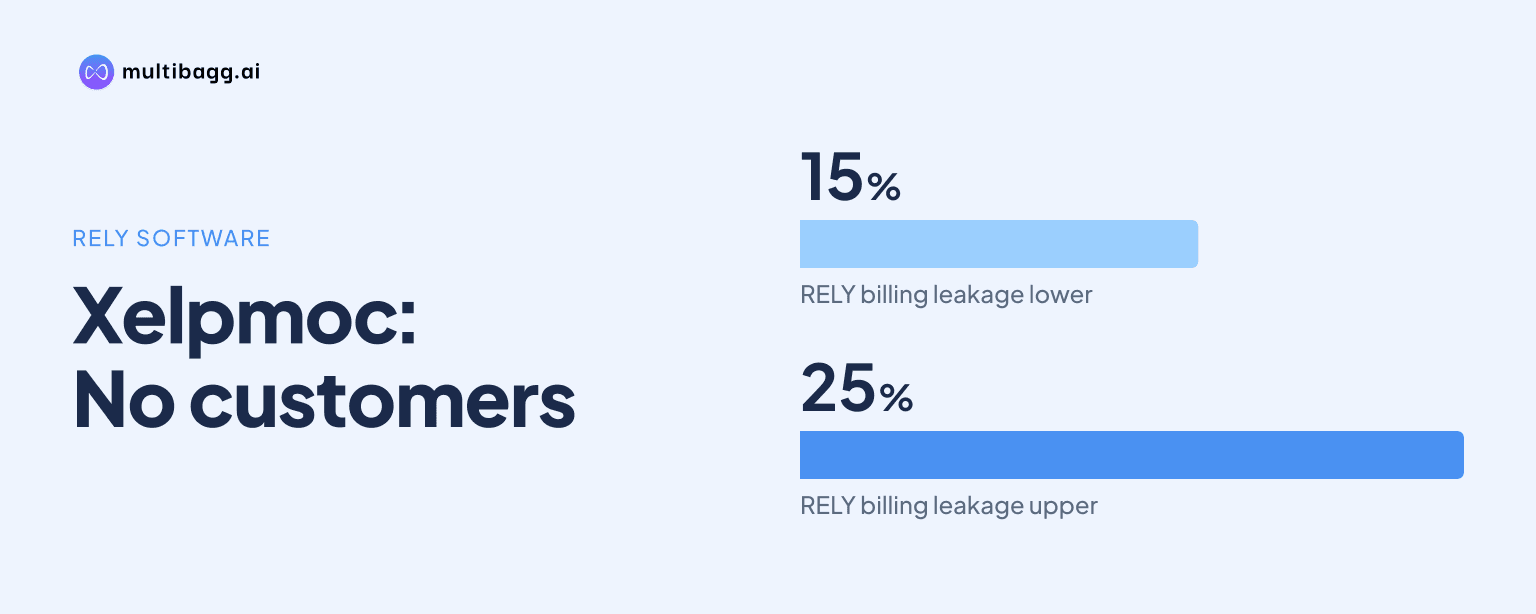
- RELY Assist is presented as reducing billing leakage by 15% to 25%.
- RELY CRM is presented as recovering 40% to 60% of lost admission leads.
- Xelpmoc reported 68 clients and a 73-member team as of September 30, 2026.
powered by IRIS
Xelpmoc Design and Tech Limited presents RELY as an end-to-end senior-living software suite and cites 40% faster administrative tasks as its largest stated operational benefit, but the supplied pages do not disclose a commercial-launch date, three onboarded customers, customer names, live properties, pricing or RELY-specific revenue.
Know Xelpmoc Design and Tech inside out
Results, valuation, peers and who's buying, in one view.
What has Xelpmoc disclosed about RELY's commercial launch?
Xelpmoc has disclosed RELY as its flagship suite for India’s senior independent and assisted-living enterprises, but it has not disclosed a commercial-launch event or three customer onboardings in the supplied material. The presentation says the suite leads Xelpmoc’s entry into the sector through Reverely Agetech, described as a venture studio by Xelp dedicated to elder-care innovation in India.
The disclosed product scope covers operations, care, customer relationship management, billing, food and beverage, and inventory. However, the RELY pages provide no count of signed customers, live facilities, contracted properties or implementation projects. They also provide no annual contract value, subscription revenue, billing rate or renewal metric that would quantify commercial adoption.
Reverely Agetech lists ageing in communities and at home, caregiving, fall prevention and the future of work as areas of focus. RELY is more specifically positioned for senior independent and assisted living. Xelpmoc says the platform can scale across multiple properties in India, but does not state how many properties used RELY as of September 30, 2026, the date attached to company-wide traction data elsewhere in the presentation.
What does RELY software include for senior-living operators?
RELY includes three named modules: RELY Assist for assisted care, RELY Active for senior-living operations and RELY CRM for admissions and growth. RELY Assist covers resident lifecycles, care plans, digital health records, family communication, automated billing, staff rostering, task allocation and compliance. Xelpmoc states that automated billing reduces leakage by 15% to 25%, but does not identify an operator or measurement period behind that range.
RELY Active manages multi-department workforces, kitchen and dietary systems, inventory, vendors, assets, maintenance, service requests and security or gate management. RELY CRM covers the path from enquiry to admission, with built-in calling and integrations with WhatsApp and Meta. Xelpmoc says the CRM module can recover 40% to 60% of lost leads while giving sales teams real-time pipeline visibility.
The common platform layer is designed to connect care, operations and sales in one system rather than fragmented tools such as Excel and WhatsApp. Xelpmoc also lists centralised real-time dashboards, key performance indicator tracking, performance analytics and predictive insights. Its security features include role-based access, data protection and audit-ready compliance systems, while its future ecosystem plan names Sigma and Omega analytics alongside deeper automation and integrations.
Got a follow-up? Ask IRIS
What performance benefits does Xelpmoc attribute to RELY?
Xelpmoc attributes 40% faster administrative tasks, 25% to 30% lower operating costs and 30% higher resident satisfaction to RELY. These figures appear under the presentation’s “ROI & Benefits” heading and are product benefit statements. The material does not provide a customer sample, baseline, comparison period, cost base or methodology for the stated percentages.
The stated 40% administrative improvement is the largest single operational figure on the RELY pages. The 25% to 30% operating-cost range is linked to plugging leakages, while the 30% resident-satisfaction figure is listed without a defined survey period or measurement method. Therefore, the presentation supports describing these numbers as Xelpmoc’s stated potential benefits, not as audited or reported outcomes from named users.
Xelpmoc describes the mechanisms supporting these claims as automated billing, digital care records, staff task allocation, centralised control and data-driven planning. The suite is also presented as localised for India through six languages, cultural menus and regulatory compliance. Onboarding, training and customisation are included in its stated end-to-end support, although no implementation timeframe or support-team size is disclosed.
How does RELY fit within Xelpmoc's wider business?
Xelpmoc places RELY within a wider business that provides product development, data science and analytics consulting. As of September 30, 2026, it reported 68 clients, a team size of 73 and 12 investee companies. The company describes itself as a technology partner and consultant working with governments, businesses, individuals and start-ups, making RELY a sector-specific platform within that broader technology activity.
For Q2 FY27, Xelpmoc reported a revenue mix of 70.9% international and 29.1% domestic. It also reported total operating revenue of Rs 1.82 crore for H1 FY27. The presentation does not split that revenue among consulting, RELY, DocuXray.ai, investee companies or other activities, so RELY’s contribution to operating revenue cannot be calculated from the supplied pages.
The difference between the company-level data and RELY-level disclosure is material. Xelpmoc provides counts for 68 clients and 73 team members, while the RELY pages provide feature descriptions and potential-benefit percentages without equivalent deployment or revenue data. The platform’s stated multi-property scalability indicates its intended delivery model, but it does not establish its installed base in Q2 FY27.
What should readers distinguish in Xelpmoc's RELY disclosure?
Readers should distinguish product capabilities from commercial traction because Xelpmoc provides detailed mechanisms for RELY but no customer, contract or revenue metric for the suite. The features include care planning, health records, rostering, inventory, admissions workflow and compliance controls. The commercial data absent from the supplied pages include customer names, customer count, property count, implementation milestones and subscription value.
Readers should also distinguish the 15% to 25% billing-leakage range and 40% to 60% lost-lead-recovery range from reported financial results. These are stated product outcomes attached to RELY Assist and RELY CRM, respectively. By comparison, Rs 1.82 crore of H1 FY27 operating revenue is a company-wide reported figure, and the source gives no basis to assign any portion of it to RELY.
Conclusion
Xelpmoc presents RELY as a unified senior-living suite spanning assisted care, property operations, admissions, billing and compliance. Its most prominent stated benefit is 40% faster administration, supported by claims of 15% to 25% lower billing leakage, 40% to 60% lost-lead recovery, 25% to 30% lower operating costs and 30% higher resident satisfaction. The supplied material does not substantiate the stated topic’s commercial-launch timing or three-customer onboarding.
What to watch next is whether Xelpmoc discloses RELY’s live properties, customer count, contract metrics or revenue contribution. Management’s future ecosystem plan includes Sigma and Omega analytics, deeper workflow automation and integrations, while the September 30, 2026 baseline of 68 clients and 73 team members provides context for later company-wide traction disclosures.