










Xelpmoc says RELY count will rise after October onboarding
Key highlights
- Xelpmoc reported three RELY operators covering about 400 beds as of September 30.
- Customers discussed in August and September were onboarded in the first and second weeks of October.
- Xelpmoc said products contributed about 12% to 15% of revenue, while services supplied about 85% to 88%.
- Management said about 70% of Xelpmoc revenue came from overseas markets.
powered by IRIS
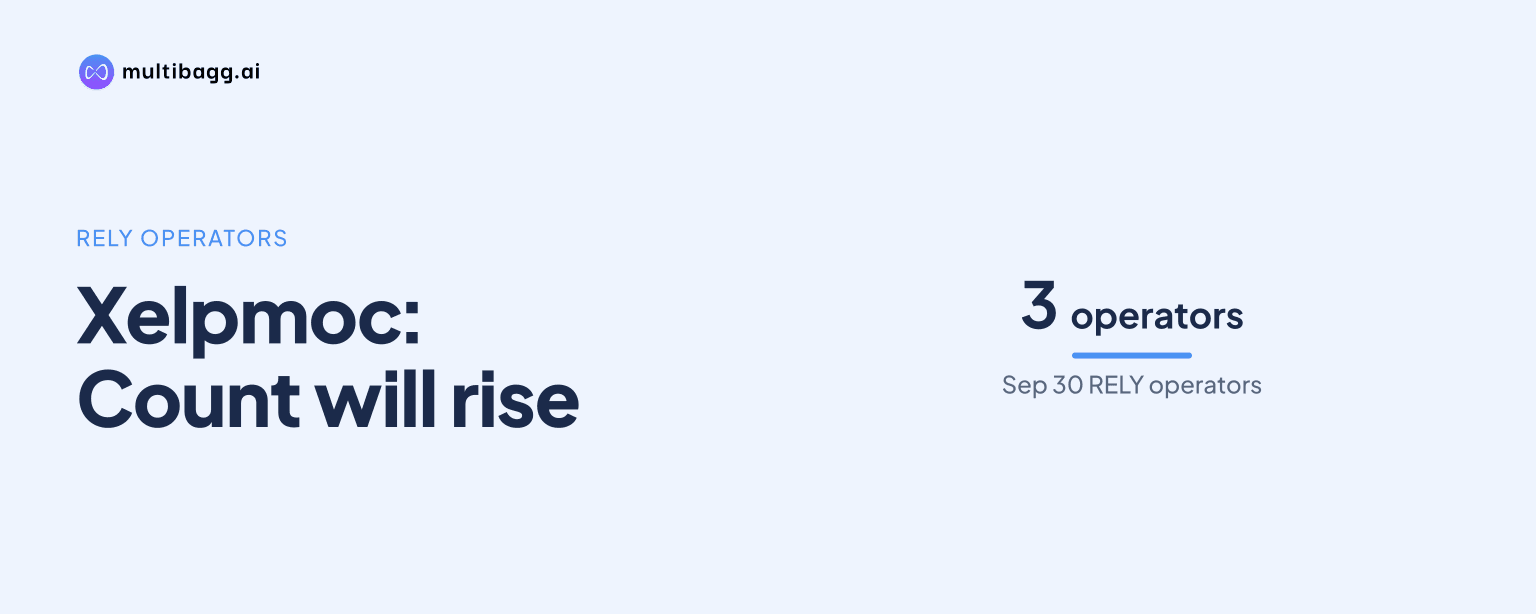
Xelpmoc Design and Tech Limited said RELY covered about 400 beds across three operators at September 30, while customers discussed in August and September were onboarded in the first two weeks of October. Management said the reported count should increase in December and March, but did not disclose a post-September customer total.
Know Xelpmoc Design and Tech inside out
Results, valuation, peers and who's buying, in one view.
How many RELY customers did Xelpmoc have at September-end?
Xelpmoc had three reported RELY operators covering close to 400 beds as of September 30. Management said the customer disclosure matched the financial reporting cutoff, meaning the three-operator figure did not include businesses that completed onboarding during October.
RELY is a subscription product charged on a per-bed or per-patient basis, according to management. The 400-bed figure therefore indicates the platform's initial operating footprint, but Xelpmoc did not disclose its price per bed, contract value, revenue from the three operators or an annual recurring revenue figure.
Management described the October change as the result of discussions held in August and September, with onboarding occurring in the first and second weeks of October. It did not state how many customers went live after September 30, so the 400-bed figure remains the latest disclosed operating volume in the transcript.
Why does Xelpmoc expect the RELY count to increase?
Xelpmoc expects the RELY count to increase because October onboarding occurred after the September 30 reporting date. Srinivas Koora said the number would change materially in the December and March periods, while providing no numerical target for operators, beds or subscriptions.
Management said the initial two or three pilots and user acceptance tests, or UATs, can take time before a customer goes live. It added that onboarding may become easier after a couple of companies are live, but this was a management view on the sales process rather than a stated forecast for conversion rates.
The key comparison is between the September-end base of three operators and the later customer additions that were excluded from that period's financial disclosure. Xelpmoc has indicated that the December and March periods should provide the next reported evidence of whether the post-September activity increased the platform's active footprint.
How is Xelpmoc selling RELY to care operators?
Xelpmoc is selling RELY to senior-living, assisted-living and home-care operators in what management called a Bharat-focused market. The company said each of the three segments needs a different go-to-market approach because their operator structures and buying processes differ.
For senior living, Xelpmoc directly approaches real-estate companies and concierge-service operators that manage services in senior-living apartments. For assisted living, it uses founder-led selling because many prospective customers are early-stage or mid-stage companies rather than large corporates.
Xelpmoc also works with market partners such as former geriatric practitioners, consultants and people already embedded with geriatric-care companies. For home care, management said the route to market is still evolving because the customer base is more distributed; its proposed mix includes digital outreach, direct engagement with home-care operators and potential regional partners.
The company said its digital activity is a small part of the wider sales effort and includes campaigns on Meta and LinkedIn. Xelpmoc did not disclose campaign spending, lead volumes, customer-acquisition cost or conversion rates for any of the three care segments.
Got a follow-up? Ask IRIS
How does RELY fit into Xelpmoc's revenue mix?
Xelpmoc said products accounted for about 12% to 15% of revenue at the time of the call, while services contributed about 85% to 88%. Management also said about 70% of revenue came from overseas markets and was largely driven by services projects started earlier.
RELY differs from those scope-based services projects because it is a long-term subscription offering priced per bed or patient. Management said the revenue mix could move towards products as product marketability develops, but it did not provide a date when product revenue could exceed services revenue or quantify RELY's contribution.
Xelpmoc said it is not turning away existing services customers, even while concentrating more on products. RELY sits within Xelpmoc rather than a separate entity, with dedicated personnel working on the product's technology and go-to-market responsibilities.
How does DocuXray's progress compare with RELY?
Xelpmoc described RELY as having three operators and about 400 beds at September 30, while DocuXray remained in pilots that were taking time to convert. Management attributed DocuXray's slower conversion process to corporate reviews of data privacy and workflows.
Management said engagement with potential DocuXray customers improved drastically between the first and second quarters discussed on the call. However, Xelpmoc did not disclose a customer count, transaction volume, contract value or revenue contribution for DocuXray, unlike the operating measures it provided for RELY.
DocuXray is designed to interpret documents and extract information from their context, with possible uses spanning payslips, bank statements and legal documents. Management said the underlying technology layer remains common across sectors, while training changes for each subject area; it cited legal technology work over five or six years and more recent work in real estate.
Management also said it was in discussions across five or six sectors for broader technology opportunities, of which two or three could progress. That statement did not identify the sectors or provide a timeframe, so it does not establish future contracts or revenue for either DocuXray or RELY.
Conclusion
The September 30 disclosure establishes RELY's reported base at three operators and about 400 beds, while the October onboarding indicates that the published count did not capture all commercial activity underway after the reporting cutoff. The product remains part of a revenue base in which services accounted for about 85% to 88%, with products contributing about 12% to 15%.
The next disclosed milestones are the December and March periods, which management said should show an improved RELY count. Other points to watch are whether pilots and UATs convert into live operators, whether Xelpmoc reports beds or subscription revenue after October onboarding, and whether DocuXray's stronger engagement between the two quarters results in contracts.