
Actions
Action Type





IRIS
Multibagg AI is an AI powered stock research and analysis platform. We provide data, information, content, and analytics for publicly traded Indian companies listed on NSE and BSE. AI can make mistakes, check important information.
Prices might be delayed by a few minutes.
Join our Exclusive Community


Join our Exclusive Community
Made with 💙 in India. © Finsky Technologies Pvt Ltd. 2026


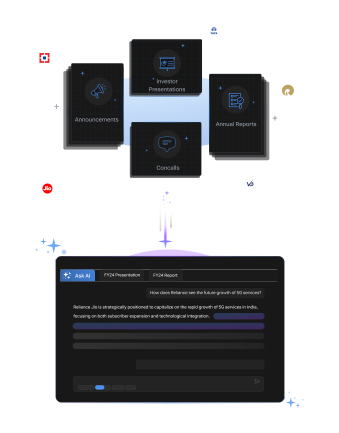
Get instant AI-powered insights about company performance, financials, and strategy. Ask questions about trends, competition, and developments while receiving responses backed by official documents and market data, with clear attribution to source documents.




 Discovery themes featuring this stock
Bearish
0
Neutral
14
Bullish
0
Bearish
0
Neutral
46
Bullish
0
Bearish
0
Neutral
32
Bullish
0
Bearish
0
Neutral
32
Bullish
0
Bearish
0
Neutral
32
Bullish
0
Bearish
0
Neutral
32
Bullish
0



Investor Presentation
Q3 FY26
| Symbol | Watchlist | Price | Market Cap | P/E | P/B | Div Yield (%) | ROE (%) | ROCE (%) | ROA (%) |
146.50 | 370 Cr | 9.68 | 1.03 | 0.00 | 10.23 | 13.23 | 6.87 | ||
33.81 | 361 Cr | 16.53 | 1.38 | 7.39 | 9.99 | 7.86 | 4.38 | ||
— | 324 Cr | 169.48 | 6.41 | 0.00 | 3.79 | 3.79 | 2.91 | ||
3.45 | 315 Cr | 5.70 | 1.26 | 3.86 | 22.16 | 27.89 | 16.40 | ||
291.40 | 297 Cr | 29.57 | 3.30 | 0.00 | 12.96 | 16.06 | 9.35 | ||
122.30 | 288 Cr | 4.45 | 1.03 | 0.00 | 14.40 | 14.78 | 10.47 | ||
1092.60 | 284 Cr | 35.96 | 1.77 | 0.27 | 4.93 | 9.08 | 1.97 | ||
| Median: 7 Co. | — | 134.40 | 315 Cr | 16.53 | 1.38 | 0.00 | 10.23 | 13.23 | 6.87 |



View Standalone
View Standalone
View Standalone
View Standalone
View Standalone
View Standalone
View Standalone
View Standalone


Nilkanth Engineering Limited is an India-based engineering and manufacturing group historically producing stainless-steel hospital furniture, injection and blow moulds, storage cabinets, trolleys and related products, while regulatory filings for Q1 FY2027 indicate the company reports its primary operating segment as fund-based leasing and financing activities, alongside consolidated reporting that includes three associate companies.
The consolidated Q1 results (30 June 2026) report Total Income of Rs. 6.55 lakhs and Profit attributable to owners of Rs. 59.34 lakhs (EPS 4.77), while standalone numbers show limited income and a negative per-share outcome; the difference is materially driven by share of profit from three associates that contributed Rs. 64.67 lakhs to consolidated results.
There is a material divergence between standalone and consolidated performance: standalone shows negative comprehensive outcomes and a small scale of operations, whereas consolidated reporting records substantial positive comprehensive income (Rs. 251.53 lakhs) driven by associate results and large fair value measurement movements, indicating reliance on investments/associates for consolidated profitability.
Governance and reporting follow formal review: independent auditors PKJ & Co. issued unqualified limited review reports for both standalone and consolidated quarterly statements, and the board approved the results on 12 August 2026; auditors noted that associate financials were unaudited and provided by management, which auditor consideration relied upon in the consolidated opinion.
Commercial Services & Supplies
Diversified Commercial Services
324 Cr
—
169.5
19.5
—
6.4
—
—
Sales CAGR
Profit CAGR
ROE
ROCE


Nilkanth Engineering Ltd (ZNILKENG) is currently trading at N/A per share. Stock prices fluctuate during market hours on NSE and BSE based on demand, company updates, and overall market conditions. Refer to the live price chart above for the most recent price movement.
Nilkanth Engineering Limited is an India-based engineering and manufacturing group historically producing stainless-steel hospital furniture, injection and blow moulds, storage cabinets, trolleys and related products, while regulatory filings for Q1 FY2027 indicate the company reports its primary operating segment as fund-based leasing and financing activities, alongside consolidated reporting that includes three associate companies. The consolidated Q1 results (30 June 2026) report Total Income of Rs. 6.55 lakhs and Profit attributable to owners of Rs. 59.34 lakhs (EPS 4.77), while standalone numbers show limited income and a negative per-share outcome; the difference is materially driven by share of profit from three associates that contributed Rs. 64.67 lakhs to consolidated results. There is a material divergence between standalone and consolidated performance: standalone shows negative comprehensive outcomes and a small scale of operations, whereas consolidated reporting records substantial positive comprehensive income (Rs. 251.53 lakhs) driven by associate results and large fair value measurement movements, indicating reliance on investments/associates for consolidated profitability. Governance and reporting follow formal review: independent auditors PKJ & Co. issued unqualified limited review reports for both standalone and consolidated quarterly statements, and the board approved the results on 12 August 2026; auditors noted that associate financials were unaudited and provided by management, which auditor consideration relied upon in the consolidated opinion.
Over the past 52 weeks, Nilkanth Engineering Ltd has traded between a low of ₹0.00 and a high of ₹0.00. The 52-week high and low indicate the stock’s price range over the last year and help investors understand its volatility and recent trading levels.
Nilkanth Engineering Ltd has a market capitalization of approximately 323.70. Market capitalization represents the total value of a company’s outstanding shares and helps investors understand its size, stability, and relative risk compared to other listed companies.
Nilkanth Engineering Ltd’s investment profile depends on its business fundamentals, valuation, and long-term outlook. The stock currently trades at a PE ratio of 169.48 and operates in the its sector sector. Investors typically assess financial performance, growth prospects, and individual risk tolerance before making investment decisions.
Based on its market capitalization of 323.70 Cr, Nilkanth Engineering Ltd is classified as a Small Cap stock. Large-cap stocks are generally more stable, while mid-cap and small-cap stocks tend to offer higher growth potential along with higher price volatility.
Nilkanth Engineering Ltd operates in the its sector sector. Sector classification matters because companies in the same sector are often affected by similar economic conditions, regulatory changes, and competitive dynamics, which can influence overall stock performance.
The Price-to-Earnings (PE) ratio of Nilkanth Engineering Ltd is 169.48. The PE ratio compares a company’s share price to its earnings and is commonly used to assess valuation. Comparing the PE ratio with sector peers and historical levels provides better context.


