





AGM/EGM Notice
Niva Bupa Postal Ballot Notice
Niva Bupa seeks shareholder approval to increase its ESOP pool by 3.9 crore options through postal ballot voting from November 19 to December 18, 2026.





IRIS
Multibagg AI is an AI powered stock research and analysis platform. We provide data, information, content, and analytics for publicly traded Indian companies listed on NSE and BSE. AI can make mistakes, check important information.
Prices might be delayed by a few minutes.
Join our Exclusive Community


Join our Exclusive Community
Made with 💙 in India. © Finsky Technologies Pvt Ltd. 2026


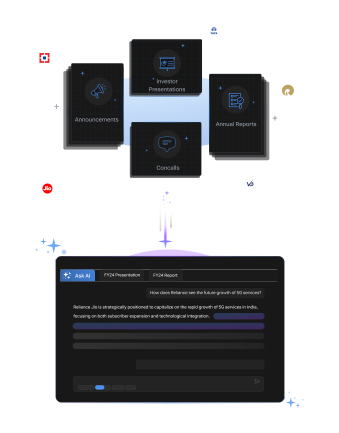
Get instant AI-powered insights about company performance, financials, and strategy. Ask questions about trends, competition, and developments while receiving responses backed by official documents and market data, with clear attribution to source documents.




 Discovery themes featuring this stock
Bearish
2
Neutral
8
Bullish
4
Bearish
30
Neutral
8
Bullish
8
Bearish
28
Neutral
0
Bullish
4
Bearish
28
Neutral
0
Bullish
4
Bearish
28
Neutral
0
Bullish
4
Bearish
28
Neutral
0
Bullish
4
Discovery themes featuring this stock

Niva Bupa Health Insurance Company Limited is a standalone health insurer focused primarily on retail health insurance, while also underwriting personal accident, critical illness and travel products. Promoted by Bupa entities, the company operates across individual, group, affinity and attachment channels, with retail business forming the strategic core of its expanding portfolio.
Niva Bupa delivered strong H1 FY27 growth, with gross written premium rising 26% excluding the one-time industry impact to INR 5,004 crore. Retail health grew 37% to approximately INR 3,800 crore, lifting retail contribution to 77% of the book from roughly 75% at the end of Q1.
Profitability improved materially under Ind AS, with profit after tax increasing to INR 273 crore from INR 132 crore in the comparable period. Combined insurance service ratio improved 365 basis points to 99.5%, while the retail loss ratio declined to 67.4%, reflecting better fresh-business quality, disciplined pricing and portfolio mix.
The company is using technology, analytics and generative AI to improve claims decision consistency and customer servicing. Its preferred provider network spans 49 cities and 1,132 hospitals, with 22% of cashless claims routed through these facilities, which management says are typically 15%–20% cheaper than tertiary and quaternary hospitals.
Growth remains strong but regulatory and reputational questions matter. Proposed distribution reforms could reduce acquisition costs and alter channel economics, while solvency has declined over several quarters despite remaining comfortable at 2.03x. Management expects demand to expand as insurance prices and commissions adjust, but future capital needs remain linked to growth and regulation.
Insurance
General Insurance
14,344 Cr
Low Risk
27.0
14.1
2.5
3.7
91.20
67.50
Sales CAGR
Profit CAGR
ROE
ROCE

| Symbol | Watchlist | Price | Market Cap | P/E | P/B | Div Yield (%) | ROE (%) | ROCE (%) | ROA (%) |
549.00 | 33,420 Cr | 31.70 | 3.20 | 0.00 | 10.10 | 6.36 | 4.34 | ||
154.80 | 25,725 Cr | -45.70 | 0.91 | 0.96 | -1.90 | -1.35 | -0.49 | ||
243.55 | 22,708 Cr | 43.81 | 2.79 | 0.00 | 9.96 | 3.92 | 2.73 | ||
75.46 | 14,344 Cr | 27.02 | 3.73 | 0.00 | 8.98 | 11.15 | 2.85 | ||
129.75 | 12,768 Cr | 95.59 | 7.79 | 0.30 | 8.15 | 0.29 | 0.26 | ||
286.40 | 2,105 Cr | 19.53 | 2.38 | 0.71 | 12.72 | 13.85 | 7.48 | ||
71.04 | 1,992 Cr | -16.23 | 2.30 | 0.00 | -11.73 | -10.90 | -11.42 | ||
| Median: 7 Co. | — | 154.80 | 14,344 Cr | 27.02 | 2.79 | 0.00 | 8.98 | 3.92 | 2.73 |


AGM/EGM Notice
Niva Bupa seeks shareholder approval to increase its ESOP pool by 3.9 crore options through postal ballot voting from November 19 to December 18, 2026.
Regulatory/Compliance Filing
Niva Bupa paid ₹150 crore in debenture principal and ₹16.05 crore gross interest to debenture holders on November 13, 2026.
Regulatory/Compliance Filing
Niva Bupa redeemed 1,500 debentures at par on November 13, 2026, repaying ₹150 crore principal and ₹14.45 crore interest pursuant to its call option.
Niva Bupa Health Insurance Company Ltd (NIVABUPA) is currently trading at 75.46 per share. Stock prices fluctuate during market hours on NSE and BSE based on demand, company updates, and overall market conditions. Refer to the live price chart above for the most recent price movement.
Niva Bupa Health Insurance Company Limited is a standalone health insurer focused primarily on retail health insurance, while also underwriting personal accident, critical illness and travel products. Promoted by Bupa entities, the company operates across individual, group, affinity and attachment channels, with retail business forming the strategic core of its expanding portfolio. Niva Bupa delivered strong H1 FY27 growth, with gross written premium rising 26% excluding the one-time industry impact to INR 5,004 crore. Retail health grew 37% to approximately INR 3,800 crore, lifting retail contribution to 77% of the book from roughly 75% at the end of Q1. Profitability improved materially under Ind AS, with profit after tax increasing to INR 273 crore from INR 132 crore in the comparable period. Combined insurance service ratio improved 365 basis points to 99.5%, while the retail loss ratio declined to 67.4%, reflecting better fresh-business quality, disciplined pricing and portfolio mix. The company is using technology, analytics and generative AI to improve claims decision consistency and customer servicing. Its preferred provider network spans 49 cities and 1,132 hospitals, with 22% of cashless claims routed through these facilities, which management says are typically 15%–20% cheaper than tertiary and quaternary hospitals. Growth remains strong but regulatory and reputational questions matter. Proposed distribution reforms could reduce acquisition costs and alter channel economics, while solvency has declined over several quarters despite remaining comfortable at 2.03x. Management expects demand to expand as insurance prices and commissions adjust, but future capital needs remain linked to growth and regulation.
Over the past 52 weeks, Niva Bupa Health Insurance Company Ltd has traded between a low of ₹67.50 and a high of ₹91.20. The 52-week high and low indicate the stock’s price range over the last year and help investors understand its volatility and recent trading levels.
Niva Bupa Health Insurance Company Ltd has a market capitalization of approximately 14,344.27. Market capitalization represents the total value of a company’s outstanding shares and helps investors understand its size, stability, and relative risk compared to other listed companies.
Niva Bupa Health Insurance Company Ltd’s investment profile depends on its business fundamentals, valuation, and long-term outlook. The stock currently trades at a PE ratio of 27.02 and operates in the its sector sector. Investors typically assess financial performance, growth prospects, and individual risk tolerance before making investment decisions.
Based on its market capitalization of 14,344.27 Cr, Niva Bupa Health Insurance Company Ltd is classified as a Small Cap stock. Large-cap stocks are generally more stable, while mid-cap and small-cap stocks tend to offer higher growth potential along with higher price volatility.
Niva Bupa Health Insurance Company Ltd operates in the its sector sector. Sector classification matters because companies in the same sector are often affected by similar economic conditions, regulatory changes, and competitive dynamics, which can influence overall stock performance.
The Price-to-Earnings (PE) ratio of Niva Bupa Health Insurance Company Ltd is 27.02. The PE ratio compares a company’s share price to its earnings and is commonly used to assess valuation. Comparing the PE ratio with sector peers and historical levels provides better context.
Niva Bupa said it expects loan-linked health-cover volumes to remain broadly stable and possibly increase. Management said hospitalisation cover remains relevant to loans because hospitalisation is one of the major reasons for loan delinquency. It also said the channel's value could decline even if volumes hold up.
Niva Bupa said its H1 '26 solvency ratio was 2.03x under the Indian GAAP framework. Management said H1 is seasonally lower because profit is more heavily weighted to H2, particularly Q4. It did not provide a numerical H2 solvency forecast.
Niva Bupa reported a retail loss ratio of 67.4% in H1 '27. Management said this was 77 basis points below the comparable prior-year period.
Niva Bupa reported profit after tax of Rs 135.64 crore for the quarter ended September 30, 2026. It was Rs 60.52 crore in the corresponding quarter of 2025 and Rs 137.80 crore in the quarter ended June 30, 2026.
