








Gold ETF vs silver ETF in India explained
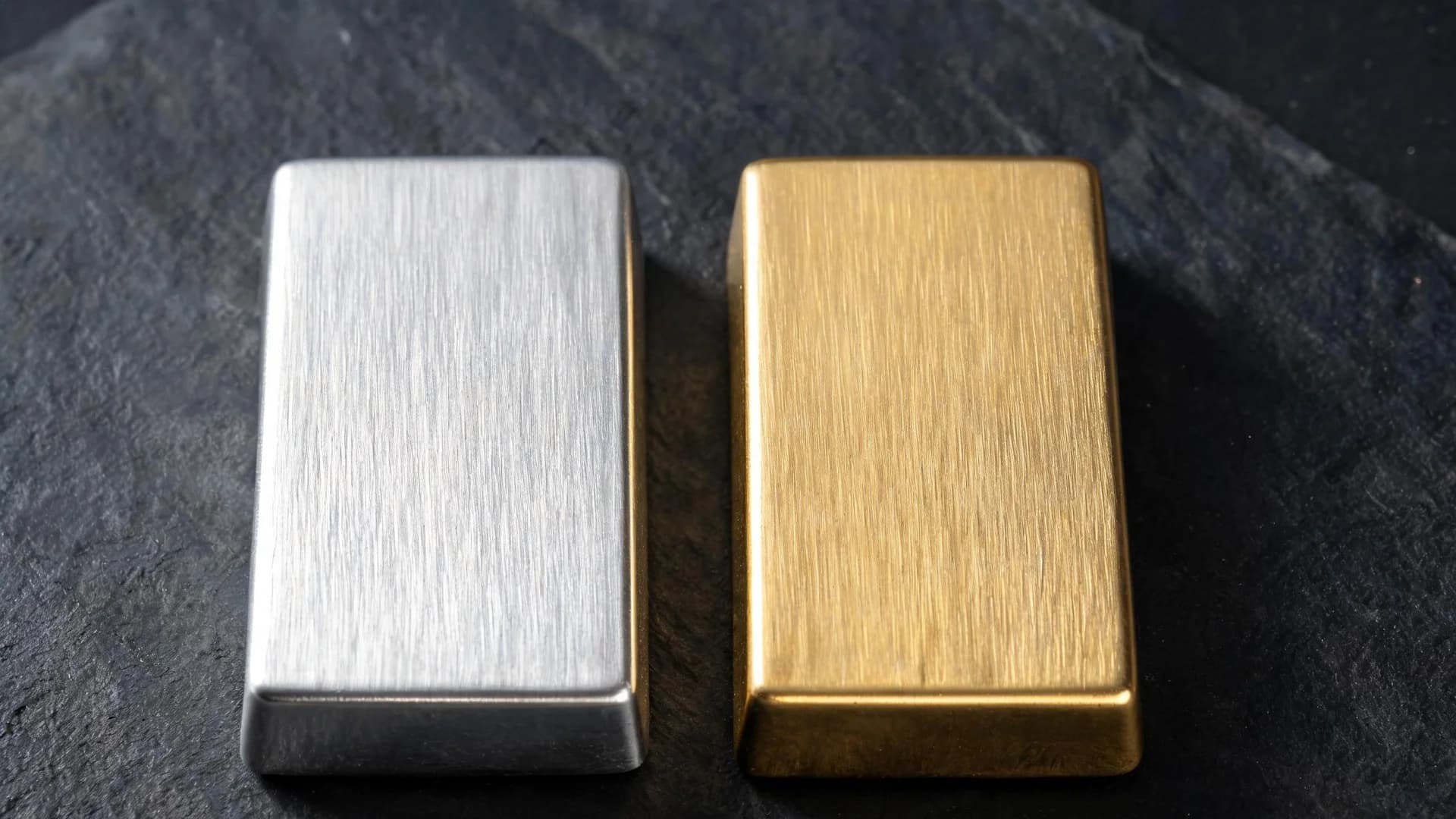
Quick Answer: Both are mutual fund schemes holding a physical metal, listed and traded on an exchange, and both must keep at least 95% of net assets in that metal. The differences that matter are purity standards, bar size and how the units are taxed, all of which are set by SEBI and Indian tax law rather than by the fund.
A gold ETF and a silver ETF are built to the same template. SEBI regulates them under one framework, they list on the same exchanges, and they are valued the same way.
Where they part company is in the detail of the metal each must hold, and in how the tax code treats the units. Those are the two questions worth answering, and both are settled in writing rather than by opinion.
What is the difference between a gold ETF and a silver ETF?
The underlying metal and its purity standard, not the structure. A gold ETF holds bars of 995 fineness; a silver ETF holds standard 30 kg bars of 999 parts per thousand, or 99.9% purity, both conforming to London Bullion Market Association Good Delivery standards.
Each must hold at least 95% of net assets in its metal and related instruments. A gold ETF, in one line, is a mutual fund scheme that holds physical gold and whose units trade on an exchange. A silver ETF is that same structure built on silver.
Listing is common to both. Under the SEBI (Mutual Funds) Regulations, 2026, ETF units must be listed and traded on a recognised stock exchange, so both trade at market prices through the session.
Gold ETF vs silver ETF in India in 2026: tracking and taxation
Tax follows what the portfolio holds and whether the units are listed, not which metal is inside. Under section 2(101) of the Income-tax Act, 2025, a security listed on a recognised stock exchange in India becomes long-term after 12 months, and section 197 sets the long-term rate at 12.5%.
How gold and silver exposure is treated (SEBI Master Circular 20 March 2026; SEBI circular on valuation of physical gold and silver, 26 February 2026; Income-tax Act, 2025)
| Gold ETF | Silver ETF | |
|---|---|---|
| Purity standard | 995 fineness | 999 fineness |
| Bar standard | LBMA Good Delivery | 30 kg bars, LBMA Good Delivery |
| Valuation price for the metal held (from 1 April 2026) | Gold spot price polled by recognised stock exchanges | Silver spot price polled by recognised stock exchanges |
| Tax (same for both) | Long-term after 12 months at 12.5% (s.2(101), s.197); short-term at slab rates | Same as gold |
Gold ETF tax in full, including how it compares with a fund of funds and physical gold, is in our gold ETF explainer, linked in the fund-of-funds section below.
Neither is an equity-oriented fund for tax, so the equity rates do not apply to either. That is the single most common error in this comparison.
Whether the units are listed matters more than which metal is inside, and the fund-of-funds section below shows why.
How are gold and silver ETFs backed and priced in India?
By physical metal held by the fund, valued under the methodology SEBI sets in its master circular for mutual funds, as on 20 March 2026. Nippon India Silver ETF tracks the domestic price of silver. Under SEBI's norms, both that benchmark and the silver the fund holds have been priced at exchange-polled spot prices since 1 April 2026, though the scheme's own description still calls the benchmark LBMA-based. It carried a NAV of ₹211.3689 on NSE's list as of 29 September 2026 at 10:23.
Purity standards are what make "physical backing" a checkable claim rather than a marketing line. Silver must be 30 kg bars at 999 fineness; gold at 995.
Market price and NAV are separate numbers. Units trade at whatever orders set, which is why the exchange publishes an indicative NAV through the session.
One rule applies to gold alone. A gold ETF may also hold gold deposit and gold monetisation scheme balances and exchange traded commodity derivatives, but SEBI caps the cumulative exposure to those gold-related instruments at 50% of net assets.
Inside that ceiling sits a tighter one. Bank gold deposit and monetisation scheme holdings together cannot exceed 20% of net assets, which limits how far a gold fund can move away from metal it holds outright.
Is a silver ETF equity or debt for tax?
Neither. A silver ETF is not an equity-oriented fund, because its assets are metal rather than listed domestic shares, and it is not a specified mutual fund, because that label attaches to funds investing more than 65% in debt and money market instruments.
It falls into the residual treatment for listed units instead: long-term after 12 months under section 2(101) of the Income-tax Act, 2025, taxed at 12.5% under section 197, with short-term gains at slab rates.
That is the same treatment a gold ETF receives, for the same reason. Nothing in the tax code distinguishes the two metals.
How do gold and silver ETFs compare with gold and silver fund of funds?
Fund-of-funds units are unlisted, so gains on them turn long-term only after 24 months, against 12 months for a listed ETF, and the long-term rate is 12.5% either way. Our gold ETF explainer covers how a fund of funds works and how its tax compares with the ETF and physical gold.
What should you check before comparing two commodity ETFs?
Read the scheme document, because the rules above are floors rather than descriptions of any one fund. The 95% asset rule, the purity standard and the listing requirement apply to every scheme in the category, so they do not distinguish one fund from another.
Expense ratio and tracking quality do. SEBI requires tracking error to be disclosed daily and tracking difference monthly on the AMC's website and on AMFI's, and for an ETF other than a debt one it sets a ceiling of 2% on the tracking error itself.
Scheme-level limits vary too, as our note on lump-sum limits in a gold ETF shows, and our note on a session when gold slipped on MCX shows the metal price moving underneath. Nothing here is a view on either metal.
Compare the schemes side by side
Regulatory floors are identical for both metals; fund-level numbers are not. Multibagg's ETF section lists the gold and silver schemes traded in India with their expense ratios and holdings.
Disclaimer: This article is for educational and informational purposes only. Multibagg AI is not a SEBI-registered investment adviser or research analyst, and it does not provide investment, financial, legal or tax advice. Nothing here is a recommendation to buy, sell, hold or invest in any security. Market data is shown as of the dates stated and may have changed since. Please consult a SEBI-registered adviser before making any investment decision.


Aaditya Aanand is the founder and CEO of Multibagg AI. An IIT Kanpur alumnus, he has worked across technology and financial markets at Goldman Sachs and American Express. His writing explores investing, markets and AI.