










Additional Surveillance Measure: ASM Raises Trading Costs
Key highlights
- ASM securities remain tradable, but applicable margins can rise to 100% of the trade value.
- Stage II can involve 25% or more close-to-close variation for five days and 30% or more client concentration.
- Stage IV can impose trade-to-trade settlement, a 100% margin and a 5% price band.
- The ASM status can change through inclusion, stage movement or exit after periodic reviews.
powered by IRIS
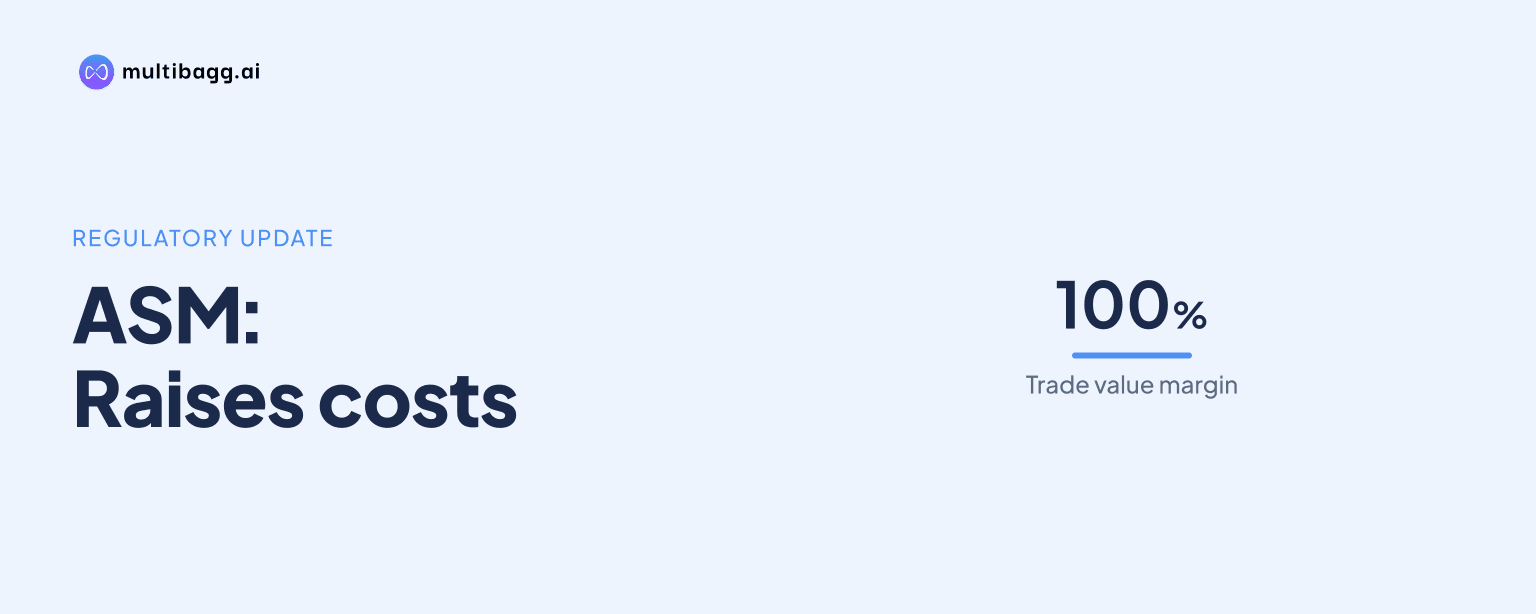
Additional Surveillance Measure can raise applicable trading margins to 100%, making trading more cash-intensive while securities remain tradable. The framework, jointly used by the Securities and Exchange Board of India and recognised stock exchanges, monitors unusual price moves, volume changes and trading patterns, with restrictions becoming tighter as surveillance stages advance.
What is ASM in the Indian stock market?
ASM is a market-surveillance framework for securities that show unusual price movements, volume changes or trading patterns. It is not a suspension of trading, and inclusion does not by itself indicate financial weakness, regulatory violations or a judgment on a company’s fundamentals.
The Securities and Exchange Board of India and recognised exchanges use the framework to impose additional trading conditions where objective surveillance parameters are met. A stock’s status can change through inclusion, movement between stages or exit after periodic reviews. For investors, the practical issue is not whether trading stops, but whether the terms for funding, settlement and price movement become more restrictive.
How does ASM change the cost of trading?
ASM can require a 100% margin, meaning the buyer may need to provide the full value of a trade upfront rather than use leverage. This can sharply raise the cash needed to build or maintain a position and can reduce speculative participation in the affected security.
Higher capital requirements may also alter how investors manage collateral and position size. Social-media discussions have focused on the potential loss of intraday flexibility and the difficulty of exiting during weak participation, but the applicable conditions depend on the surveillance stage and exchange requirements. Investors should therefore check the current notice for the specific security rather than assume identical restrictions apply to every ASM stock.
What happens when an ASM stock moves through stages?
The long-term ASM framework can escalate from a 100% margin requirement to tighter price bands and, at its most restrictive stage, trade-to-trade settlement. The stated sequence is based on persistent surveillance conditions, including close-to-close price variation and client concentration at Stage II.
A lower price band limits the range within which a share can move in a session. At Stage IV, the 5% band and gross settlement requirement can make trading notably less flexible. Trade-to-trade settlement requires compulsory delivery for each transaction, removing the ability to simply square off the purchase within the same day.
Got a follow-up? Ask IRIS
Why can ASM affect liquidity and exits?
ASM can reduce liquidity because higher margins and delivery-based settlement make short-term trading more expensive and restrictive. Lower participation can make it harder to buy or sell larger quantities at a preferred price, particularly when a stock reaches a circuit limit.
The tighter band can limit both gains and losses in one session, but it can also delay an exit. A seller may find it difficult to transact if a share hits its lower price limit and there are few buyers. Similarly, a buyer cannot assume that a lower band creates an immediate opportunity, since the full cash requirement and settlement conditions still apply.
What should retail investors check before trading ASM shares?
Retail investors should verify the latest ASM status, stage and applicable exchange conditions before placing an order. The relevant checks include the margin requirement, price band and whether the security has moved to trade-to-trade settlement.
Investors should also assess whether they have sufficient free cash for the entire purchase value and whether a restricted settlement mechanism suits their holding plan. The framework is designed around market surveillance, so an ASM label should be treated as a signal to review trading conditions carefully, not as a standalone conclusion about the underlying business.
Conclusion
ASM changes the mechanics of trading more than it changes a company’s fundamental status. Its most direct effect can be a 100% margin requirement, while later stages can add narrower price bands and compulsory delivery, reducing leverage and potentially limiting liquidity.
The next point to watch is the exchange’s periodic review of each security’s status. Investors should track whether a stock enters ASM, moves to a higher stage, remains under surveillance or exits the framework, because each outcome can change the cash requirement and settlement conditions for future trades.