










Asset Reconstruction Company (India) Ltd Reports 54% H1 Profit Growth
Key highlights
- ARCIL reported H1 FY27 profit after tax of Rs 290 crore, up 54% year-on-year.
- ARCIL's assets under management rose 21% to Rs 20,274 crore as of September 30, 2026.
- H1 FY27 recoveries increased 21% to Rs 2,135 crore, while acquisitions rose 18% to Rs 1,707 crore.
- ARCIL reported total income of Rs 516 crore for H1 FY27, a 48% year-on-year increase.
powered by IRIS
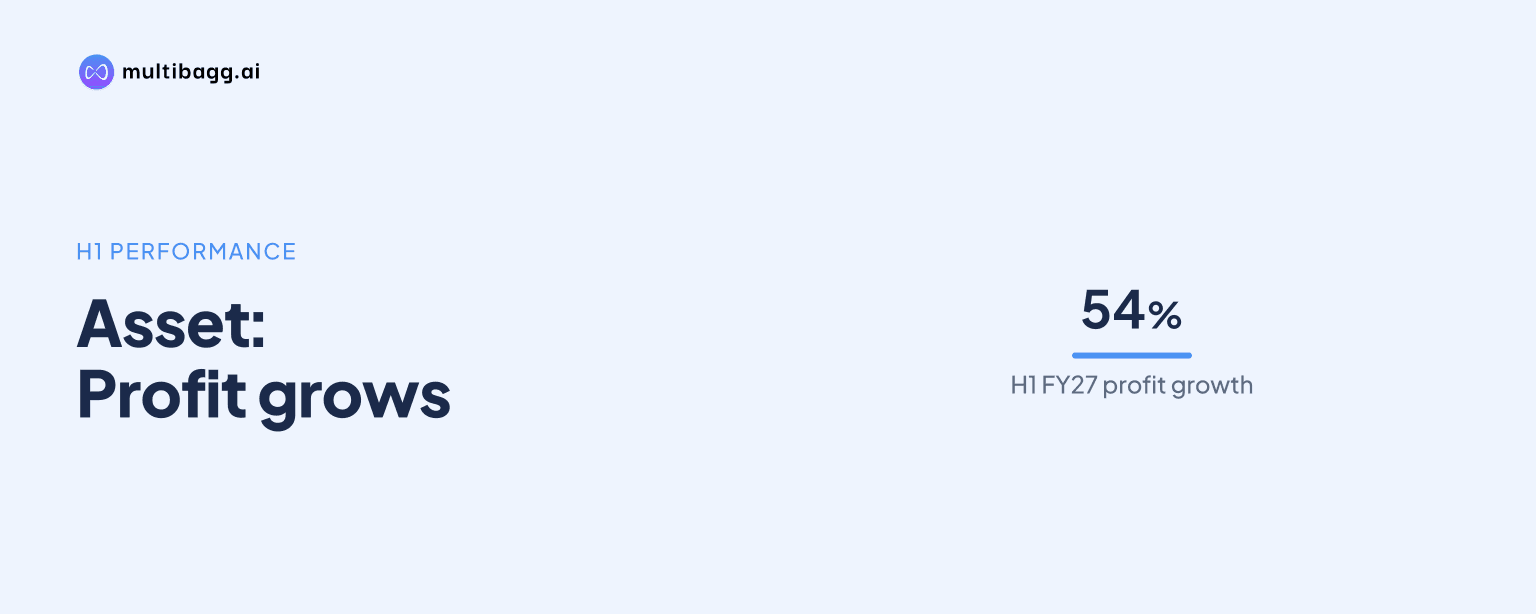
Asset Reconstruction Company (India) Ltd (ARCIL) reported a 54% year-on-year rise in profit after tax to Rs 290 crore for the first half of FY27, while assets under management increased 21% to Rs 20,274 crore as of September 30, 2026. The update was discussed in ARCIL's October 30 earnings call.
Know Asset Reconstruction Company (India) inside out
Results, valuation, peers and who's buying, in one view.
What did ARCIL report for the first half of FY27?
ARCIL reported broad-based growth in its operating and financial metrics for the half year ended September 30, 2026. Total income increased 48% year-on-year to Rs 516 crore, while profit after tax rose 54% to Rs 290 crore. The figures were presented by management during its earnings conference call with investors and analysts.
Assets under management stood at Rs 20,274 crore at the end of September 2026, compared with Rs 16,788 crore a year earlier. Management said acquisitions grew 18% to Rs 1,707 crore during the half year, while recoveries rose 21% to Rs 2,135 crore. These measures are central to an asset reconstruction company because acquisitions add to the portfolio and recoveries determine cash realisation from stressed assets.
How did ARCIL's asset mix change by September 2026?
ARCIL said corporate assets accounted for about 66% of its assets under management as of September 2026, followed by retail assets at 25% and small and medium enterprise assets at 9%. A year earlier, the respective shares were about 69%, 24% and 8%.
The change indicates that retail assets gained a modest share of the portfolio over the year, while corporate assets remained the largest category. ARCIL did not provide further financial details in the available call extract on the performance of each segment. The reported mix nonetheless provides context on the sources of its managed stressed-asset exposure.
ARCIL's management also said the company became India's first listed asset reconstruction company in September. The listing is a significant corporate development for a sector that has historically had limited direct representation in public equity markets.
Why was the October 30 earnings call important for investors?
ARCIL used its October 30, 2026 earnings call to discuss its quarterly and half-year performance for the period ended September 30, 2026, and subsequently made the audio recording available on its investor relations website. The call allowed management to present the half-year operating data and address the company's outlook with investors and analysts.
The company disclosed the recording in accordance with Regulation 30 of the SEBI Listing Obligations and Disclosure Requirements Regulations, 2015. This regulation requires listed companies to disclose specified material events and information to stock exchanges, supporting timely access to corporate communications.
The available materials also refer to an earlier earnings conference call held on October 7, 2026, for which a transcript was submitted on October 13, 2026. The October 30 call recording specifically related to the quarter and half year ended September 30, 2026.
Got a follow-up? Ask IRIS
What do the results indicate for ARCIL's operating model?
ARCIL's reported 21% growth in both assets under management and recoveries points to expansion in the managed portfolio alongside higher cash collections. Total income growth of 48% outpaced the growth in assets under management, while profit after tax grew 54%, based on the half-year comparison cited by management.
For an asset reconstruction company, recoveries and acquisitions are important operating indicators. Recoveries reflect the resolution and collection of acquired stressed assets, while acquisitions show additions to the portfolio. The disclosed figures show that both activities increased over the comparable half-year period.
The performance data should be read alongside the composition of the portfolio. Corporate assets still represented roughly two-thirds of assets under management, meaning ARCIL's overall portfolio remains principally linked to corporate stressed-asset resolution even as retail assets expanded their share.
How does ARCIL's update matter for the asset reconstruction sector?
ARCIL's update matters because the company described itself as India's first and largest private asset reconstruction company and said it became the first listed ARC in September. Its public disclosures provide investors with operating data on a business focused on buying and resolving distressed loans and related assets.
The 21% increase in recoveries to Rs 2,135 crore is relevant to the sector because recovery execution underpins the economics of asset reconstruction. Similarly, the 18% increase in acquisitions to Rs 1,707 crore shows continued portfolio activity during the half year. The available information does not provide sector-wide acquisition or recovery data for comparison.
For investors, the key disclosed measures are the pace of assets under management growth, recovery performance, income and profitability. ARCIL's October 30 call recording and related disclosures give shareholders access to management commentary alongside the reported H1 FY27 figures.
Conclusion
ARCIL reported higher income, profit, recoveries and assets under management for H1 FY27. Profit after tax rose 54% to Rs 290 crore and total income increased 48% to Rs 516 crore, while the managed portfolio reached Rs 20,274 crore at September-end.
Investors can watch future disclosures for changes in recoveries, acquisitions and the corporate, retail and SME portfolio mix. ARCIL has made the October 30 earnings call recording available, while the company has also disclosed the transcript of its October 7 conference call under Regulation 30.