










ARCIL Plans Retail and SME Growth on Pricing and Collections
Key highlights
- ARCIL acquired Rs 1,000 crore of SME and retail assets within Rs 1,700 crore of first-half acquisitions.
- ARCIL said unsecured acquisitions were at single-digit price levels and secured pools at levels in the mid-40s.
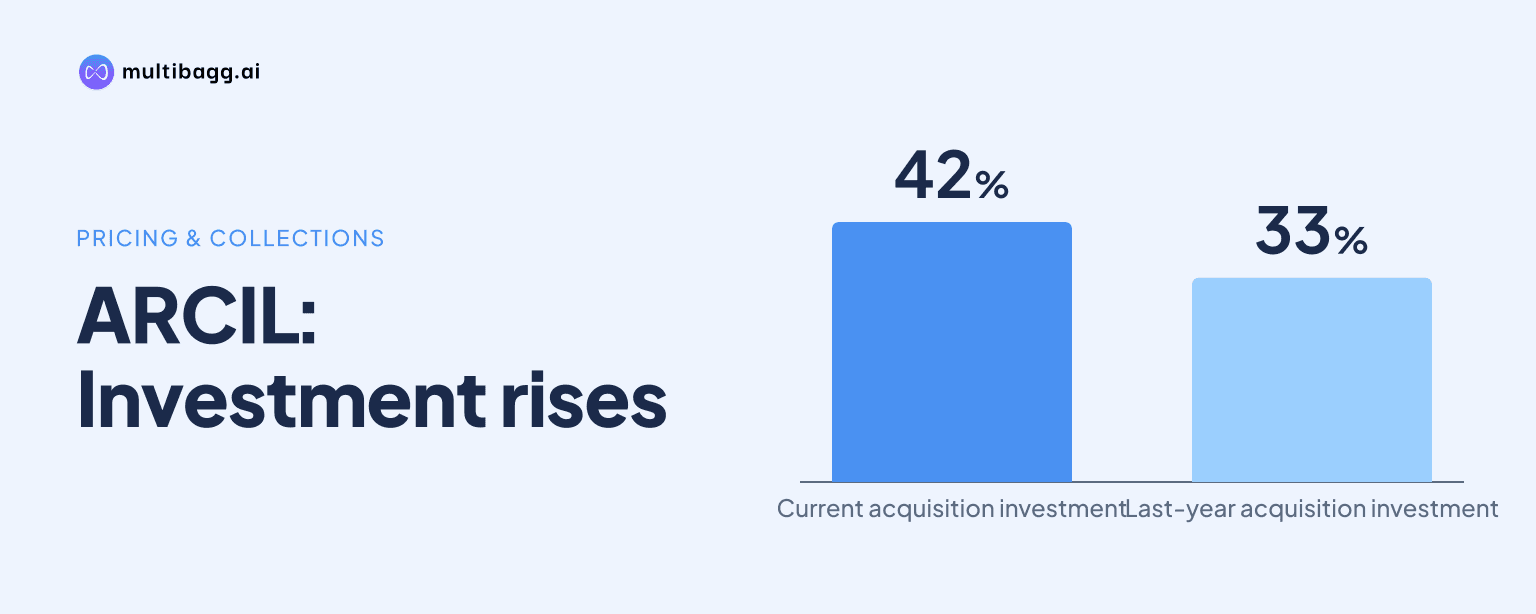
- ARCIL's average investment in acquisitions rose to 42% from 33% last year.
- Management expects fees and investment upside income to contribute about 70% to 80% of overall revenue.
powered by IRIS
ARCIL said on October 30, 2026 that it plans to deepen retail and small and medium enterprise acquisitions, with Rs 1,000 crore of its Rs 1,700 crore first-half acquisitions in those segments, supported by selective purchase pricing and a pan-India collections network. Management said corporate assets remain a major part of the portfolio.
Know Asset Reconstruction Company (India) inside out
Results, valuation, peers and who's buying, in one view.
How is ARCIL shifting acquisitions toward retail and SME assets?
ARCIL is increasing acquisitions in retail and small and medium enterprises, or SME, while retaining a large corporate portfolio. Of Rs 1,700 crore acquired in the first half, ARCIL said Rs 1,000 crore was in SME and retail and Rs 700 crore was in corporate assets. Management said more retail assets are now available to asset reconstruction companies, while corporate opportunities have shifted from fresh non-performing assets to written-off assets.
ARCIL did not provide a separate split for retail and SME within the Rs 1,000 crore amount. Corporate assets nevertheless accounted for close to 65% of total assets under management, or AUM, and ARCIL said its corporate book was about Rs 13,000 crore. The strategy described on the call is therefore an expansion into retail and SME alongside, rather than a replacement for, corporate stressed-asset resolution.
ARCIL said it began its retail business in 2008, making the segment an established activity rather than a newly launched line. Management also said it is examining microfinance recoveries selectively because microfinance is a large part of India’s credit book, but characterised this work as an effort to understand the market. It gave no AUM guidance for the year end or the next two to three years.
What purchase discipline supports ARCIL's retail and SME strategy?
ARCIL said underwriting at the right price is central to its retail and SME approach, with its unsecured book acquired at single-digit price levels and secured pools acquired in the mid-40s. Management linked these entry prices to its resolution capability, saying a pan-India presence, in-house collection services and an established network support recoveries from purchased pools.
The call did not define the exact measurement basis for the single-digit and mid-40s acquisition-price references, or disclose segment-specific collection rates. Management’s stated mechanism is that purchase discipline works with its collections infrastructure: pricing determines the investment made at acquisition, while its collection services are intended to improve recoveries after purchase. ARCIL said its technology, people, processes and CAS platform were built ahead of the retail opportunity.
Management said the usual recovery cycle is three to four years, compared with the eight-year regulatory point at which write-offs arise. It said the amount of ARCIL assets expected to become more than eight years due over the next three years would be very small, while quarterly mark-to-market valuations already incorporate possible write-offs. These are management assessments rather than a portfolio-level loss-rate forecast.
ARCIL also described a rising capital commitment to acquisitions. Its average investment in acquisitions was 42% in the first half, compared with 33% last year, even as more than 70% of acquisitions over the past two years remained AUM-based. Management said it invests more than the stipulated 15% in normal security-receipt, or SR, transactions, which it said supports management-fee generation.
Got a follow-up? Ask IRIS
How could retail and SME acquisitions change ARCIL's revenue mix?
ARCIL management expects management fees and investment upside income together to contribute about 70% to 80% of overall revenue over time. It said its management-fee run rate was Rs 450 crore a year and quarterly fee income had stabilised at about Rs 115 crore to Rs 120 crore, driven by both managed AUM and collection-linked fees.
Management said investment upside income has exceeded Rs 200 crore consistently for the past two to three years, which it attributed to sustained investment in assets bought entirely for cash. Cash acquisitions typically generate upside from the second or third year, according to ARCIL, while structured SR transactions generate regular fees. The revenue outcome will consequently depend on the balance between cash and structured transactions and on the timing of collections.
ARCIL said structured transactions accounted for a substantial majority of acquisitions during the first two quarters, though it did not disclose an exact proportion. Management said a structured deal provides fee income on a regular basis and recovers almost the full internal rate of return, or IRR, annually, reducing dependence on later investment upside. Cash transactions, by contrast, produce a larger proportion of upside later in the holding period.
Write-backs were another component of first-half income. ARCIL reported Rs 140 crore of write-backs in the first half, including Rs 125 crore in the first quarter, and management said it did not expect write-backs to be as large in the second half. It said recoveries after regulatory write-offs mean write-backs will remain a revenue item, although quarterly amounts can be bulky.
Does ARCIL have capacity to fund more retail and SME acquisitions?
ARCIL said it had capital adequacy of 70.5% and debt-to-equity of 0.37 times after borrowings rose to Rs 1,224 crore from Rs 1,100 crore as of June 30, 2026. Management said the increase in borrowings funded second-quarter acquisitions and that liquidity and capital left ARCIL positioned to evaluate opportunities in the seasonally stronger second half.
Management said about 60% of the previous year’s acquisitions occurred in the second half, reflecting market seasonality, but it did not provide a full-year acquisition forecast. It also declined to guide on second-half profitability, saying acquisitions do not immediately affect profit but indicate future profitability. ARCIL’s reported first-half acquisition total of Rs 1,700 crore provides the disclosed base for assessing later buying activity.
ARCIL estimated stressed assets in the market, including written-off assets, at a little over Rs 23 lakh crore and said the asset reconstruction industry currently handles about 10% of that market. Management said a downturn can increase asset supply and improve purchasing power for buyers, but can also slow resolutions. It added that ARCIL does not currently participate in agricultural or gold-loan stress.
Corporate recoveries remain material to capacity and earnings despite the retail and SME emphasis. ARCIL said its corporate AUM of about Rs 13,000 crore can continue to generate large, individual resolutions, making recovery income lumpy at an asset level. Management asked investors to assess the regularity of such recoveries across the broader corporate portfolio rather than any single transaction.
Conclusion
ARCIL’s plan combines a greater share of retail and SME acquisitions with continued corporate exposure. The first-half mix of Rs 1,000 crore in SME and retail out of Rs 1,700 crore of acquisitions shows the shift in new buying, while the strategy relies on management’s stated pricing discipline, collection services, higher investment per acquisition and a mix of cash and structured transactions.
The next disclosed marker is second-half acquisition activity, as management said about 60% of the prior year’s purchases occurred then but gave no full-year guidance. Investors can also track whether the Rs 450 crore annual management-fee run rate, 42% average investment in acquisitions and management’s 70% to 80% fee-and-upside revenue expectation develop alongside lower second-half write-backs.