










Arham expects integration to lift gross margins by 5-8%
Key highlights
- Arham expects plastic moulding, sheet-metal fabrication and motor manufacturing to improve gross margins by 5-8%.
- Arham says plant utilisation can increase from 30% to 80% by FY28 without significant capital expenditure.
- Arham operates a 45,000+ square-foot Raipur facility and acquired 6,350 square metres of expansion land.
- Arham targets FY28 revenue of more than Rs 300 crore, compared with Rs 119 crore shown for FY26.
powered by IRIS
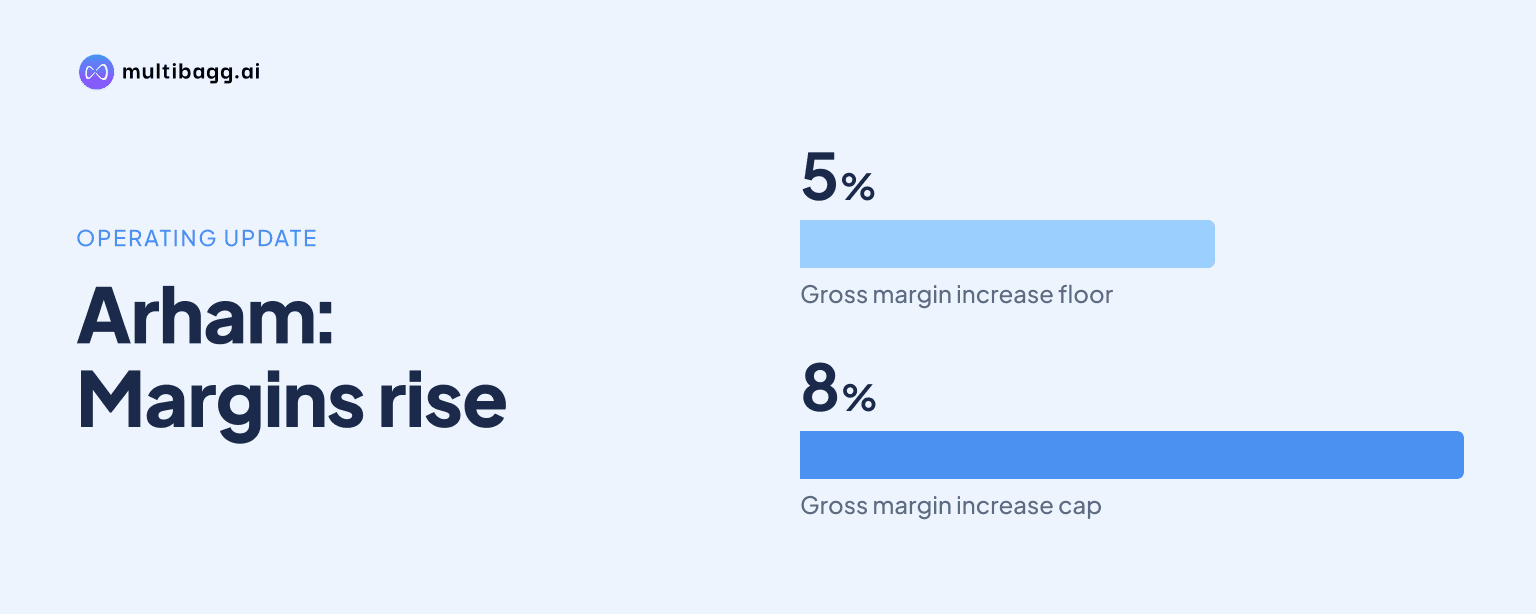
Arham Technologies Limited expects plastic injection moulding, sheet-metal fabrication and motor manufacturing to improve gross margins by 5-8%, with benefits expected to become more visible in forthcoming full-year financials. The plan shifts upstream work from external suppliers towards in-house production while targeting plant utilisation of 80% by FY28.
Know Arham Technologies inside out
Results, valuation, peers and who's buying, in one view.
What manufacturing processes has Arham brought in-house?
Arham has shifted design and development, tooling and process setup, and fabrication from outsourced activities to in-house operations. Assembly, testing and quality, and final-product manufacturing were already in-house, so the integration programme is focused on earlier production stages that determine component specifications, manufacturing setup and fabrication.
Arham’s current process map lists all six stages as in-house, although it describes tooling and fabrication as “in-house/expanding” in its operating overview. This indicates that the company is building out those capabilities rather than presenting every process as fully developed for all components. Its design and development work covers televisions, interactive flat-panel displays (IFPDs) and appliances.
The fabrication plan includes sheet-metal work for television cabinets and fan components, as well as injection moulding for plastic parts. Arham identifies television and cooler cabinets, fan blades, and plastic components for table, pedestal and wall fans as applications for these facilities. The company says localisation is intended to reduce external dependence while improving quality control and supply-chain reliability.
How does Arham expect integration to improve gross margins?
Arham expects plastic injection moulding, sheet-metal fabrication and motor manufacturing to improve gross margins by 5-8%. This is management’s expectation under its FY28 plan, not a reported financial outcome, and the presentation does not disclose the starting gross margin, the cost base affected or a date for reaching the full improvement.
The company’s stated mechanism is greater localisation and lower reliance on suppliers for components and manufacturing processes. Arham says its in-house fabrication investments are intended to improve cost delivery, quality control and supply-chain reliability, while tooling development should reduce reliance on external vendors. It also says some margin benefits will be passed to distributors to strengthen those relationships.
Arham also links rising output to operating leverage. Management says growing volumes can expand margins because fixed costs remain constant, while a localised, just-in-time supply chain is intended to support faster inventory movement. These are management-described operating mechanisms; the presentation does not provide reported inventory-turnover, receivables-day or cash-conversion-cycle data.
Got a follow-up? Ask IRIS
What capacity and capital base supports Arham’s plan?
Arham says it can raise plant utilisation from 30% to 80% by FY28 without significant capital expenditure because infrastructure is already in place. Separately, its FY28 vision refers to increasing television capacity utilisation from 50% to 80% through STARSHINE and ARATION, without explaining whether this is a narrower measure than overall plant utilisation.
The operating base includes a 45,000+ square-foot facility in Raipur, Chhattisgarh, described as having 24/7 operational readiness and multi-stage testing. Arham also acquired 6,350 square metres of land at EMC, Raipur, for future expansion. The company states a subsidised land cost of Rs 52.39 lakh against a market value of Rs 4.31 crore and describes the land bank as a 250% expansion of its current footprint.
Arham presents its asset model as capable of generating Rs 8 of revenue for every Rs 1, compared with 2-3 times for “other companies.” This is a company-provided comparison without named peers, periods or a defined financial-ratio methodology. Its stated revenue target is more than Rs 300 crore in FY28, compared with Rs 119 crore shown for FY26.
Which products and markets are tied to Arham’s integration plan?
Arham connects backward integration to televisions, fans, air coolers, appliances, IFPDs and digital-signage products. Its assembly operations include LED televisions, large-sized panels and IFPDs, while the company is expanding into 75-inch and 85-inch televisions and digital-signage solutions.
The FY28 plan identifies larger smart televisions, premium brushless direct-current fans, smart air coolers, home appliances and IFPDs as additional revenue engines. Arham says 95-98% of its revenue comes from STARSHINE, making television cabinets and related plastic components particularly relevant to its existing product mix. The presentation does not disclose revenue, volumes or margins by individual product category.
IFPDs are also part of the expansion plan. Arham cites an Indian IFPD market compound annual growth rate of 20-25% for 2025-2030, more than 15 lakh schools in India and smart-classroom penetration below 15-20%. It points to Rs 42,100 crore allocated for Samagra Shiksha Abhiyan in 2026-27 and a Rs 400+ crore approved digital-classroom budget in Chhattisgarh, while stating that it has set up manufacturing infrastructure for domestic IFPD production.
Conclusion
Arham’s stated route to better economics combines more control over upstream production with higher use of installed manufacturing infrastructure. Design, tooling and fabrication have moved from outsourced status to in-house or in-house/expanding status, while the company’s 5-8% gross-margin expectation is tied to plastic moulding, sheet-metal fabrication and motor manufacturing across televisions, fans, coolers and appliances.
The next disclosed milestones are whether forthcoming full-year financials show the expected incremental margin and whether utilisation progresses towards 80% by FY28. Management’s plan also sets a revenue target of more than Rs 300 crore in FY28, while the differing 30% overall plant-utilisation and 50% television-capacity starting points remain an item for clarification.