










Bai-Kakaji Polymers FY26 PAT Rises 48.5% to ₹26.98 Crore
Key highlights
- Bai-Kakaji Polymers reported FY26 PAT of ₹26.98 crore, up 48.5% from ₹18.17 crore in FY25.
- FY26 revenue from operations rose 12.1% to about ₹365 crore.
- FY26 EBITDA increased 43.9% to ₹48.78 crore and EBITDA margin reached 13.36%.
- Bai-Kakaji Polymers scheduled a board meeting on November 6, 2026 for September half-year results.
powered by IRIS
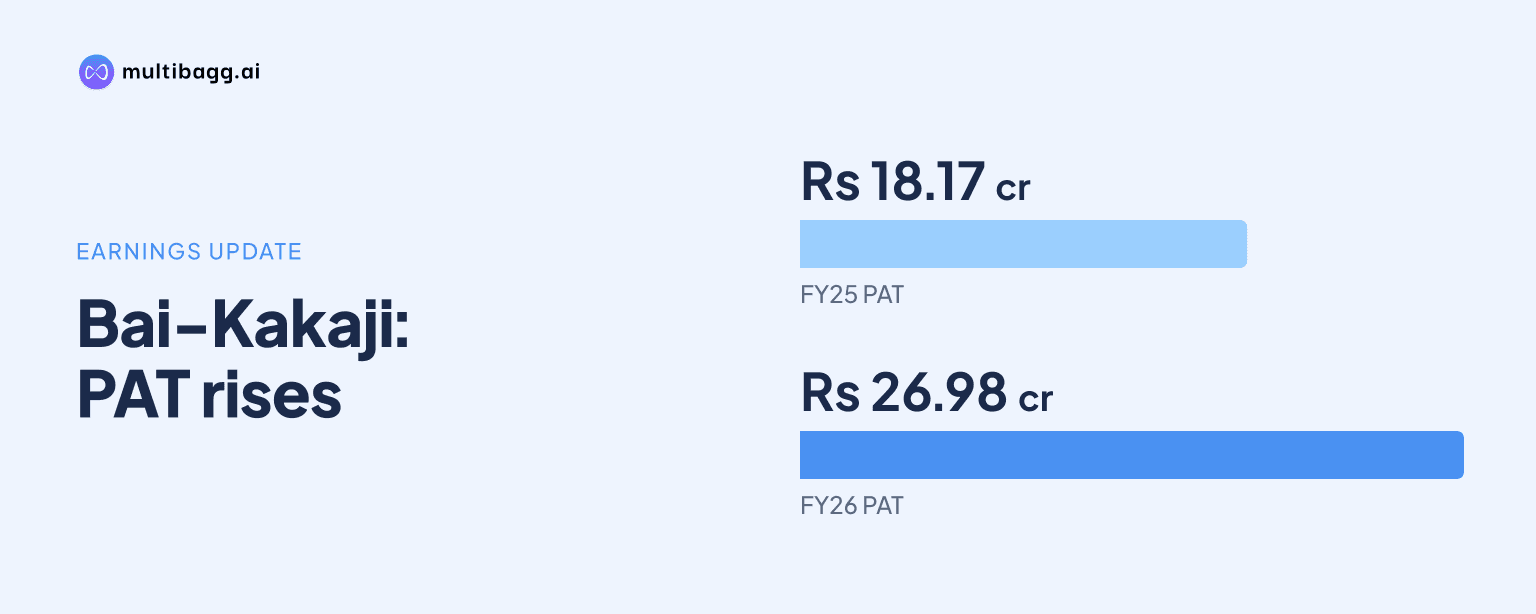
Bai-Kakaji Polymers Limited reported FY26 profit after tax of ₹26.98 crore, a 48.5% increase from FY25, supported by a 12.1% rise in revenue from operations to ₹365 crore and an EBITDA margin of 13.36%. The result matters because profit growth outpaced sales growth, indicating improved operating leverage during the year ended March 31, 2026.
Know Bai-Kakaji Polymers inside out
Results, valuation, peers and who's buying, in one view.
What did Bai-Kakaji Polymers report for FY26?
Bai-Kakaji Polymers reported consolidated profit after tax of ₹26.98 crore for FY26, compared with ₹18.17 crore in FY25. Revenue from operations increased to ₹364.69 crore, rounded to ₹365 crore in the company’s reported FY26 summary, from ₹325.37 crore a year earlier. The company said the performance was aided by improved operating leverage.
EBITDA rose 43.9% to ₹48.78 crore from ₹33.90 crore. As a result, the EBITDA margin expanded by 296 basis points to 13.36% from 10.4%. PAT margin increased to 7.39% from 5.6%, a rise of 179 basis points. The reported revenue growth was lower than the increase in operating profit and net profit, making margin expansion a central feature of the FY26 result.
How did FY26 earnings improve faster than revenue?
Bai-Kakaji Polymers’ reported EBITDA growth of 43.9% was substantially ahead of the 12.1% increase in revenue. This gap is reflected in the EBITDA margin improvement from 10.4% in FY25 to 13.36% in FY26. The company attributed the earnings improvement to better operating leverage, which means profitability improved as costs did not rise at the same pace as sales.
Other financial tables supplied for the company show annual FY26 revenue of ₹363.14 crore, EBITDA of ₹60.55 crore and net profit of ₹26.33 crore, compared with revenue of ₹331.26 crore, EBITDA of ₹39.79 crore and net profit of ₹18.17 crore in FY25. These figures differ from the FY26 consolidated-result summary, which states revenue of ₹364.69 crore, EBITDA of ₹48.78 crore and PAT of ₹26.98 crore. Investors should therefore refer to the company’s filed standalone and consolidated financial statements to identify the applicable reporting basis before making direct comparisons.
The available March 2026 quarterly data also indicates sales of ₹203 crore and net profit of ₹14 crore. Another set of March 2026 figures lists sales at ₹192 crore and EPS at ₹6.22. The variations reinforce the importance of checking whether a data point refers to standalone, consolidated, annual, quarterly, or another presentation basis.
What does the balance-sheet update mean for investors?
Bai-Kakaji Polymers said its balance sheet was significantly deleveraged in FY26. It also reported net worth of ₹175.70 crore following its IPO. A larger net-worth base and lower leverage can affect the company’s financial flexibility, although the supplied information does not quantify debt, debt reduction, interest coverage, or cash flow.
The company has reported a revenue compound annual growth rate of 16.4% over the last three fiscal years. Historical annual data shows revenue rising from ₹195.67 crore in FY22 to ₹363.14 crore in FY26, while the corresponding net profit figure increased from ₹4.11 crore to ₹26.33 crore. This historical series indicates that earnings grew more rapidly than reported revenue over that period.
For shareholders, the FY26 result provides evidence of improved profitability, but the differing reported figures require careful reading. The annual data also shows EPS of ₹15.32 for FY26, versus ₹80.75 for FY25, despite higher reported net profit in FY26. The supplied information does not explain this movement, so it should not be interpreted without reviewing share-capital changes and the audited financial statements.
Got a follow-up? Ask IRIS
What investor communication and compliance actions has Bai-Kakaji Polymers taken?
Bai-Kakaji Polymers held a physical investor meeting with analysts in Latur on September 23, 2026, to discuss growth initiatives and respond to market queries. It had also confirmed a virtual investor meeting with Kuber India Fund on September 5, 2026. These meetings were disclosed as part of the company’s shareholder-communication activity.
The company announced that its trading window would close from October 1, 2026 until 48 hours after release of the unaudited half-year results for the period ended September 30, 2026. The closure follows SEBI insider-trading requirements and restricts trading by designated persons during the unpublished-price-sensitive-information period.
Bai-Kakaji Polymers, listed on the BSE, also issued an intimation on November 3 for a board meeting scheduled on November 6, 2026. The board is set to consider and approve unaudited standalone and consolidated financial results for the half year ended September 30, 2026. The announcement is the next disclosed reporting event after the FY26 performance update.
Why do the FY26 results matter for the polymers business?
Bai-Kakaji Polymers’ FY26 results matter primarily because the company reported margin expansion alongside sales growth. Revenue increased by 12.1%, while EBITDA rose by 43.9% and PAT by 48.5% in the consolidated-result summary. This relationship shows that the year’s financial outcome was driven not only by higher turnover but also by stronger profitability on that turnover.
For market participants, the immediate focus is likely to remain on the consistency of revenue, EBITDA and profit performance in the September 2026 half-year results. The March 2026 result announcement was associated with an LTP of ₹172 on May 29, 2026, while the LTP on the record date was ₹167.70. These prices are historical reference points, not indicators of future share-price movement.
Conclusion
Bai-Kakaji Polymers delivered reported FY26 PAT growth of 48.5% to ₹26.98 crore, with revenue reaching about ₹365 crore and EBITDA margin improving to 13.36%. The figures point to better operating leverage and a stronger reported net-worth position following the IPO. However, investors should distinguish between the consolidated-result summary and other annual financial tables that show different revenue, EBITDA and profit values.
The next disclosed item to watch is the November 6, 2026 board meeting for unaudited standalone and consolidated results for the half year ended September 30, 2026. Those filings may provide updated sales, profitability and reporting-basis details after the FY26 results.