










Bai-Kakaji Polymers H1 revenue rises 63% to Rs 263.7057 crore
Key highlights
- Bai-Kakaji Polymers reported H1 2026-27 standalone revenue of Rs 263.7057 crore, up 62.67% year on year.
- Profit for the period rose to Rs 15.7452 crore in H1 2026-27 from Rs 13.0122 crore a year earlier.
- Combined long-term and short-term borrowings increased to Rs 63.8003 crore at September 30, 2026, from Rs 32.0763 crore at March 31, 2026.
- Bai-Kakaji Polymers reported H1 2026-27 net operating cash outflow of Rs 4.6978 crore.
powered by IRIS
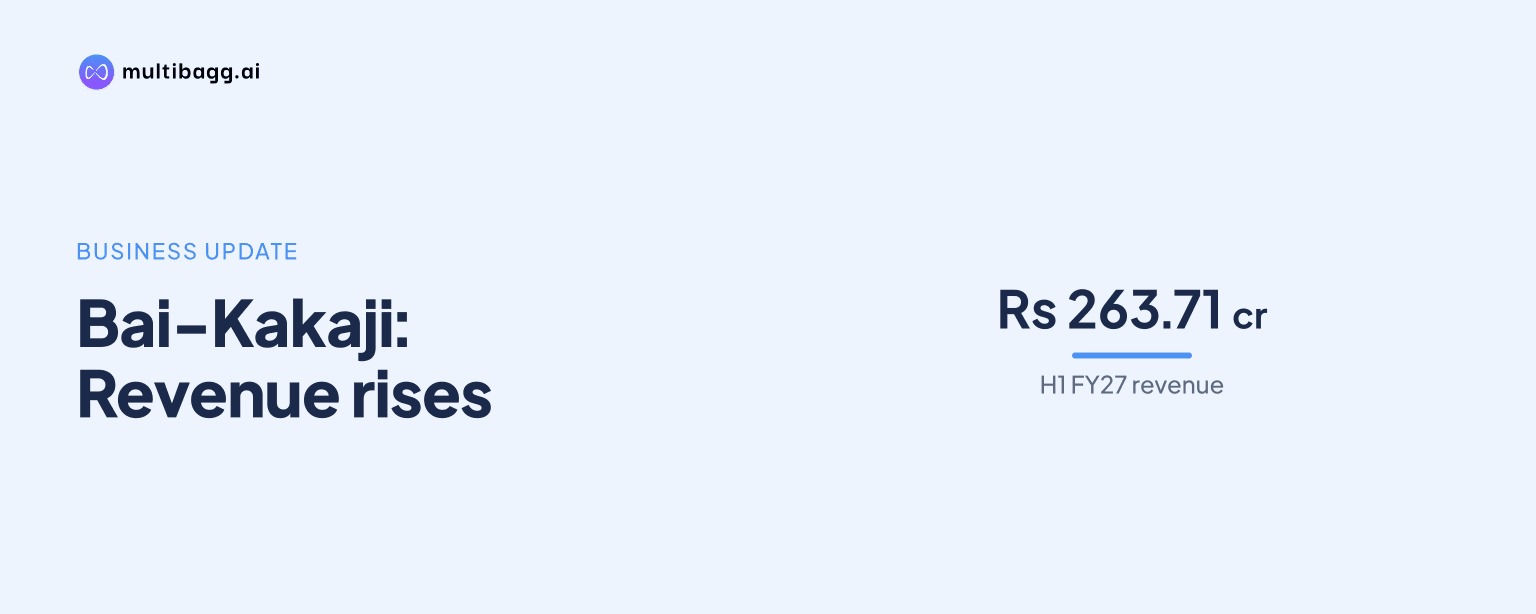
Bai-Kakaji Polymers Limited reported standalone revenue from operations of Rs 263.7057 crore for H1 2026-27 ended September 30, 2026, a 62.67% year-on-year increase, while profit for the period rose to Rs 15.7452 crore. The unaudited result was approved by its board on November 6, 2026.
Know Bai-Kakaji Polymers inside out
Results, valuation, peers and who's buying, in one view.
How did Bai-Kakaji Polymers perform in H1 2026-27?
Bai-Kakaji Polymers increased revenue, total income and profit compared with both H1 2025-26 and H2 2025-26. Revenue from operations rose by Rs 101.5952 crore from Rs 162.1105 crore in H1 2025-26 and by Rs 71.6693 crore from Rs 192.0364 crore in H2 2025-26. Other income was Rs 77.28 lakh in H1 2026-27, compared with Rs 3.3517 crore a year earlier and Rs 5.6399 crore in the preceding half year.
Bai-Kakaji Polymers' profit for the period increased by Rs 2.7330 crore, or 21.00%, from H1 2025-26 and was Rs 2.4264 crore higher than in H2 2025-26. Basic and diluted earnings per share were Rs 7.36 in H1 2026-27, against Rs 7.57 in H1 2025-26 and Rs 7.75 in H2 2025-26. The company said half-year earnings per share were calculated on weighted-average share capital and were not annualised.
What costs and accounting items affected Bai-Kakaji Polymers' profit?
Bai-Kakaji Polymers reported total expenses of Rs 246.7753 crore in H1 2026-27, up Rs 95.7751 crore from H1 2025-26, while total income increased by Rs 99.0163 crore. Cost of materials consumed was Rs 185.7290 crore, rising Rs 79.1500 crore year on year, and purchases of stock-in-trade increased by Rs 6.4658 crore to Rs 18.9483 crore.
Employee-benefit expense increased to Rs 6.1662 crore from Rs 5.0018 crore, depreciation and amortisation rose to Rs 9.5934 crore from Rs 8.7792 crore, and other expenses reached Rs 24.1644 crore from Rs 18.3422 crore. Finance costs moved in the other direction, declining by Rs 2.2266 crore to Rs 2.1115 crore from Rs 4.3381 crore in H1 2025-26.
The statement recorded profit before extraordinary and prior-period items and tax of Rs 17.7032 crore for H1 2026-27. It then showed an extraordinary or prior-period item of negative Rs 2.3578 crore, resulting in reported profit before tax of Rs 20.0610 crore under the presented format. The filing did not specify the nature of this item; the comparable H1 2025-26 item was negative Rs 3.4426 crore.
Current tax was Rs 4.7372 crore in H1 2026-27, while deferred tax was a credit of Rs 42.14 lakh. The resulting tax expense was Rs 4.3158 crore, compared with Rs 4.8923 crore in H1 2025-26, when current tax was Rs 4.5474 crore and deferred tax expense was Rs 34.49 lakh.
Got a follow-up? Ask IRIS
How did Bai-Kakaji Polymers' balance sheet change by September 2026?
Bai-Kakaji Polymers' total assets and total equity and liabilities stood at Rs 280.8099 crore at September 30, 2026, compared with Rs 234.6947 crore at March 31, 2026. Property, plant and equipment increased by Rs 5.9967 crore to Rs 118.3118 crore, while capital work-in-progress declined to Rs 1.9128 crore from Rs 6.2230 crore.
Working-capital balances rose during the half year. Inventories increased by Rs 8.0111 crore to Rs 51.4708 crore, trade receivables rose by Rs 12.3203 crore to Rs 42.8521 crore, and short-term loans and advances increased by Rs 11.4396 crore to Rs 19.8006 crore. Long-term loans and advances also increased to Rs 21.5855 crore from Rs 9.7639 crore.
Long-term borrowings were Rs 13.4262 crore at September 30, 2026, compared with Rs 3.0261 crore at March 31, while short-term borrowings rose to Rs 50.3741 crore from Rs 29.0502 crore. Combined borrowings therefore increased to Rs 63.8003 crore from Rs 32.0763 crore. Reserves and surplus rose by Rs 15.7452 crore to Rs 169.4003 crore, while paid-up equity share capital remained Rs 21.4044 crore.
Trade payables to creditors other than micro and small enterprises increased to Rs 16.3451 crore from Rs 13.7855 crore. Dues to micro and small enterprises declined to Rs 82.94 lakh from Rs 1.0649 crore, while other current liabilities fell to Rs 4.9377 crore from Rs 7.0292 crore.
What did Bai-Kakaji Polymers report on cash flow and segment disclosure?
Bai-Kakaji Polymers reported net cash outflow from operating activities of Rs 4.6978 crore in H1 2026-27. Operating profit before working-capital changes was Rs 26.2609 crore, but inventories absorbed Rs 8.0111 crore, trade receivables absorbed Rs 7.2692 crore, and loans and advances absorbed Rs 8.8019 crore. Net taxes paid were Rs 7.6568 crore.
Investing activities used Rs 25.1415 crore in the half year, including Rs 11.2790 crore under purchase or sale of property, plant and equipment and a negative Rs 14.0464 crore under the line described as proceeds for capital advances. Financing activities generated Rs 29.6514 crore, including Rs 10.4001 crore of proceeds from long-term borrowings and Rs 21.3239 crore from short-term borrowings, less Rs 2.0726 crore of interest paid.
Cash and cash equivalents in the cash-flow statement declined by Rs 18.80 lakh to Rs 25.70 lakh at September 30, 2026, from Rs 44.50 lakh at March 31, 2026. The balance sheet reported cash and cash equivalents of Rs 1.8039 crore because it also included bank deposits and other bank balances. Bai-Kakaji Polymers said it operates in one segment, so Accounting Standard 17 segment reporting did not apply.
Conclusion
Bai-Kakaji Polymers delivered H1 2026-27 revenue growth of 62.67% and profit growth of 21.00%, with revenue reaching Rs 263.7057 crore and profit for the period reaching Rs 15.7452 crore. The rise in total income of Rs 99.0163 crore exceeded the Rs 95.7751 crore increase in expenses, while finance costs declined despite higher period-end borrowings.
The filing does not disclose a forward target or a scheduled next reporting event. The next issue to watch is whether higher inventories of Rs 51.4708 crore, receivables of Rs 42.8521 crore and loans and advances of Rs 19.8006 crore convert into operating cash generation, after H1 operating cash flow was negative Rs 4.6978 crore and combined borrowings reached Rs 63.8003 crore.