










Balmer Lawrie Q2 Profit Rises 39.56% to ₹67.66 Crore
Key highlights
- Balmer Lawrie's Q2 FY27 standalone net profit rose 39.56% year on year to ₹67.66 crore.
- Standalone Q2 FY27 total income increased 26.34% to ₹818.04 crore from ₹647.48 crore.
- Standalone Q2 FY27 profit before tax grew 42.95% to ₹93.63 crore.
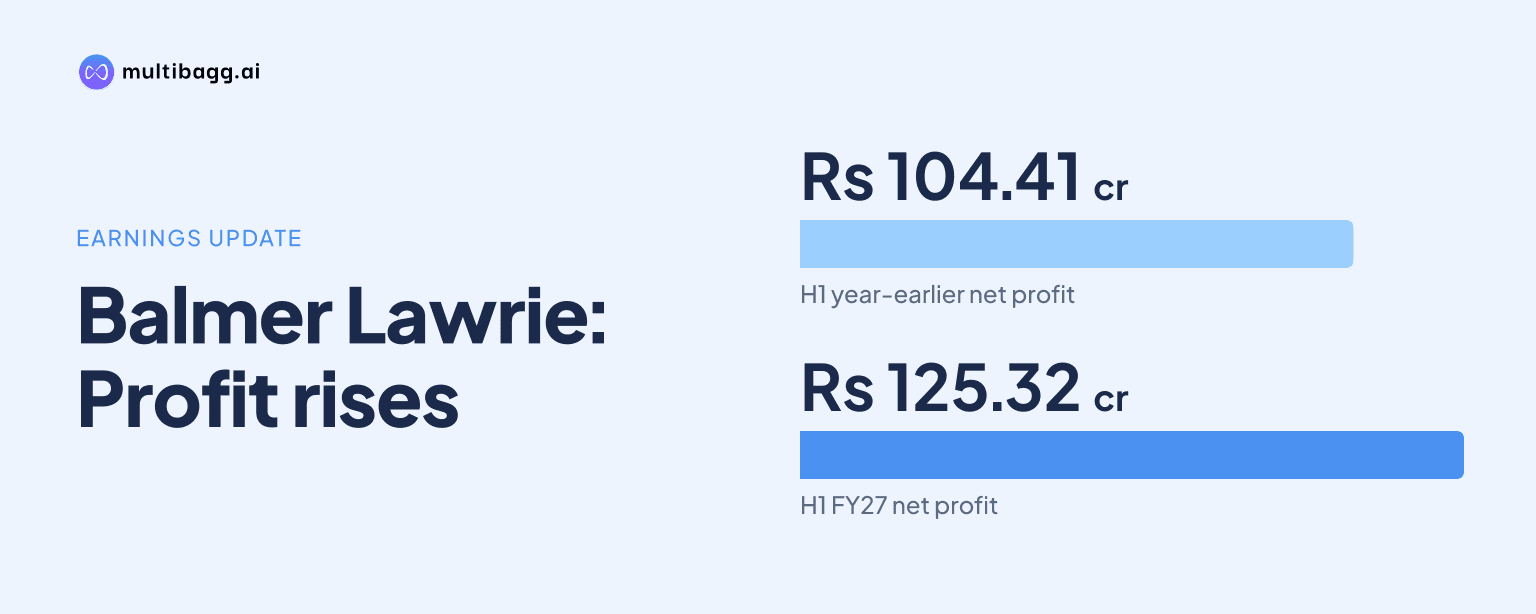
- H1 FY27 standalone net profit rose to ₹125.32 crore from ₹104.41 crore a year earlier.
powered by IRIS
Balmer Lawrie & Company Ltd reported standalone net profit of ₹67.66 crore in Q2 FY27, a 39.56% rise from ₹48.48 crore a year earlier, while total income increased 26.34% to ₹818.04 crore. The September-quarter performance reflects stronger year-on-year revenue and profit growth for the diversified public sector enterprise.
Know Balmer Lawrie Investment inside out
Results, valuation, peers and who's buying, in one view.
What did Balmer Lawrie report for Q2 FY27?
Balmer Lawrie reported standalone profit after tax of ₹67.66 crore for the quarter ended September 30, 2026, compared with ₹48.48 crore in Q2 FY26. This translates into year-on-year growth of 39.56%.
Total income for the July-September quarter stood at ₹818.04 crore, against ₹647.48 crore in the corresponding quarter of the preceding financial year. The 26.34% increase in income was accompanied by a 42.95% rise in profit before tax to ₹93.63 crore from ₹65.50 crore.
The board of directors approved the unaudited standalone and consolidated financial results for the second quarter and first half of FY27 at its meeting in Hampi, Karnataka, on November 2, 2026. No dividend was declared for the current half-year, according to the disclosed results information.
How did the first half of FY27 compare with last year?
Balmer Lawrie recorded total income of ₹1,570.58 crore in the six months ended September 30, 2026, compared with ₹1,332.76 crore in the corresponding period a year earlier. The first-half figure indicates that income growth continued through the first two quarters of FY27.
First-half profit before tax rose to ₹172.75 crore from ₹140.88 crore in H1 FY26. Net profit increased to ₹125.32 crore from ₹104.41 crore over the same comparison period. These figures place the Q2 standalone profit of ₹67.66 crore within a first-half profit total of ₹125.32 crore.
The company also disclosed consolidated figures in its Q2 filing. Consolidated revenue was reported at ₹800.72 crore for the September quarter, up 26.01% from ₹635.44 crore in Q2 FY26, while consolidated net profit rose to ₹78.99 crore from ₹38.47 crore. Standalone and consolidated results cover different reporting bases and should not be compared directly without considering the underlying entities included in each statement.
What drove the improvement in quarterly profitability?
The reported figures show that Balmer Lawrie's profit before tax grew faster than total income in the standalone September quarter. Total income rose 26.34%, while PBT increased 42.95% year on year, resulting in a 39.56% increase in net profit.
The available results summary does not provide a segment-wise explanation for the higher income or profit. Therefore, the disclosed data establishes the improvement in financial performance but does not attribute it to a particular business, pricing change, cost item, or operational initiative.
The company operates as a diversified public sector enterprise. For investors, the distinction between income growth and profit growth is important because the Q2 numbers show both measures moving higher from the year-ago quarter. The faster PBT increase is a key reported feature of the standalone result.
Got a follow-up? Ask IRIS
How do the Q2 results compare with the preceding quarter?
The earlier Q1 FY27 summary showed revenue of ₹751.14 crore, operating profit of ₹102.05 crore and net profit of ₹72.59 crore. Revenue was 0.65% higher than the preceding quarter, while operating profit and net profit were lower sequentially in that Q1 disclosure.
The Q2 announcement is principally framed as a year-on-year comparison. It reports standalone total income of ₹818.04 crore and net profit of ₹67.66 crore, but the supplied data does not provide a directly comparable standalone Q1 total-income figure for calculating a like-for-like sequential Q2 change. Investors should therefore treat the disclosed year-on-year changes as the confirmed comparison for the September-quarter standalone announcement.
The difference between Q1 and Q2 profitability figures also underlines the need to identify the reporting basis used in each release. Balmer Lawrie has released both standalone and consolidated financial information, and the numbers should be read within their respective statements.
Why do these results matter to investors?
The Q2 outcome matters because Balmer Lawrie delivered higher standalone income, PBT and net profit compared with Q2 FY26. Net profit growth of 39.56% exceeded income growth of 26.34%, while the first-half net profit rose to ₹125.32 crore from ₹104.41 crore.
The figures are also relevant for tracking the company's earnings momentum after the Q1 FY27 results. The Q1 summary had reported revenue of ₹751.14 crore and net profit of ₹72.59 crore. The Q2 release provides the next disclosed quarterly update and confirms that the company maintained year-on-year growth in total income and profit through the first half.
Investors should monitor subsequent company disclosures for segment-level information, expenses, cash flows, order activity and management commentary. Such details would provide additional context on the sustainability and composition of the reported financial improvement.
Conclusion
Balmer Lawrie's Q2 FY27 standalone results showed a broad year-on-year improvement, with total income rising to ₹818.04 crore, PBT reaching ₹93.63 crore and net profit increasing to ₹67.66 crore. The first-half numbers also remained ahead of the prior-year period, with net profit of ₹125.32 crore.
The board approved the unaudited Q2 and H1 FY27 results on November 2, 2026, and no dividend was declared for the current half-year. The next point for investors to watch is the company's subsequent earnings disclosure and any additional detail it provides on the business drivers behind revenue and profit growth.