










Chalet Hotels Q2 FY27 PAT rises 40% as core income grows
Key highlights
- Chalet Hotels reported Q2 FY27 PAT of ₹216.2 crore, up 39.7% year-on-year.
- Core business income increased 11% year-on-year to ₹511 crore in Q2 FY27.
- Core EBITDA rose 13% to ₹227.4 crore and margin expanded 110 basis points to 44.5%.
- Chalet Hotels plans ₹3,400 crore to ₹3,600 crore of capital expenditure across FY27 to FY29.
powered by IRIS
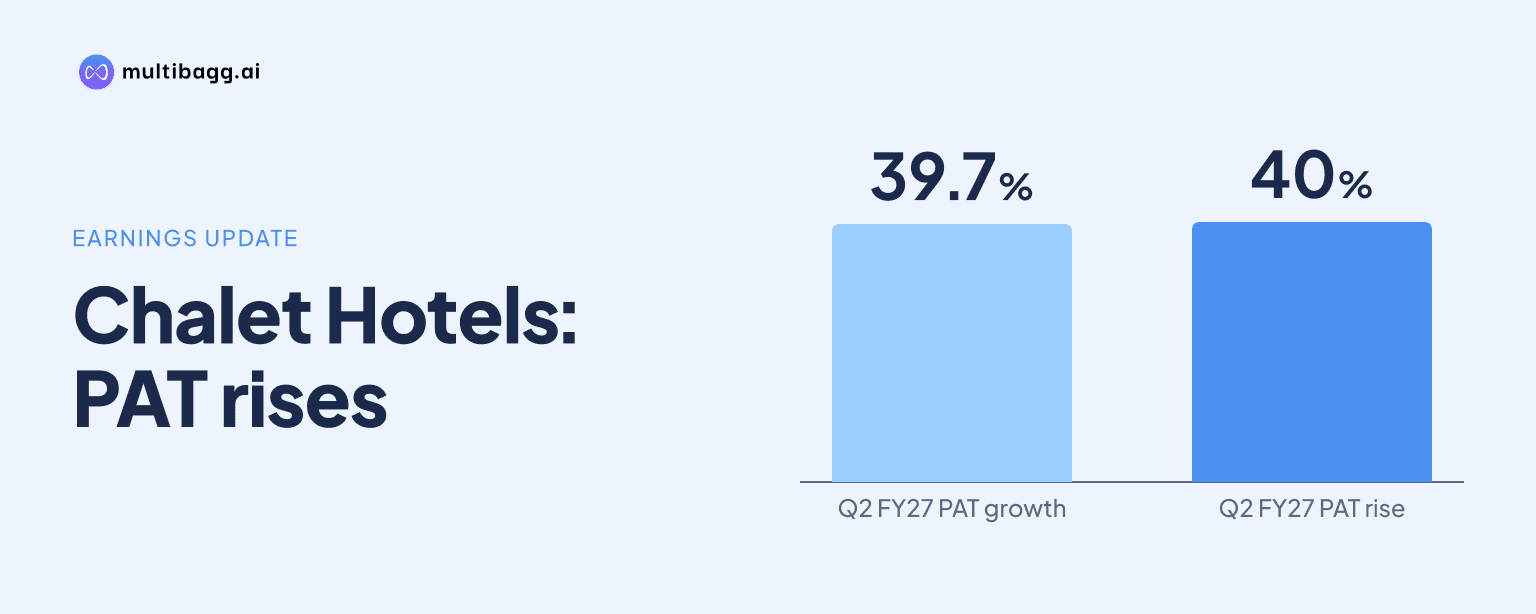
Chalet Hotels Limited reported net profit of ₹216.2 crore for Q2 FY27, up 39.7% year-on-year, supported by an 11% rise in core business income to ₹511 crore and a deferred tax credit of ₹112.5 crore. The result highlights growth in hospitality and rental annuity operations despite a lower reported consolidated revenue base.
Know Chalet Hotels inside out
Results, valuation, peers and who's buying, in one view.
What did Chalet Hotels report for Q2 FY27?
Chalet Hotels reported consolidated profit after tax of ₹216.2 crore for the quarter ended September 30, 2026, compared with ₹154.8 crore a year earlier. The company said the result included a deferred tax credit of ₹112.5 crore arising from adoption of the concessional tax regime.
Core business income, covering hospitality and commercial real estate and excluding residential operations, rose to ₹511 crore from ₹461.7 crore in Q2 FY26. Core EBITDA increased 13% to ₹227.4 crore, while the margin improved by 110 basis points to 44.5%.
Reported consolidated revenue declined 31.7% year-on-year to ₹501.9 crore, according to the results summary, while EBITDA declined 27.3% to ₹217.5 crore. The comparison was affected by residential revenue from the Koramangala project that had been recognised in the year-earlier quarter.
The company's investor presentation separately reported consolidated total income of ₹511.4 crore for Q2 FY27, against ₹743.8 crore in Q2 FY26. Chalet Hotels has indicated that handovers for Phase II of the Koramangala residential project are expected in the second half of FY27, with revenue planned in Q3 FY27.
How did hospitality and commercial real estate perform?
Hospitality revenue rose 8.2% year-on-year to ₹411.5 crore, with segment EBITDA increasing 11.2% to ₹169.1 crore. The hospitality EBITDA margin improved to 41.1%, showing that earnings growth exceeded revenue growth during the quarter.
Average daily rate, or ADR, increased 11.3% to ₹13,546, while revenue per available room, or RevPAR, rose 7.2% to ₹8,702. Occupancy was 64.2%, down from 66.7% a year earlier. The company attributed the operating backdrop to disruption linked to West Asia, which affected occupancy even as room pricing improved.
Commercial real estate revenue rose 22% to ₹90.1 crore. Its EBITDA grew 23% to ₹75 crore, and the segment margin expanded by 95 basis points to 83%. This rental annuity business remained a significant contributor to the group's core earnings profile.
Got a follow-up? Ask IRIS
Why did reported consolidated revenue decline?
Reported consolidated revenue declined because the comparable Q2 FY26 period included revenue from the Koramangala residential project. Chalet Hotels has emphasised core operations excluding residential activity as a clearer measure of recurring performance across its hotels and rental annuity assets.
On that basis, the company recorded 11% core income growth and 13% core EBITDA growth. The difference between core growth and consolidated revenue movement shows the effect that timing of residential project recognition can have on quarterly comparisons.
For investors, this means the higher net profit should also be assessed alongside the ₹112.5 crore deferred tax credit. The credit supported the reported PAT increase, while the expansion in core EBITDA and margins provides the operating measure of performance from the hospitality and commercial real estate businesses.
What is Chalet Hotels planning for expansion?
Chalet Hotels plans capital expenditure of ₹3,400 crore to ₹3,600 crore between FY27 and FY29, largely funded through internal accruals. The investment programme is intended to support new capacity and the development of its hospitality portfolio.
The company has outlined a 2,036-key hospitality pipeline and a target of more than 5,500 operational keys within five years. Of the pipeline, 906 keys are under the ATHIVA brand. Management has described the next phase of growth as moving from renovation and recovery towards additional capacity.
India Ratings upgraded the company's credit rating to IND AA from AA minus. The rating action accompanies the planned investment cycle and reflects an improvement reported by the company, although the results release did not provide further rating rationale.
How does the result matter for investors and operations?
The quarter showed margin expansion across both core operating segments. Core EBITDA margin reached 44.5%, hospitality margin rose to 41.1%, and commercial real estate margin reached 83%, supported by higher room rates and growth in rental income.
At the same time, occupancy declined by 244 basis points, and reported consolidated revenue and EBITDA were lower because of the residential comparison base. These figures make it important to distinguish between recurring core operations and project-linked residential revenue when reviewing Chalet Hotels' quarterly performance.
The announced capital expenditure plan also creates a clear operational focus for the next three financial years. Its funding mix, execution progress and the timing of new hotel openings will be relevant to how the planned expansion translates into operating income.
Conclusion
Chalet Hotels delivered higher Q2 FY27 profit and improved core margins, led by growth in hospitality and commercial real estate. The 39.7% increase in PAT included a deferred tax credit, while core income growth of 11% and EBITDA growth of 13% reflected underlying operating progress.
Investors will watch the planned ₹3,400 crore to ₹3,600 crore capital expenditure programme, progress on the 2,036-key pipeline and the expected residential revenue recognition from Koramangala Phase II in Q3 FY27. Occupancy trends and the pace of ADR growth will also remain important operating indicators.