










Control Print sees Track & Trace market expand beyond 300 brands
Key highlights
- Control Print estimates the current Track & Trace market at Rs 600 crore to Rs 700 crore.
- Control Print said it already conducts about Rs 20 crore of Track & Trace business.
- The next mandate could extend coverage from 300 brands to the top 1,000 brands in 2027.
- Control Print has run Track & Trace pilots for more than a year with two major Indian pharmaceutical customers.
powered by IRIS
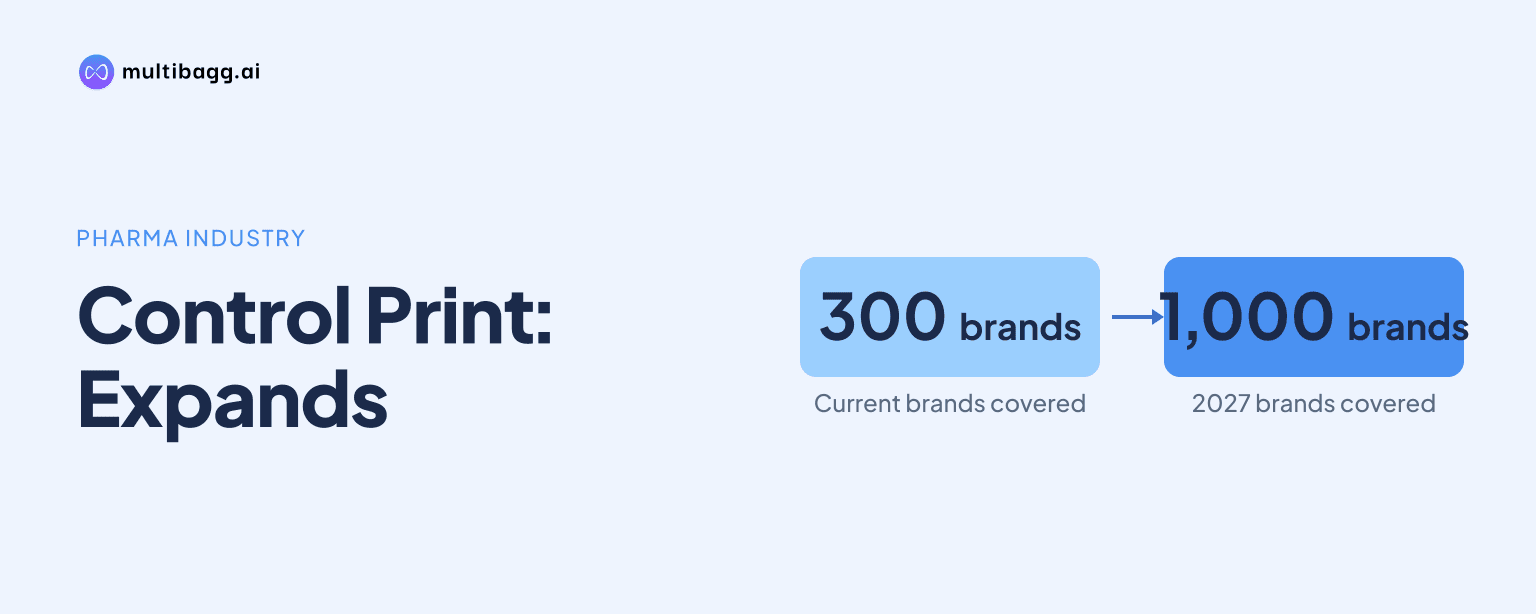
In Q2 and H1 FY27, Control Print Limited said India’s pharmaceutical Track & Trace requirements could extend from 300 mandated brands to the top 1,000 brands, with further categories due in 2027 and 2028, potentially enlarging a market currently estimated at Rs 600 crore to Rs 700 crore. Management is testing its integrated solution through pilots with two major Indian pharmaceutical customers.
Know Control Print inside out
Results, valuation, peers and who's buying, in one view.
How could Control Print benefit from wider pharmaceutical traceability rules?
Control Print could benefit if the government’s existing requirement for 300 pharmaceutical brands expands to the top 1,000 brands under a gazetted requirement. Management said some of the initial 300 brands have started implementation and that Control Print is servicing part of this installed base. The company also said it already conducts about Rs 20 crore of Track & Trace business within a market it estimates at Rs 600 crore to Rs 700 crore.
The next regulatory expansion, as described by management on October 29, 2026, could be broader than the first 300-brand phase. Management said the future requirements would include anti-infectives, such as antibiotics and antivirals, vaccines, and medicines with psychotropic or narcotic properties. It cautioned that it was not certain of the exact dates, but identified 2027 and 2028 as significant deadlines because the number of stock-keeping units, or SKUs, and brands under the government’s scope would rise substantially.
Management also described a change in customer purchasing behaviour that could increase implementation work before the deadlines. Some larger pharmaceutical customers, it said, are choosing to apply a common Track & Trace system across all production lines rather than installing it only on lines making the initially mandated 300 brands. In the example management gave, a customer with 20 lines and 10 or 11 already covered may prefer a single approach because it expects the requirements eventually to reach more SKUs.
What is Control Print’s Track & Trace market size today?
Control Print estimated the current Track & Trace market at about Rs 600 crore to Rs 700 crore, including the top 300 brands as well as certain export and other SKUs. Management presented this as the size of the present market rather than a forecast for Control Print’s revenue. It said several suppliers operate in the category, naming ACG, Jackson, Cornot and Prophasis alongside Control Print.
Management did not estimate the market in 2028 or 2029, despite an analyst asking whether it could exceed Rs 200 crore or Rs 300 crore for the company. Instead, it said it was difficult to quantify the outcome once coverage reaches 1,000 brands and additional medicine categories. The company’s position was that the market should increase if the gazetted requirements are implemented, but the scale will also depend on whether customers select feature-rich solutions rather than basic systems.
That distinction matters because management described its own proposed offering as more expensive than a plain-vanilla solution due to additional features. It said broader implementation of such systems could lift overall market value beyond the current Rs 600 crore to Rs 700 crore level. However, management also explicitly linked growth to regulation, saying the market may not grow as quickly if the government does not change or implement the rules as expected.
What is Control Print testing with major pharmaceutical customers?
Control Print is testing an integrated Track & Trace offering that combines technology acquired from Markprint, digital printers manufactured in India, and software from the QRiousCodes team acquired by the company. Management said it has worked on the offering for about six years and has conducted pilots for more than a year with two Indian pharmaceutical customers that it described as top-five or top-10 companies.
The pilots were nearing their end stage at the time of the October 2026 call, according to management. The immediate purpose is to assess field performance against an internal target percentage rate and identify any gaps before a wider launch. Management did not disclose the targeted performance threshold, the names of the customers, or commercial terms, citing non-disclosure agreements and the continuing pilot and development status.
Management said multiple iterations have already been made to the solution while the pilots have progressed. It believes the system could provide anti-counterfeiting and anti-duplication benefits in addition to meeting government requirements, alongside other tertiary benefits that it did not specify. These are management expectations, not reported results from the pilots, and the company said it would need permission from customers before it could disclose outcomes after the projects conclude.
Got a follow-up? Ask IRIS
When could Control Print’s regulatory opportunity become clearer?
Control Print identified 2027 as the expected period for rules covering the top 1,000 brands and psychotropic and narcotic medicines, while it placed anti-infectives and vaccines in 2028. Management was clear that the month could be August or September 2027 but that it was not certain, so these timings should be treated as its current understanding rather than a confirmed company forecast.
The clearest nearer-term operational marker is pilot feedback from the two large pharmaceutical customers. Management said it expects to learn whether field performance meets the required level and whether the solution is ready to proceed or requires further work. That result may determine when the company can discuss the product more specifically, since its current disclosure is constrained by customer confidentiality agreements.
The opportunity also depends on customer implementation choices. Management said some customers are considering a full-factory approach across 20 lines rather than maintaining separate solutions for currently covered and uncovered SKUs. If this approach becomes more common before the 2027 and 2028 deadlines, installation demand could arrive before formal coverage of each individual brand. The transcript did not provide an order pipeline, market-share target, or revenue target for this possible demand.
How does Control Print position itself against other providers?
Control Print said it competes in a market that includes ACG, Jackson, Cornot and Prophasis, but management did not provide a market-share figure for any participant. Its current stated position is about Rs 20 crore of Track & Trace business within the Rs 600 crore to Rs 700 crore market it estimated. This comparison indicates that the company is already active in the category, while leaving its share and future share undisclosed.
Its proposed differentiation is the combination of locally manufactured digital printers, Markprint technology and QRiousCodes software. Management also said the solution has features beyond regulatory compliance, including potential anti-counterfeiting and anti-duplication uses. Whether those features translate into wider customer adoption remains unresolved because the two major-customer pilots were still being evaluated in Q2 and H1 FY27.
Conclusion
Control Print’s disclosed Track & Trace case is a regulatory-led expansion opportunity rather than a quantified revenue forecast. The company estimates today’s market at Rs 600 crore to Rs 700 crore, reports about Rs 20 crore of existing business, and expects the addressable scope to broaden as requirements move from 300 brands toward 1,000 brands and additional medicine categories. Its integrated printer-and-software system is being tested with two large pharmaceutical customers.
The next items to watch are management’s confirmation of the 2027 and 2028 regulatory dates, feedback from pilots that have run for more than a year, and any permitted disclosure on field performance or commercial deployment. Management has not issued a market-share target, an order target, or a revenue estimate for the expanded mandate, making execution evidence more important than the currently stated market potential.