










Dhampur Bio Organics Reports ₹29.13 Crore Q2 Continuing PAT
Key highlights
- Dhampur Bio Organics reported Q2 FY27 consolidated revenue of ₹1,026.33 crore, up 24.7% year on year.
- Continuing PAT was ₹29.13 crore in Q2 FY27 versus a ₹8.76 crore loss a year earlier.
- Total borrowings fell to ₹212.17 crore from ₹1,054.17 crore in March 2026.
- The board approved a buyback of up to ₹50 crore at a maximum price of ₹200 per share.
powered by IRIS
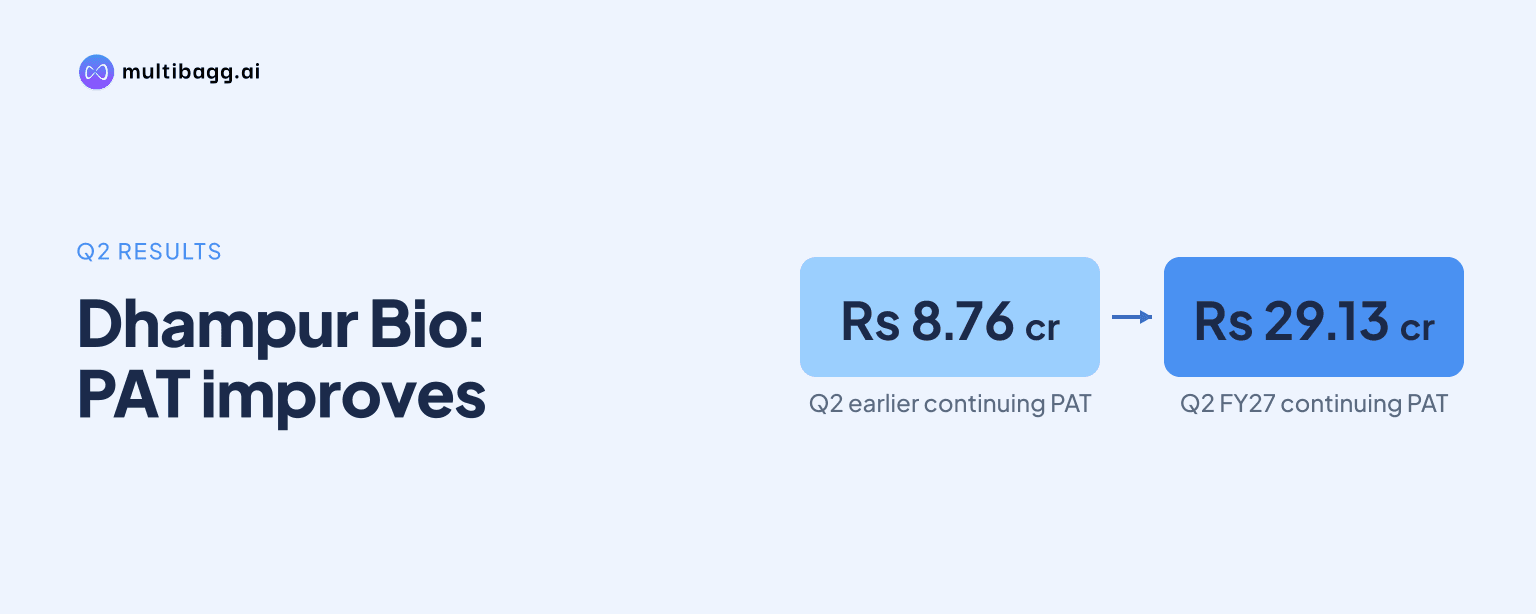
Dhampur Bio Organics Limited reported consolidated Q2 FY27 revenue of ₹1,026.33 crore and continuing profit after tax of ₹29.13 crore, reversing a ₹8.76 crore loss a year earlier, while its board approved a buyback of up to ₹50 crore at a maximum price of ₹200 per share.
Know Dhampur Bio Organics inside out
Results, valuation, peers and who's buying, in one view.
What did Dhampur Bio Organics report for Q2 FY27?
Dhampur Bio Organics Limited, referred to hereafter as Dhampur Bio Organics, returned to profitability from continuing operations in the quarter ended September 30, 2026. Consolidated revenue rose 24.7% year on year and 11.7% sequentially to ₹1,026.33 crore. Continuing PAT was ₹29.13 crore, compared with losses of ₹8.76 crore in the year-ago quarter and ₹13.75 crore in the preceding quarter.
The operating improvement was also reflected in consolidated EBITDA, which rose to ₹63.43 crore from ₹12.50 crore a year earlier and ₹10.15 crore sequentially. Separately, the filing stated that pre-tax profit from continuing operations was ₹39.22 crore, against a pre-tax loss of ₹12.24 crore in Q2 FY26.
For the first half of FY27, revenue stood at ₹1,944.89 crore, up 23.6% year on year. Continuing PAT for the six-month period was ₹15.38 crore, compared with a continuing loss of ₹22.85 crore in the corresponding period of the previous financial year.
Which businesses supported the quarterly performance?
Dhampur Bio Organics' sugar segment was a key contributor to the quarterly improvement, reporting revenue of ₹468.67 crore. This was 19.5% higher than the preceding quarter and 12.7% above the year-ago level. Segment profit rose to ₹47.58 crore from ₹4.73 crore in Q1 FY27.
The Bio Fuels and Spirits segment reported revenue of ₹104.42 crore, up 29.3% sequentially and 9.3% year on year. The country liquor business generated revenue of ₹437.91 crore, representing growth of 47.7% from the corresponding quarter of FY26.
The reported sugar performance came amid improved realisations and supply constraints in the industry. These conditions supported the segment's revenue and profitability during the quarter, although sector conditions can vary with cane availability, production levels and government policy.
How did the Meerganj sale change the balance sheet?
Dhampur Bio Organics reduced total borrowings to ₹212.17 crore as of September 30, 2026, from ₹1,054.17 crore at the end of March 2026. The reduction was partly attributed to the divestment of the Meerganj unit and subsequent debt repayment.
The Meerganj undertaking was sold for ₹305 crore. The supplied results information refers to a one-time post-tax gain of ₹50.54 crore from the sale, while the half-year filing also reports a ₹63.89 crore gain under discontinued operations. The company has therefore separated the transaction-related discontinued-operations effect from the performance of continuing businesses.
A lower debt level reduces the amount of borrowings carried by the company compared with March 2026. The audited standalone and consolidated financial results for the quarter and half year ended September 30, 2026 received unmodified audit opinions, according to the board-meeting update.
Got a follow-up? Ask IRIS
What are the details of the proposed ₹50 crore buyback?
Dhampur Bio Organics' board approved a proposal to buy back shares for up to ₹50 crore at a maximum price of ₹200 per share. The proposed buyback could represent up to 3.76% of the company's paid-up equity capital.
The proposal remains subject to shareholder approval. The board also approved a postal ballot process, which will allow shareholders to consider the buyback resolution. The approved maximum price and total amount set the stated limits of the proposal; they do not establish the final quantity of shares that will be bought back.
For shareholders, the buyback proposal follows a quarter marked by improved operating profitability and a substantial fall in borrowings. The filing does not provide a forecast for future earnings, and the effect of a buyback on individual investors depends on final terms, participation and applicable market conditions.
What opportunities and risks remain for the business?
Dhampur Bio Organics operates across sugar, biofuels and spirits, and country liquor, making sugar prices, ethanol policy and demand trends relevant to its operations. The company cited demand linked to power, fuel and infrastructure activity, along with India's ethanol-blending programme, as longer-term opportunities for the sector.
At the same time, restrictions on sugarcane-based ethanol feedstock create uncertainty for the distillery business. Such policy restrictions can affect the availability of feedstock for ethanol production and remain an important operating consideration for companies with distillery capacity.
The September-quarter figures show that sugar segment profitability improved sharply from the preceding quarter, while the country liquor business recorded strong year-on-year revenue growth. However, the supplied information does not state management guidance for future revenue, margins or ethanol volumes.
Conclusion
Dhampur Bio Organics reported a material improvement in Q2 FY27 operating performance, with revenue of ₹1,026.33 crore, EBITDA of ₹63.43 crore and continuing PAT of ₹29.13 crore. The Meerganj divestment also helped bring borrowings down to ₹212.17 crore from ₹1,054.17 crore in March 2026, while the board proposed a buyback of up to ₹50 crore.
Investors will next watch the shareholder approval process for the buyback, the implementation of the Meerganj-sale proceeds and changes in sugar and ethanol policy. Feedstock restrictions for sugarcane-based ethanol remain an unresolved factor for the Bio Fuels and Spirits business.