










Eco Recycling Limited Q2 profit rises 22%, revenue ₹16.42 crore
Key highlights
- Eco Recycling Limited reported Q2 FY27 standalone net profit of ₹7.53 crore, up 22% from ₹6.18 crore a year earlier.
- Q2 FY27 standalone revenue rose 14% year-on-year to ₹16.42 crore from ₹14.42 crore.
- Operating profit increased to ₹9.11 crore and operating margin improved to 55.5% from 50.14%.
- Cash and cash equivalents were ₹9.90 crore on September 30, 2026, versus ₹13.14 crore at the prior financial year-end.
powered by IRIS
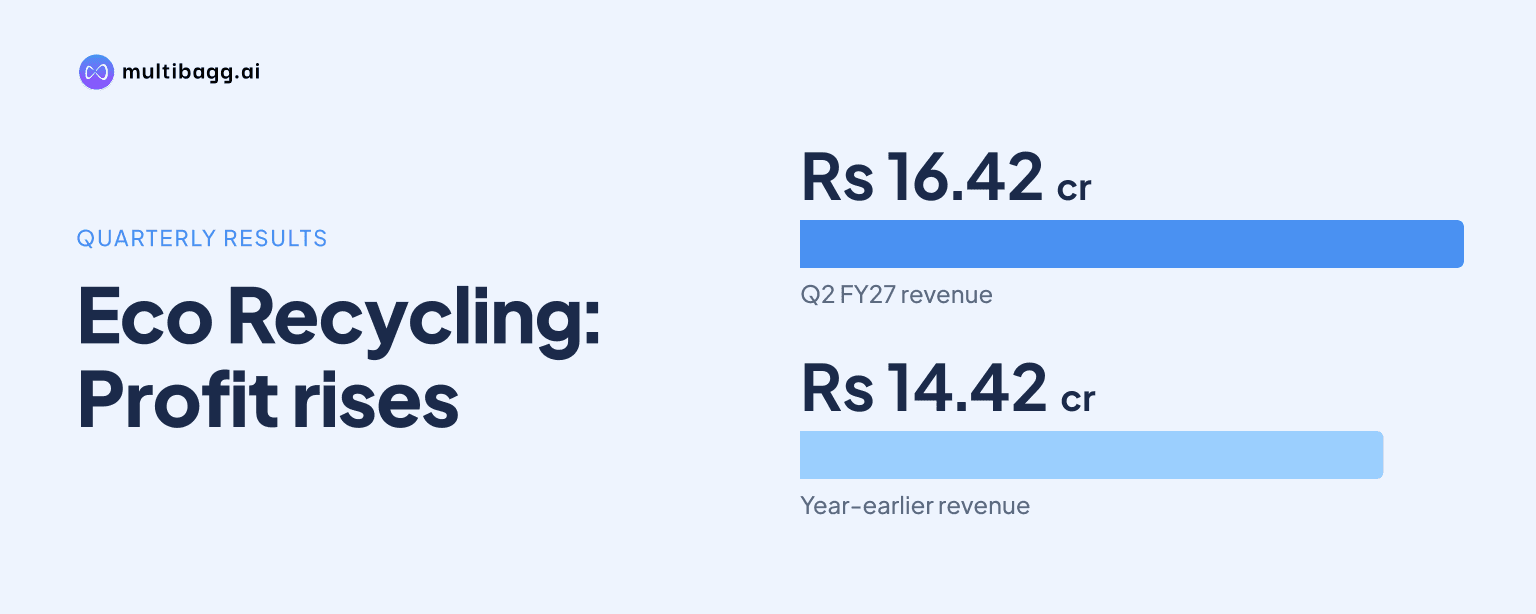
Eco Recycling Limited reported Q2 FY27 standalone net profit of ₹7.53 crore, up 22% year-on-year from ₹6.18 crore, while revenue from operations increased 14% to ₹16.42 crore for the quarter ended September 30, 2026. The results point to higher revenue and profit in the company’s e-waste management operations.
Know Eco Recycling inside out
Results, valuation, peers and who's buying, in one view.
What did Eco Recycling Limited report for Q2 FY27?
Eco Recycling Limited reported standalone revenue from operations of ₹16.42 crore in Q2 FY27, compared with ₹14.42 crore in the corresponding quarter a year earlier. Standalone net profit rose to ₹7.53 crore from ₹6.18 crore, while profit before tax increased to ₹8.52 crore from ₹6.89 crore.
The company’s operating profit was ₹9.11 crore, compared with ₹7.23 crore in Q2 FY26, based on the quarterly results data. The operating margin stood at 55.5%, versus 50.14% in the year-earlier quarter. Eco Recycling attributed the margin improvement to operational efficiencies in its e-waste management segment.
The reported profit figures are standalone results. The Board also approved unaudited consolidated financial results for the quarter and half year ended September 30, 2026, but the supplied disclosures do not provide the consolidated revenue or profit figures.
When did the board approve the Q2 FY27 results?
Eco Recycling Limited’s Board of Directors approved the unaudited standalone and consolidated Q2 FY27 results on November 4, 2026. The approval covered financial performance for both the September quarter and the first half of FY27, along with the statutory auditor’s limited review report.
The meeting had initially been scheduled for November 3, 2026. Eco Recycling moved it to November 4, citing unavoidable circumstances. The change was disclosed before the results were approved, and the revised agenda retained the consideration of unaudited results and the limited review report.
The company had also indicated that the board would consider an interim dividend for FY27. The available information confirms approval of the financial results but does not state whether an interim dividend was declared. Investors therefore have no disclosed dividend outcome in the supplied material.
How did Eco Recycling Limited’s quarterly performance compare?
Eco Recycling Limited’s Q2 FY27 revenue was higher year-on-year but lower than the preceding June 2026 quarter. Revenue was ₹16.42 crore in the September quarter, compared with ₹16.19 crore in June 2026 and ₹18.61 crore in March 2026.
Standalone net profit was ₹7.53 crore in Q2 FY27. For comparison, net profit was ₹6.87 crore in the June 2026 quarter and ₹9.33 crore in the March 2026 quarter. The June-quarter comparison reported in the supplied data shows a 13.0% quarter-on-quarter decline in revenue and a 26.4% decline in net profit from the March quarter.
Got a follow-up? Ask IRIS
What does the result show about Eco Recycling’s financial position?
Eco Recycling stated that it remains debt-free in respect of financial borrowings. Its finance costs relate solely to lease liabilities, according to the supplied results summary. This distinction matters because it indicates that reported finance costs were not linked to conventional borrowing debt.
Cash and cash equivalents stood at ₹9.90 crore as of September 30, 2026, down from ₹13.14 crore at the end of the previous financial year. The company disclosed a net decrease of ₹3.25 crore in cash and cash equivalents over the six-month period, while noting working-capital pressure and the use of investment proceeds to maintain liquidity.
The balance between higher quarterly profit and lower cash is relevant for investors assessing operations and capital deployment separately. The disclosures establish the cash movement but do not provide a detailed break-up of each working-capital component in the material provided.
Why does e-waste market context matter for Eco Recycling Limited?
Eco Recycling operates in the e-waste management segment, where collection, processing and recovery volumes are important to operating performance. The company linked its Q2 margin expansion to operational efficiencies in this segment, making the improvement in operating margin a key part of the quarterly result.
The supplied industry context estimates India’s annual e-waste generation at 6.19 million metric tonnes, with per-capita generation of 4.3 kg to 4.5 kg. These figures describe the size of the material stream that e-waste collection and recycling companies address, although they do not represent Eco Recycling’s own processing volume or market share.
For shareholders, the Q2 numbers provide evidence of year-on-year improvement in revenue, profit before tax and net profit. The sequential decline from the March 2026 quarter also shows that quarterly performance has varied, with revenue falling from ₹18.61 crore in March to ₹16.42 crore in September.
Conclusion
Eco Recycling Limited closed Q2 FY27 with standalone revenue of ₹16.42 crore and net profit of ₹7.53 crore, representing year-on-year increases of 14% and 22%, respectively. Operating profit increased and the operating margin improved to 55.5%, while the company continued to report no financial borrowings.
The next disclosed items to watch are the company’s future quarterly results, its cash and working-capital position after the ₹3.25 crore six-month reduction in cash and cash equivalents, and any formal disclosure on the FY27 interim dividend considered by the board.